
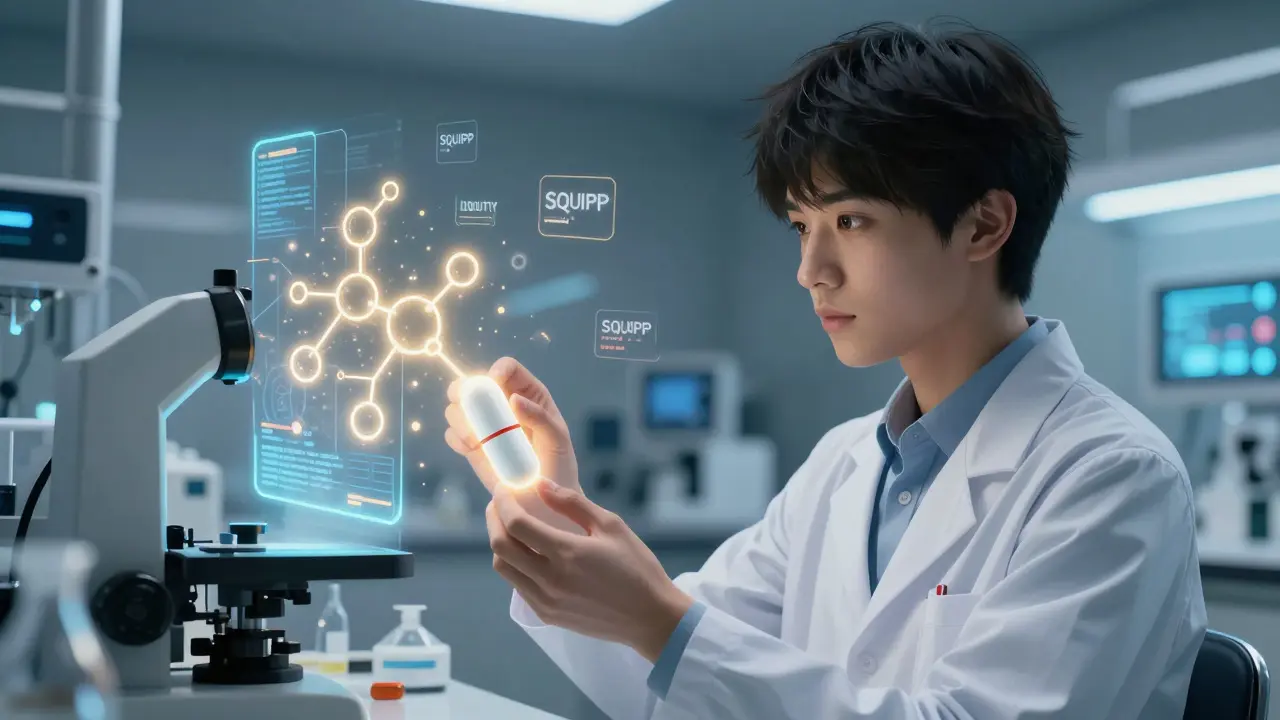
When you pick up a generic pill at the pharmacy, you expect it to work just like the brand-name version. But how do you know it’s real? Not just the right chemical, but the right dose, the right shape, the right release profile? The answer lies in a hidden system of rules, machines, and checks that make counterfeiting nearly impossible - if done right. This isn’t science fiction. It’s generic manufacturing standards in action.
Why Generic Drugs Need Tougher Rules Than You Think
Generic drugs make up 90% of prescriptions filled in the U.S. But they only account for 23% of spending. Why? Because they’re cheaper - not because they’re less important. In fact, they’re more vulnerable to counterfeiting. Fake pills can look identical, cost pennies to produce, and slip through weak supply chains. A 2022 FDA study found that 96% of drugs bought from illegal online pharmacies failed basic quality tests. That’s not just risky - it’s deadly. The system built to stop this started after the 1937 sulfanilamide tragedy, where 107 people died from a toxic solvent used in a liquid drug. That led to the Federal Food, Drug, and Cosmetic Act. But real change came in 1962 with the Kefauver-Harris Amendments, which forced drugmakers to prove their drugs actually worked. Today, that legacy lives in cGMP - Current Good Manufacturing Practices. The FDA says it plainly: “Quality cannot be tested into a finished product; it must be built into the design and manufacturing process at every single step.”The SQUIPP Framework: What Makes a Generic Drug Real
Every generic drug must pass five non-negotiable tests - Safety, Quality, Identity, Potency, and Purity. Together, they’re called SQUIPP. This isn’t a checklist. It’s a full-system approach.- Identity: How do you know it’s the right drug? Not just “it has the same molecule.” You need to prove it’s the exact same chemical form. Techniques like infrared spectroscopy and high-performance liquid chromatography (HPLC) compare the drug’s fingerprint against the brand-name version. These tests catch fake versions that look right but have the wrong crystal structure - a known trick used in counterfeit valsartan pills in 2018.
- Potency: Does it contain the right amount of active ingredient? Too little? It won’t work. Too much? It could overdose you. Testing requires statistical control across batches, with process capability (CpK) scores above 1.33. That means less than 0.27% of pills fall outside acceptable limits.
- Purity: Are there harmful impurities? Even trace amounts of carcinogens or heavy metals can trigger recalls. The FDA requires testing for 15+ known impurities, and many manufacturers now use mass spectrometry to detect unknown ones.
- Quality: Does it dissolve properly? A pill that doesn’t break down in your stomach is useless. Dissolution testing requires 80% of the drug to be released within 30 to 45 minutes. If it doesn’t meet that, the whole batch is scrapped.
- Safety: This isn’t just about the drug itself. It’s about the environment. Clean rooms must meet ISO Class 5 standards - fewer than 3,520 airborne particles per cubic meter. That’s hospital operating room level.
How Track-and-Trace Systems Block Fake Pills Before They Reach You
Looking at a pill won’t tell you if it’s fake. But scanning its barcode might. Since 2023, every prescription drug package in the U.S. must carry a unique serial number under the Drug Supply Chain Security Act. That’s not just a number. It’s a digital fingerprint. Each serial number is scanned at every stop - from factory to wholesaler to pharmacy. If a package is duplicated, lost, or never registered, the system flags it. The accuracy? 99.99%. In 2023, 92% of the top 50 generic manufacturers had full serialization. Smaller companies lag, but the pressure is mounting. This isn’t just about tracking. It’s about verification. Imagine a pharmacist scans a bottle. The system checks: Is this package from an authorized supplier? Was it made at an FDA-approved facility? Did it pass all lab tests? If any link breaks, the system blocks it. No manual guesswork. No loopholes.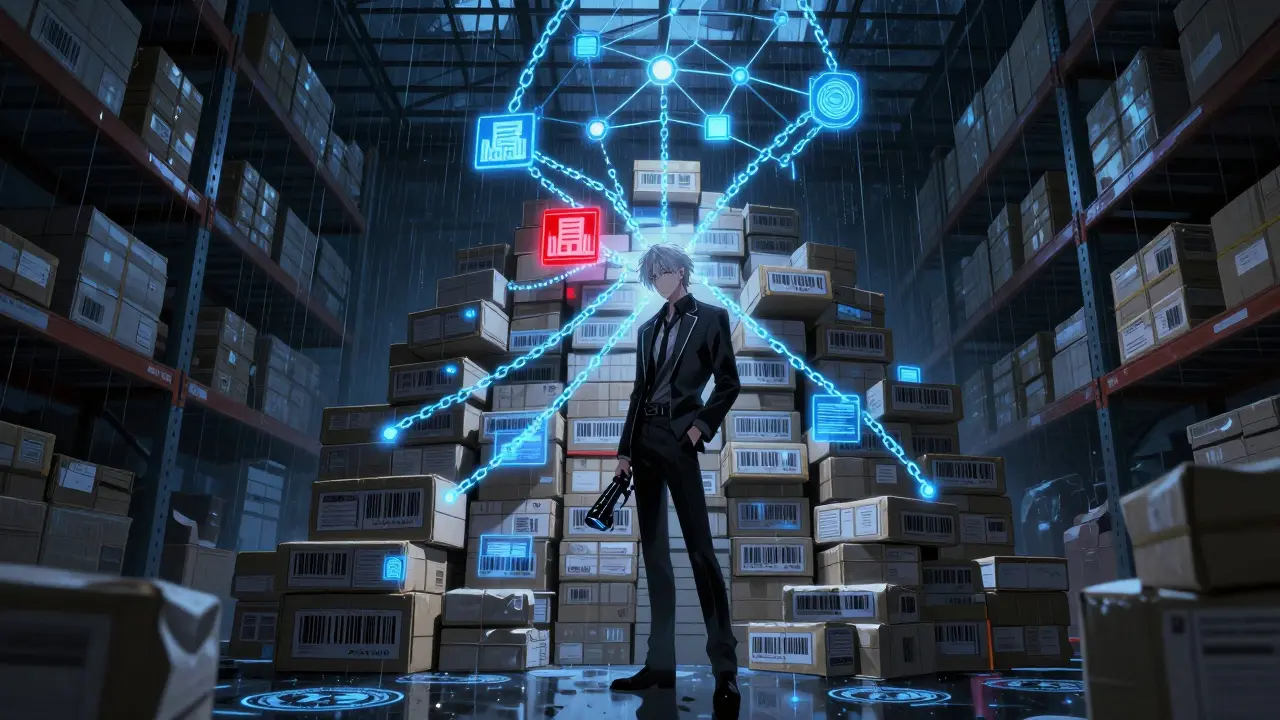
What Happens Behind the Scenes: eQMS and Real-Time Monitoring
You don’t see it, but every batch of generic drug is monitored by an Electronic Quality Management System (eQMS). By 2023, 78% of major manufacturers had switched from paper logs to cloud-based platforms like Veeva QualityOne or TrackWise. These systems track over 15,000 data points per batch - temperature during mixing, humidity in the drying room, vibration levels on the tablet press. If a machine starts drifting outside tolerance, the system auto-flags it. No waiting for daily reports. No human error. One quality manager at Teva told Reddit users their eQMS cut deviation resolution time from 14 days to 48 hours. But it cost $2.3 million and took 18 months to set up. That’s the trade-off. Smaller factories can’t always afford it. That’s why the FDA still finds 29% of warning letters citing poor cleaning validation - a sign that corners are being cut.Global Gaps: Where Counterfeits Still Slip Through
The U.S. and EU have some of the strictest systems in the world. But not everywhere. In India, 78% of generic manufacturing facilities passed FDA inspections in 2023. In China? Only 65%. That gap matters. In 2022, Interpol’s Operation Pangea X seized $21 million in fake medicines - 78% of them falsely labeled as generics. The WHO says countries with full GMP compliance see counterfeit rates below 0.1%. In places without enforcement? It’s 10% to 30%. That’s not just a market issue. It’s a public health crisis. A fake antimalarial pill doesn’t just cost money - it can kill. The EU’s Qualified Person (QP) system adds another layer: every batch must be personally signed off by a certified pharmaceutical expert before release. The U.S. relies more on process validation. Both work - but the QP system adds a human checkpoint that’s harder to fake.
The Future: AI, Blockchain, and Molecular Taggants
The fight against counterfeits is going high-tech. The FDA is investing $150 million in AI-powered detection tools. IBM and Siemens have poured $1.2 billion into machine learning systems that analyze spectral patterns to catch fake pills before they leave the factory. By 2026, the EU will require quantum-resistant cryptography for serial numbers - meaning even hackers with future tech can’t crack them. In Africa, the WHO is testing blockchain-based verification for generic antimalarials. Each pill’s journey is recorded on a tamper-proof ledger. Even more advanced? Molecular taggants. Tiny, invisible markers added to the drug that can be detected with handheld scanners. Think of them like a hidden watermark in currency - but at the molecular level. Pilot programs are already underway.What You Can Do - and What You Can’t
As a patient, you can’t test a pill yourself. You can’t smell it, feel it, or look at it and know if it’s real. But you can choose where you buy it. Stick to licensed pharmacies. Avoid websites that sell drugs without a prescription. Check if your pharmacy is part of the Verified Internet Pharmacy Practice Sites (VIPPS) program. If a generic drug costs 80% less than others, it’s a red flag. The system works - but only if it’s enforced. And that means supporting strong regulations, funding inspections, and holding manufacturers accountable. Because when quality control fails, it’s not just a lost sale. It’s a life.Are generic drugs as safe as brand-name drugs?
Yes - when they’re made under proper quality control. The FDA requires generics to meet the same standards as brand-name drugs. Studies show the adverse event rate for generics is 0.02%, compared to 0.03% for brand-name drugs. That’s nearly identical. The difference isn’t in the drug - it’s in whether the manufacturer follows cGMP rules.
How do regulators catch counterfeit generic drugs?
They use a mix of lab testing, digital tracking, and inspections. Labs use HPLC and infrared spectroscopy to verify chemical identity. Track-and-trace systems scan serial numbers at every supply chain step. The FDA also sends inspectors to manufacturing sites - both in the U.S. and abroad. In 2023, 94% of U.S. facilities passed inspections. But only 65% of Chinese facilities did. That’s why global cooperation is critical.
Can counterfeit drugs look exactly like the real thing?
Yes - and that’s the danger. Counterfeiters can match color, shape, imprint, and even packaging. But they often get the chemistry wrong. They might use the wrong crystal form, skip purification steps, or substitute cheaper fillers. That’s why identity testing with spectroscopy is essential. A pill can look perfect but fail a chemical fingerprint test.
Why do some generic drugs cost so much less than others?
It’s not always about competition. A drug that costs 70% less than others may be made in a facility with poor quality controls. The cheapest option isn’t always the safest. Manufacturers that invest in eQMS, serialization, and advanced testing have higher costs - but they also have lower failure rates and fewer recalls. You get what you pay for - even in generics.
What’s being done to improve counterfeit detection?
The FDA is pushing for AI-driven quality systems, blockchain verification, and molecular taggants. By 2025, continuous manufacturing - with real-time data every 5 seconds - will be required for new facilities. The EU is rolling out quantum-resistant serialization by 2026. These aren’t futuristic ideas - they’re already being tested. The goal is to make counterfeiting so hard and so expensive that it’s not worth the risk.
Comments (9)
-
Jacob Hessler March 23, 2026This whole system is a joke. We spend billions on 'quality control' while China pumps out fake pills by the ton. FDA inspectors can't even get into half the factories overseas. And you think a barcode is gonna stop a criminal with a 3D printer? Wake up. We're getting played. The real solution? Ban all foreign generics. Period. End of story.

-
Amber Gray March 24, 2026I just bought a generic blood pressure pill last week for $3. The brand name is $80. I'm not dumb. I know what's going on. 😈 But hey, at least my BP's under control. If I drop dead, at least I saved $77. #worthit

-
Danielle Arnold March 25, 2026So let me get this straight. We're trusting a machine to detect if a pill is real... but the same machines are built by the same companies that make the pills? And we're surprised when things go wrong? 😴

-
Jesse Hall March 27, 2026This is actually one of the most important things we never talk about. I work in a pharmacy and I see how many people rely on generics just to survive. The fact that most of these systems work? That’s huge. We need to fund more inspections, not cut them. Every life matters. ❤️

-
Donna Fogelsong March 27, 2026eQMS? Blockchain? You think they’re protecting us? Nah. This is all a distraction. The real threat is the secret biotech labs in Nevada that are injecting nano-chips into the fillers. They’re using the ‘quality control’ narrative to normalize surveillance. You think your pill’s safe? Think again. They’re watching your vitals through the absorption rate. #MindControl

-
Sean Bechtelheimer March 29, 2026I read somewhere the FDA gets paid by pharma companies to approve their labs. That’s why 94% of US facilities pass. Coincidence? Nah. The system is rigged. I stopped taking generics after my cousin died from a ‘fake’ metformin. They said it was ‘impurity’ but I know better. 🤫

-
Seth Eugenne March 30, 2026I appreciate the depth here. It’s easy to be cynical, but the truth is, most generics are safe because of the people working behind the scenes-technicians, inspectors, QA engineers. They don’t get credit. But they’re the real heroes. If you’re worried about quality, support policies that pay them fairly. It’s not magic. It’s labor. 👏

-
rebecca klady March 30, 2026I’m from Ohio. My dad’s on 5 meds. All generics. He’s 72. Last year, his new bottle tasted weird. I called the pharmacy. They said ‘batch variation.’ I told them to send the original. They did. Same pill. Different taste. I still don’t trust it. Not one bit.

-
Namrata Goyal March 31, 2026You Americans think your cGMP is the gold standard? Please. India makes 40% of the world’s generics. We have 100+ WHO-GMP certified plants. Your FDA inspections are theater. We use AI-driven dissolution testing before you even heard of HPLC. Your fear is just ignorance wrapped in nationalism. And yes, we’re cheaper because we’re better at efficiency, not because we cut corners. 🇮🇳
