

Injection Site Rotator Visualizer
Instructions: Click anywhere inside the outline to simulate an injection.
Follow the "One-Inch Rule": Avoid clicking within the grey safety ring of existing dots.
Tracking Stats
- Upper Quadrants 0
- Lower Quadrants 0
The Hidden Problem Behind Unstable Blood Sugar
Imagine checking your blood glucose levels constantly, eating the right foods, and taking your exact prescribed dose, yet your numbers still swing wildly. You might feel frustrated, wondering what you did wrong. Many people with diabetes unknowingly struggle with physical changes under their skin that directly sabotage their metabolic control. These physical changes are known collectively as Insulin Injection Site Reactions. While some redness or minor swelling is normal, persistent lumps or dents signal a deeper issue.
This isn't just about cosmetic concerns. When tissue changes occur where you inject insulin, the medication does not absorb into your bloodstream consistently. Instead of working smoothly, the insulin sits trapped in damaged tissue or gets released at unpredictable rates. Research indicates that roughly 30 to 50 percent of individuals using insulin face these complications at some point. Despite modern syringes and pens making administration easier, the fundamental habit of rotating injection sites remains the biggest hurdle for many patients.
Understanding the Types of Tissue Changes
To fix the problem, you first need to recognize what is happening beneath the surface. The medical term for abnormal fat tissue changes is LipodystrophyAbnormal fat accumulation or loss at injection sites. This isn't one single condition; it breaks down into two distinct behaviors that require different attention.
- Lipohypertrophy: This is the most common form. It happens when repeated injections in the same spot cause fat cells to swell and scar tissue to build up. You may notice a raised, rubbery lump under the skin. A study published in the Journal of Evaluation in Clinical Practice noted that these lumps can measure over an inch in diameter. While they feel firm compared to surrounding tissue, they typically do not hurt unless infected.
- Lipoatrophy: This involves the disappearance of fat, leaving a shallow dent or crater in the skin. Unlike the buildup seen in hypertrophy, this occurs due to an allergic reaction destroying fatty tissue. It is less common today because modern purer insulin formulations rarely trigger this, but older cases persist.
You might also deal with BruisingEcchymosis occurring at the injection site. While often temporary, frequent bruising suggests mechanical issues with how you handle the needle or pen. Approximately 65 percent of patients report seeing bruises after injections, often attributed to pressing the device too hard against the skin. Understanding the difference is vital because bruising is usually a sign of technique error, whereas lipodystrophy indicates long-term tissue damage that alters insulin action.
How These Reactions Derail Your Health Plan
The true danger of ignoring these skin changes lies in their effect on your blood sugar stability. Healthy skin absorbs insulin quickly and predictably. Scarred or lumpy tissue absorbs it slowly and erratically. When you inject into a lipohypertrophic lump, the medication can be delayed significantly. You might find yourself needing 20 to 30 percent more insulin to get the same effect as injecting into healthy tissue.
This creates a vicious cycle. To lower high blood sugar caused by poor absorption, you take extra doses. Then, suddenly, the insulin releases all at once, causing severe low blood sugar episodes known as hypoglycemia. Studies show that undiagnosed tissue changes lead to wide glycemic oscillations. Patients with these site reactions have nearly three times higher risk of unexplained hypoglycemia. Furthermore, this unpredictability raises your risk of developing diabetic ketoacidosis, a life-threatening complication.
| Condition | Appearance | Primary Cause | Impact on Insulin |
|---|---|---|---|
| Lipohypertrophy | Raised, rubbery lump | Repeated injections in one spot | Delayed, erratic absorption |
| Lipoatrophy | Shallow indentation | Allergic tissue destruction | Poor absorption |
| Bruising | Discoloration (purple/red) | Vein nick or excessive pressure | Mechanical issue, less metabolic impact |
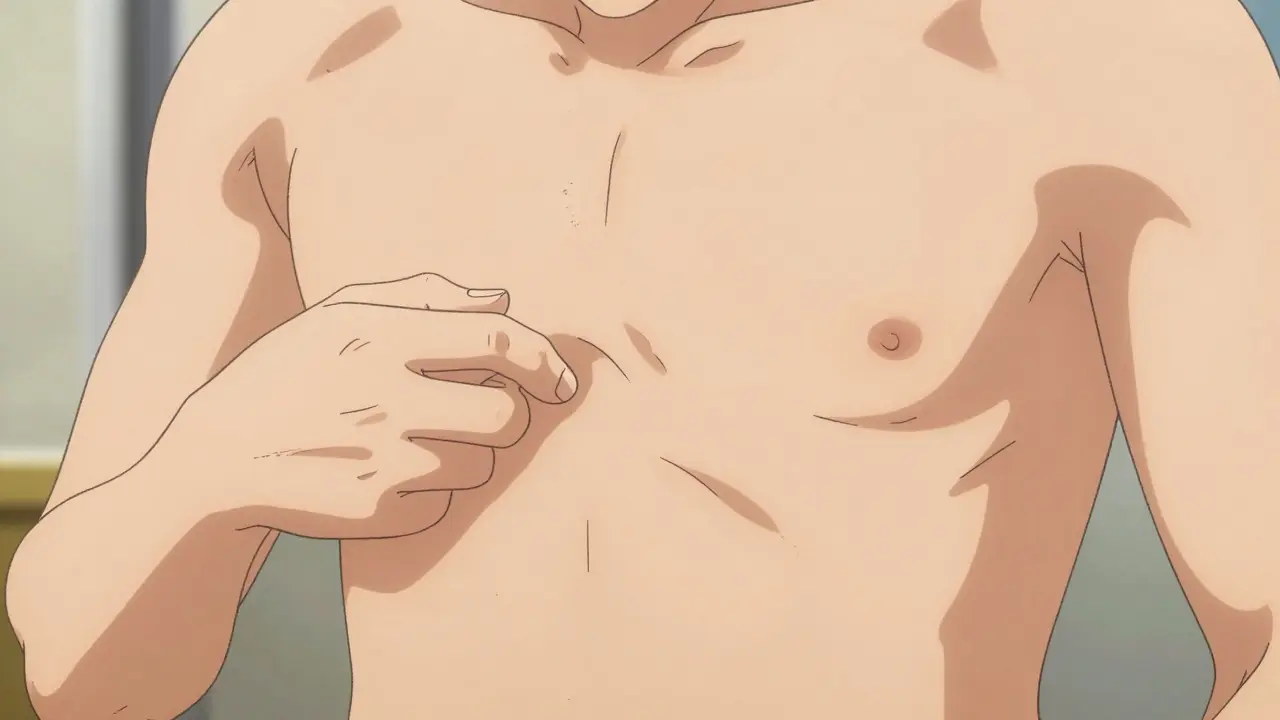
Root Causes: Why It Happens to You
Many people assume lipodystrophy is unavoidable, but the data suggests otherwise. The primary culprit is simply failing to rotate injection sites effectively. Most patients intuitively return to the same area because it is comfortable or convenient. However, skin needs time to recover. Injecting into the same millimeter repeatedly triggers an inflammatory response.
Needle Reuse is another major factor. Using a needle more than once dulls the tip, creating a ragged opening in the skin. This increases trauma and promotes scarring. Experts suggest needles bend or fray slightly even after one use, which irritates the subcutaneous fat layer. Additionally, holding the pen or syringe too tightly against the abdomen can force insulin into the muscle rather than the fat layer, leading to faster-than-expected absorption or localized bleeding.
Your anatomy plays a role too. Abdominal areas are popular because absorption is fastest there, but about 78 percent of hypertrophic cases occur in this region. Thighs are less prone to lumps but offer slower absorption. Balancing these factors requires a conscious plan rather than random guessing.
Actionable Steps for Prevention and Recovery
Fixing this issue starts with a disciplined approach to your daily routine. First, adopt the "one-inch rule." Space every new injection at least one inch (2.54 cm) away from the previous puncture site. Visualizing the abdominal area as a grid helps. Imagine dividing your belly into four quadrants. Spend one week injecting only in the upper right quadrant, then rotate clockwise to the next quadrant for the following week.
Perform regular self-checks. You likely see your stomach daily in the mirror. Look closely at the texture. Run your fingers over the area to feel for bumps you might not see immediately. Palpation is often more effective than vision alone because early stage lumps are soft and hidden beneath skin folds. If you find a lump, stop injecting there immediately and give it at least four to eight weeks to heal before reusing that zone.
If you suspect bruising is frequent, review your handling of the device. Press the button and keep it pressed until you fully withdraw the needle. Hold gentle pressure with a cotton swab afterward, but do not rub the spot. Rubbing spreads the broken blood vessels around the site and worsens the discoloration. Some users find switching to a shorter needle gauge, such as 31G or 32G, reduces tissue trauma significantly.

When Professional Intervention is Needed
While many mild cases improve with better habits, you shouldn't ignore serious symptoms. If an injection site becomes hot, warm to the touch, red, or unusually painful, you may have an infection rather than simple lipodystrophy. Heat and redness indicate inflammation that requires medical attention to prevent abscess formation.
Talk to your healthcare provider about your A1C numbers if you see them rising despite increased insulin doses. Doctors often miss this issue because they do not examine your injection sites during standard visits. A 2023 forum survey revealed that over 60 percent of patients never had their doctors check their skin for lumps. Be proactive. Ask your doctor to palpate your abdomen during your next checkup. Bringing photos of the affected area can also help them understand the severity.
Recent advancements in technology offer support. Several mobile applications now track injection locations visually to ensure you stay within the safety radius. AI-powered tools launched recently can map your history and alert you when you are about to overlap a fresh injection site. Integrating these tools can significantly reduce recurrence rates.
Summary and Moving Forward
Managing diabetes successfully hinges on more than just counting carbohydrates or choosing the right insulin dose. Your body's ability to process that insulin relies heavily on the condition of the tissue receiving the injection. Ignoring small lumps or recurring bruises leads to large swings in your daily glucose readings. By treating your skin with respect, rotating zones systematically, and monitoring for changes, you reclaim control over your metabolic health. Healing takes time, but consistent effort yields stable results within months.
Will lipodystrophy go away on its own?
Yes, provided you stop injecting into the affected area. Once healthy tissue is used for injections, the damaged fat cells can gradually regress over several months. However, complete resolution depends on the duration the tissue was neglected. Early detection speeds recovery significantly.
Does bruising mean I am injecting into a vein?
Not necessarily. While hitting a capillary can cause a bruise, frequent bruising is often due to friction damage from sharp needles or pressing the pen too firmly against the skin. It is a mechanical reaction rather than a vascular injury in most cases.
How often should I change my injection site?
You should move at least one centimeter or a finger's width away from the last injection spot. Systematic rotation of large areas like the abdomen is recommended, changing quadrants every few days to allow full healing.
Can I use the same needle twice to save money?
No. Reusing needles damages the tip and causes micro-trauma to the skin, increasing the risk of pain, bruising, and lipohypertrophy. The cost saving is outweighed by the medical risks involved.
What should I do if I already have lumps?
Stop injecting into those lumps immediately. Switch to a healthy area away from the scar tissue. Consult your doctor to adjust your dosages, as insulin absorption in the old lumps may be unreliable while you heal.
Comments (14)
-
Rod Farren April 2, 2026
From a physiological standpoint, the disruption of the subcutaneous adipose layer creates significant pharmacokinetic issues with rapid-acting insulin formulations.
Repeated trauma induces fibrosis which alters the bioavailability of the agent within the tissue matrix.
We need to consider capillary permeability when discussing why absorption rates vary so wildly in scarred zones.
Hypertrophic nodules act as a depot that delays peak plasma concentration significantly beyond standard parameters.
Furthermore, the lipoprotein catabolism within the affected area slows down diffusion coefficients measurably.
This explains why patients report erratic glucose excursions despite maintaining consistent dosing schedules accurately.
I always advise monitoring local tissue pH changes during these inflammatory responses as well.

-
Callie Bartley April 3, 2026
It is absolutely infuriating that medical systems never emphasize rotating sites until it is too late!
You spend years fighting for basic care access only to be told you injected wrong repeatedly.
Why is it always onus on patient behavior rather than provider education regarding physical anatomy limitations?
The stress of managing this alone causes such unnecessary mental load that nobody talks about openly.
I had to fight my endocrinologist who refused to even look at the damage under my skin.
It feels like we are expected to fix everything ourselves without proper tools or guidance consistently available.
This systemic failure leaves millions struggling with metabolic chaos every single day unnecessarily!

-
James DeZego April 3, 2026
I totally agree with the point about needle reuse causing micro-trauma to the dermis :)
Even brand new pens have needles that dull slightly after one prick sadly.
Switching to a fresh needle each time makes a massive difference in comfort levels honestly.
It also reduces the risk of introducing bacteria into those compromised injection areas safely.
Just a small habit change that saves so much pain in the long run!
Hope everyone finds relief from those annoying lumps soon though :(

-
Molly O'Donnell April 4, 2026
Stop reusing needles immediately.

-
Eleanor Black April 6, 2026
I wanted to share my own personal journey since dealing with this condition for several years now :)
When I first began injecting insulin regularly I failed to understand the importance of site rotation protocols.
My abdomen eventually looked like a bumpy terrain map instead of smooth skin sadly.
Finding a soft spot to inject became almost impossible during certain parts of the week frustratingly.
The physician finally advised me to implement a strict quadrant strategy similar to what is described above.
It required immense patience to allow the damaged hypertrophy to resolve completely over many months unfortunately.
I found that stopping injections in the bad zone allowed the fat cells to regenerate slowly eventually.
Using shorter gauge needles also reduced the mechanical friction against the sensitive tissues greatly.
Bruising frequency dropped noticeably once I adjusted my pressure technique properly.
Now I feel much more confident handling my daily regimen without anxiety about absorption rates.
Your physiology truly benefits from respectful maintenance of the injection interfaces constantly.
Please do not ignore early warning signs of tissue changes if you notice any texture shifts recently.
Healing takes commitment but the stability of blood sugar control is worth the effort eventually :)
I hope these details help someone avoid the struggles I went through initially during treatment.
Stay strong and keep tracking your progress meticulously moving forward with care.
We can manage this effectively together with discipline and knowledge about our bodies.

-
Owen Barnes April 7, 2026
dang yea rod u r spot on with the science part
i was thinking bout switching 2 a pen device lately
but my tech said dont touch the same spot again
gonna try to rotate 2 my thighs 2day
hope it helps with my highs
would love 2 hear ur thoughts on pens
kthxbye

-
Cullen Zelenka April 7, 2026
Hey there!
Don't worry so much about the stress of it all.
You are doing great learning about this stuff.
Small changes like rotating zones really help a lot.
Give yourself a break and trust your body to heal.
It takes time but you got this for sure.
Keep going with the plan!

-
Russel Sarong April 9, 2026
That is fantastic advice regarding needle integrity!!!
I cannot believe how often people overlook this aspect!!!!!
The slight bend in the steel makes a huge difference in delivery!!!
We must prioritize equipment freshness above all else!!!!!
Thank you for sharing such valuable insights on the mechanics!!!
This community is incredibly supportive and informative!!!
Keep spreading the word about proper injection safety techniques!!!

-
Arun Kumar April 9, 2026
It sounds like you have the right information now.
Take it slow and focus on one step at a time.
Many people struggle with consistency until it becomes routine.
You are already ahead by understanding the root cause clearly.
Remember that your health matters more than saving money on needles.
Be kind to yourself while you adjust your habits gradually.
We are all here to support your wellness journey together.

-
Julian Soro April 11, 2026
Wow thank you for posting this detailed story!
It gives me hope that healing is possible for us all.
Your experience validates exactly what I suspected was happening to me.
Checking textures with fingers is such a pro tip honestly.
I will start mapping my belly quadrants right away tomorrow morning.
Thanks for being so open about your recovery path.
Let's stay positive about getting our numbers stable soon!

-
Christopher Beeson April 11, 2026
Perhaps we are merely victims of biological fragility disguised as a manageable disease state.
The irony lies in needing to pierce our defense mechanisms to survive.
Society demands compliance yet offers little protection against self-inflicted trauma.
We degrade our own vessel to maintain the illusion of normalcy.
This cycle of injury and repair reflects the broader human condition tragically.
Acceptance is the only true medicine here.
Nothing changes except the location of the wound.

-
Cara Duncan April 11, 2026
Aww that is super deep 🧐
I know it gets lonely dealing with chronic stuff 😔
But remember you aren't alone in this battle 💪
Let's keep looking out for each other always ❤️
Hope you feel better soon!! 🩹✨

-
Jenny Gardner April 13, 2026
Exactly!!
Precision matters when dealing with delicate biological functions!!!!
You should definitely invest in quality gear regardless of cost!!!!!
Consistency yields results in the long run!!!!
Well said on the technical front!!

-
Sharon Munger April 14, 2026
Thanks for sharing all of this
really useful tips on rotation and scars
will try them out next week
appreciate the community here
