
What You’re Really Buying When You Pick Up an OTC Medicine
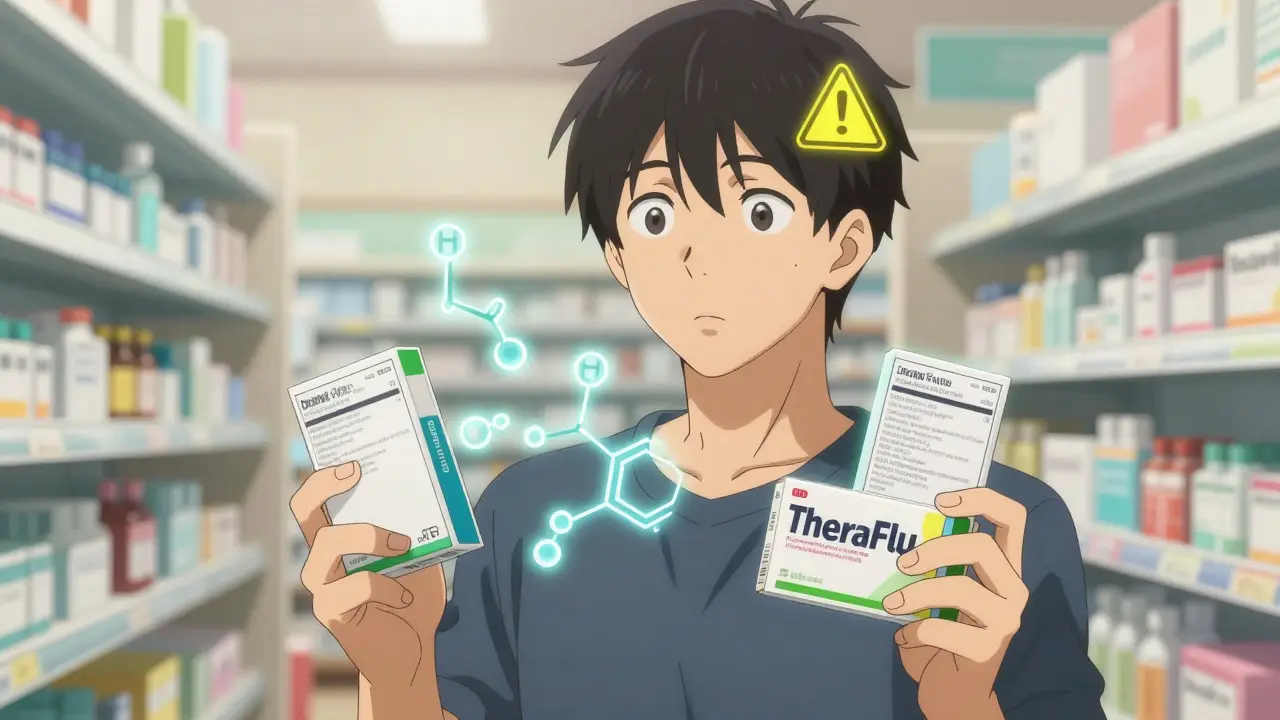
Walk into any pharmacy and you’ll see dozens of boxes lined up on the shelf: Tylenol, Advil, Benadryl, TheraFlu, Zyrtec. Each one promises relief - for headaches, colds, allergies, or stomach upset. But here’s the thing: active ingredients are what actually do the work. Not the brand name. Not the color of the bottle. Not the slogan on the box. Just the chemical inside.
Most people don’t realize that Tylenol, Excedrin, and even some store-brand cold medicines all contain the same active ingredient: acetaminophen. And if you take two of them without checking, you could accidentally overdose. That’s not a myth - it’s a common mistake. In fact, nearly 70% of OTC medication errors happen because people don’t look at the active ingredient list.
The Drug Facts Label: Your Secret Decoder Ring
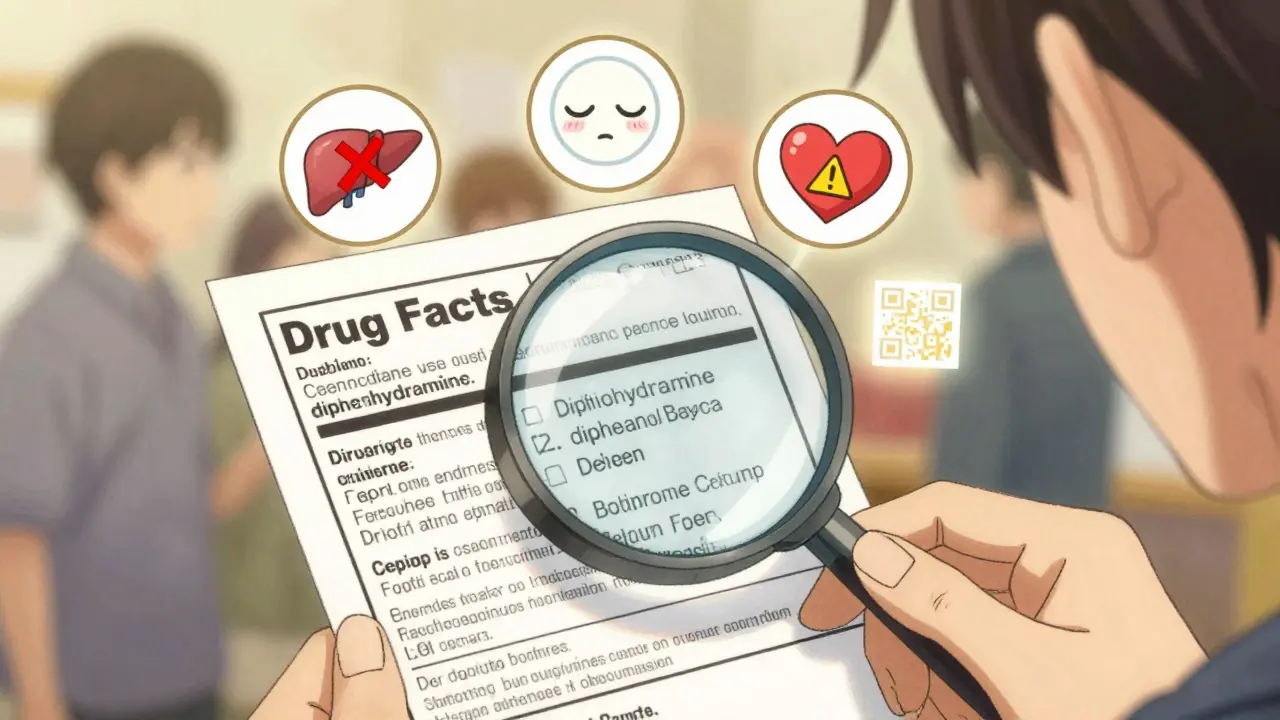
Since 1999, every OTC drug sold in the U.S. has been required to carry a standardized label called the Drug Facts label. It’s not optional. It’s the law. And it’s designed to cut through the marketing noise. The first section? Always Active Ingredients.
This isn’t just a list. It’s a precise measurement. Look for this format: “acetaminophen 325 mg per tablet” or “ibuprofen 200 mg per capsule”. The FDA requires exact numbers - not percentages, not vague terms like “strong formula.” That 325 mg? It’s the amount your body absorbs with each dose. Too much? You risk liver damage. Too little? You won’t feel relief.
The label also tells you:
- Purpose: What the ingredient does (e.g., “pain reliever,” “antihistamine”)
- Uses: What it treats (headache, runny nose, fever)
- Warnings: Who shouldn’t take it (pregnant women, people with liver disease, those on blood thinners)
- Directions: How much and how often
- Inactive Ingredients: Fillers, dyes, preservatives - yes, these matter too, especially if you’re allergic
Reading this label takes 45 seconds. But it could save you a trip to the ER.
The Top 5 Active Ingredients You’re Probably Using
You don’t need to memorize all 800+ active ingredients in OTC drugs. But these five show up in over 70% of products:
- Acetaminophen - The most common pain reliever in the U.S. Found in Tylenol, NyQuil, Excedrin, and dozens of cold and flu blends. Maximum daily dose: 4,000 mg for adults. One extra tablet on top of your cold medicine? That’s how liver damage starts.
- Ibuprofen - An NSAID that reduces inflammation. Found in Advil, Motrin, and generic versions. Maximum daily dose: 1,200 mg. Not safe for people with kidney issues or stomach ulcers.
- Diphenhydramine - The antihistamine in Benadryl and many nighttime cold medicines. Makes you sleepy. Don’t mix with alcohol. Kids’ versions are capped at 25 mg per dose - adult ones go up to 50 mg.
- Pseudoephedrine - A decongestant in Sudafed and multi-symptom cold remedies. Keeps you awake. Banned behind pharmacy counters in some states because it’s used to make meth.
- Loperamide - The active ingredient in Imodium. Stops diarrhea. Sounds harmless? It’s an opioid. People have died from taking way too much of it, thinking it was “just a stool softener.”
Why Brand Names Are Traps
Here’s the dirty secret: Brand names don’t tell you what’s inside. A product labeled “ColdCure” might have the same active ingredients as “Store Brand Cold Relief.”
A 2023 Consumer Reports survey found that only 28% of people knew that Aleve contains naproxen sodium. Meanwhile, 72% correctly identified Tylenol as acetaminophen. Why? Because Tylenol is everywhere - and its name has become a synonym for pain relief. But that’s dangerous. If you think “all cold medicines are the same,” you’re setting yourself up for an overdose.
Take this real example: A man took one Tylenol in the morning. Later, he grabbed a bottle of TheraFlu Nighttime for his cough. He didn’t check the label. Each dose of TheraFlu had 650 mg of acetaminophen. He took two doses. Total acetaminophen that day: 1,950 mg. He was fine - until his liver enzymes spiked three days later. He ended up in the hospital.
That’s not rare. It’s routine.
How to Avoid Accidental Overdose
Here’s a simple system - use it every time you buy or take an OTC medicine:
- Stop. Look. Read. Before you buy, hold the box up to the light. Find the Drug Facts label. Read the Active Ingredients section. Write it down if you have to.
- Check what you’re already taking. Are you on a prescription? A vitamin? A supplement? Some herbal products contain hidden acetaminophen or ibuprofen. Ask your pharmacist.
- Don’t stack. Never take two OTC meds with the same active ingredient. No exceptions. Not even if one says “non-drowsy.”
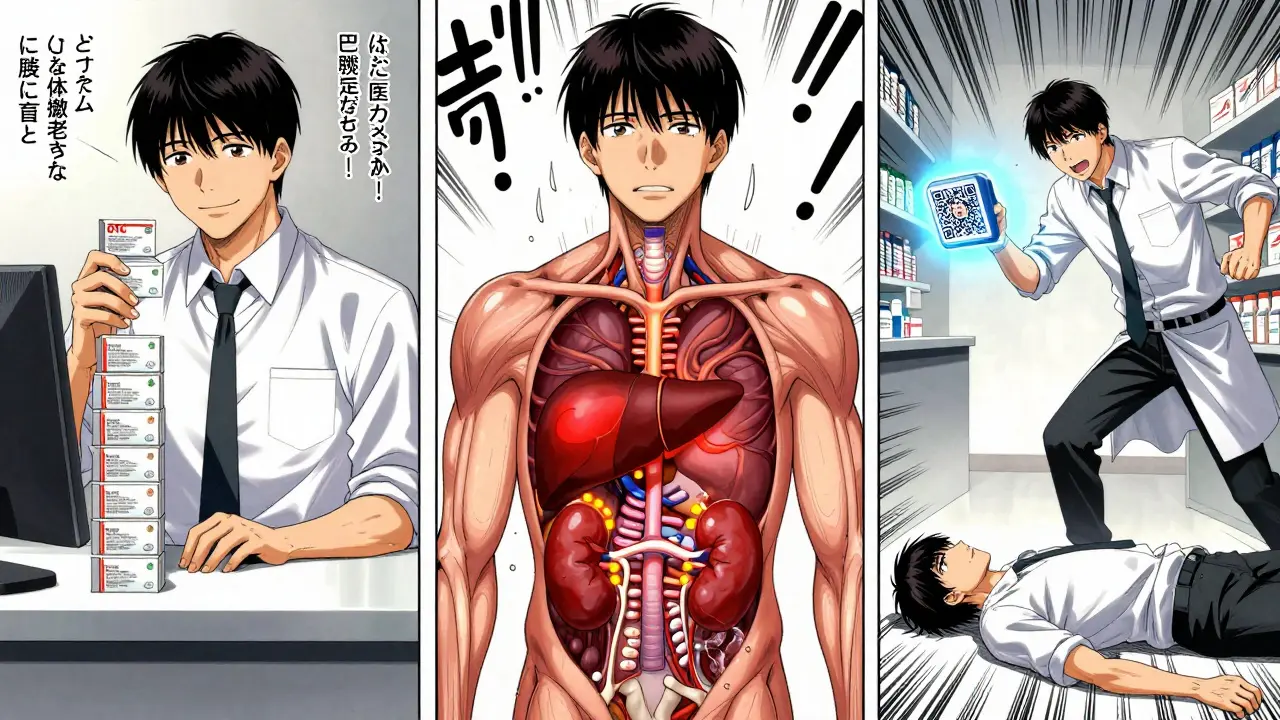
- Know your limits. Acetaminophen: max 4,000 mg/day. Ibuprofen: max 1,200 mg/day. Diphenhydramine: max 300 mg/day. Exceed these, and you’re playing Russian roulette with your organs.
- Use the QR code. Starting in 2026, all OTC drugs will have scannable QR codes on the label. Scan it with your phone. It’ll show you a full breakdown - including inactive ingredients and allergens. It’s coming. Start using it now if your product already has it.
What You Shouldn’t Ignore: Inactive Ingredients
These aren’t just fillers. They’re chemicals too. And they can cause reactions.
Red dye #40? Can trigger hives in sensitive kids. Lactose? A problem for people with severe dairy allergies. High fructose corn syrup? Not ideal for diabetics. Sodium? A concern for those with high blood pressure.
One parent on a parenting forum shared how their toddler broke out in hives after taking Children’s Motrin. They thought it was an allergy to ibuprofen. It wasn’t. It was the red dye. They switched to a dye-free version - and the rashes disappeared.
Always read the Inactive Ingredients list. Especially if you have allergies, asthma, or sensitivities.
What’s Changing in 2026
The FDA isn’t standing still. Thanks to the CARES Act of 2020, OTC drug rules are being rewritten. By the end of 2023, every monograph (the official rulebook for each drug category) had to be finalized. That means:
- Some products may be reformulated or pulled from shelves.
- Acetaminophen tablets are now capped at 650 mg per tablet in prescription combos - OTC is still at 500 mg, but that could change.
- QR codes on labels are mandatory by 2026. This isn’t optional. It’s coming to every box you buy.
- New warnings are being added. Loperamide labels now must include a bold warning about opioid abuse.
These changes aren’t bureaucracy. They’re responses to real harm. Over 160 deaths since 2012 from loperamide abuse. 100,000 ER visits every year from accidental acetaminophen overdose. This is about saving lives.
Final Tip: When in Doubt, Ask
Pharmacists don’t just fill prescriptions. They’re trained to help you navigate OTC meds. If you’re unsure whether two products conflict, ask. If you’re giving medicine to a child or elderly parent, ask. If you’re on more than three medications, ask.
There’s no shame in asking. The real shame is assuming you know what’s in that bottle - and finding out too late.
How do I know if two OTC medicines have the same active ingredient?
Always compare the Drug Facts label’s Active Ingredients section. Even if the brand names are different - like Tylenol vs. CVS Health Pain Relief - check the name and amount. Acetaminophen 500 mg in one equals acetaminophen 500 mg in the other. Many pharmacies offer free printouts of common active ingredients and their brand equivalents. You can also download the FDA’s free Active Ingredient Reference Chart.
Can I take OTC medicine with my prescription drugs?
Not always. OTC pain relievers like ibuprofen can increase bleeding risk if you’re on blood thinners. Antihistamines can make sedatives stronger. Acetaminophen can damage your liver if you’re on certain antibiotics or alcohol. Always check with your pharmacist before combining OTC and prescription meds. They’ll cross-reference your full list.
Why do some OTC drugs have lower doses than prescription versions?
Safety. Prescription drugs are monitored by doctors. OTC drugs are meant for self-use. The FDA limits OTC doses to reduce the chance of overdose. For example, prescription ibuprofen can be 800 mg per tablet. OTC is capped at 200 mg. That way, you’d have to take six pills to reach a prescription dose - making accidental overdose much harder.
Are store-brand OTC drugs as good as name brands?
Yes - if the active ingredients and dosages match. Store brands are required to contain the same active ingredient at the same strength as name brands. The only differences are in inactive ingredients (like dyes or flavorings) and packaging. You’re paying for branding, not better medicine.
What should I do if I think I’ve taken too much of an OTC drug?
Call Poison Control immediately at 1-800-222-1222 (U.S.) or your local emergency number. Don’t wait for symptoms. Acetaminophen overdose, for example, can show no signs for 24 hours - but liver damage starts right away. Keep the medicine bottle handy - the poison control specialist will need to know the exact active ingredient and amount taken.
Comments (15)
-
Tobias Mösl March 3, 2026
Let me tell you something they don't want you to know - the FDA doesn't regulate OTC drugs like they do prescriptions. They're basically running a free-for-all. You think Tylenol's safe? Try combining it with NyQuil, DayQuil, Excedrin, and that 'natural' cold remedy from the vitamin aisle. Boom. Liver failure in 72 hours. I've seen it. People die because they think 'natural' means 'safe.' It's not a myth - it's a corporate loophole wrapped in pastel packaging.
And don't even get me started on loperamide. People are popping 20, 30 pills a day like they're M&Ms. It's an opioid. It binds to the same receptors as oxycodone. And now? They're adding a warning? Took 160 dead bodies for that? Pathetic.
QR codes? Cute. But what about the 70-year-old who can't afford a smartphone? Or the single mom working two jobs who doesn't have 45 seconds to read a label? This isn't safety - it's performative regulation. The real solution? Ban combination cold meds. Period. Let people buy single-ingredient pills. But that would cut Big Pharma's profits. So we get QR codes instead.

-
tatiana verdesoto March 3, 2026
Thank you for this. Seriously. I used to just grab whatever looked like it’d help, until my kid had a reaction to red dye #40 in Children’s Motrin. We thought it was an allergy to ibuprofen. Turns out? It was the color. Now I read every label like a detective. I keep a little notebook - active ingredient, dosage, time taken. It’s weirdly calming. You’d be surprised how many people don’t even know what’s in their medicine. I show my mom how to read the Drug Facts label every time she visits. She calls me her ‘Pharmacy Whisperer.’ 😊

-
Ethan Zeeb March 4, 2026
Stop pretending this is about safety. This is about liability. The FDA doesn’t care if you overdose. They care if you sue them. That’s why the labels are so detailed - so you can’t blame them. They know people won’t read it. They know you’ll stack meds. They know you’ll ignore warnings. And when you end up in the ER? They’ve got the paperwork to say, ‘We told you so.’
The real danger isn’t the drug. It’s the illusion of control. You think you’re being careful because you read the label? You’re just playing along with the system. The system wants you to feel safe so you keep buying.

-
Darren Torpey March 5, 2026
Bro. This post is like a superhero origin story for your inner health ninja. 🦸♂️💊 You walk into the pharmacy like a confused traveler - and BAM - you crack open the Drug Facts label like a sacred scroll. Suddenly, you’re not just buying medicine. You’re decoding the matrix. Tylenol? Acetaminophen. Advil? Ibuprofen. TheraFlu? A sneaky acetaminophen trap. You’re not a shopper anymore. You’re a pharmaceutical Sherlock Holmes.
And that QR code? That’s the future. Scan it. Let your phone whisper the truth into your ear. No more guessing. No more ‘I thought it was different.’ You’re not just reading a label - you’re hacking the system. Welcome to Level 2 of adulting.

-
Lebogang kekana March 6, 2026
Listen. I come from Johannesburg where we don’t have the luxury of 15 different cold medicines on the shelf. We have one. And it’s got one active ingredient. No labels. No QR codes. Just a bottle with a name and a number. We learn fast - you don’t mix. You don’t stack. You don’t assume. You ask. You listen. You respect the dose.
Here in the U.S., you’ve got more options than sense. You’re drowning in choices. And it’s killing you. Not the medicine - the confusion. The marketing. The ‘new and improved’ nonsense. Simplicity saves lives. Maybe we should export our ‘one pill, one purpose’ mindset instead of your 800 active ingredients.

-
Jessica Chaloux March 7, 2026
OMG I just realized I’ve been taking NyQuil AND DayQuil on the same day 😭 I thought they were different because one was for night and one was for day… I’m so stupid… I’m gonna go check my medicine cabinet right now… 😫 I feel sick just thinking about it…

-
Mariah Carle March 8, 2026
There’s a metaphysical truth here: the active ingredient is the soul of the medicine. The brand is the mask. The label is the mirror. When you look at acetaminophen 500mg, you’re not seeing a chemical - you’re seeing the distilled essence of human suffering. The body asks for relief. The market answers with packaging. But the truth? It’s always in the fine print. The real question isn’t ‘What’s in this pill?’ - it’s ‘Who are you trusting?’
And if you’re trusting the color of the bottle… well… you’re already on the path to dissolution. 🌌

-
Justin Rodriguez March 10, 2026
One thing people miss: the inactive ingredients matter just as much as the active ones. I have a patient with severe lactose intolerance who broke out in hives every time she took a certain generic ibuprofen. Turned out - the filler was lactose. No one thought to check. She switched to a dye-free, lactose-free version - and she’s been fine for two years. Always check the inactive list. Especially if you have allergies. Ask your pharmacist. They’re trained for this. Don’t be shy.

-
Raman Kapri March 11, 2026
This article is a classic example of Western overregulation masquerading as public health. You have over 800 active ingredients? That’s not knowledge - that’s chaos. In India, we use one or two standard formulations. We don’t need QR codes. We don’t need 12 versions of acetaminophen. We use what works. And we teach people to read the dosage - not the marketing. Your ‘safety’ system is built on fear. Ours is built on simplicity. You’ve confused complexity with competence.

-
Siri Elena March 12, 2026
Oh honey, you really think the FDA cares if you overdose? Darling, they’re just waiting for you to die so they can update their monograph with a new warning. ‘New Warning: Do Not Combine With Other Products Containing Acetaminophen.’ Wow. Groundbreaking. They knew this since 1999. They just didn’t want to inconvenience the $12 billion OTC market. You’re not being protected. You’re being monetized. And your ‘QR code’? That’s just a Band-Aid on a hemorrhage.

-
Divya Mallick March 14, 2026
Let me tell you something - this is why India has better public health outcomes than America. We don’t have 17 brands of cold medicine. We have 2. And we know what’s in them. We don’t need a PhD to read a label. We don’t need a smartphone. We don’t need a ‘system.’ We just need common sense. You Americans are drowning in choices because you’ve outsourced your intelligence to marketing departments. Your ‘Drug Facts’ label? It’s a psychological trap. You think you’re being informed - but you’re just being manipulated. We don’t need your QR codes. We need your humility.

-
Pankaj Gupta March 15, 2026
I appreciate the thorough breakdown. The emphasis on active ingredients is critical. Many consumers confuse brand names with efficacy, which leads to dangerous polypharmacy. The FDA’s Drug Facts label is indeed one of the most effective public health tools in modern medicine. The key is education - not just regulation. Teaching people to identify active ingredients from an early age - perhaps in high school health classes - would reduce errors significantly. The QR code initiative is a step forward, but literacy must precede technology.

-
Alex Brad March 17, 2026Read the label. Always. No exceptions.

-
Renee Jackson March 18, 2026
As a registered nurse and certified medication safety educator, I cannot stress enough the importance of this information. Medication errors are the 4th leading cause of preventable death in the U.S. The majority occur with over-the-counter products because they are perceived as harmless. I conduct weekly workshops at community centers on how to decode the Drug Facts label. The results? A 78% reduction in accidental overdoses among participants. Knowledge is not just power - it is protection. Please, share this. Save a life.

-
RacRac Rachel March 18, 2026
YESSSS this is so important!! 💯 I used to think store brands were ‘weaker’ but then I learned they’re literally the same pills in a different box 😱 Now I only buy generic - saves me $40/month AND I’m not risking my liver. Also, I screenshot the Drug Facts label on my phone for every med I take - it’s my little health cheat sheet 📱✨ I even showed my grandma and now she reads every label too - she says it makes her feel like a superhero 🦸♀️💖
