
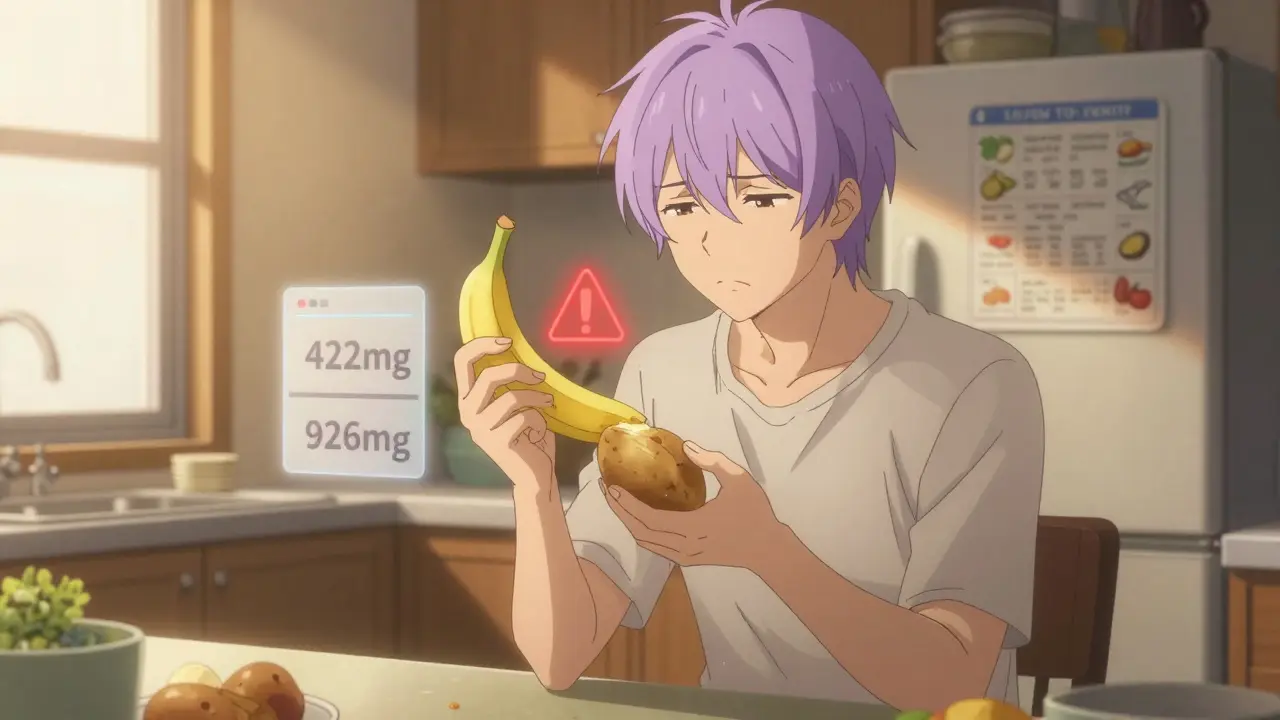
Potassium Intake Tracker for ACE Inhibitors
Daily Potassium Tracking
This tool helps you monitor your potassium intake while taking ACE inhibitors. Remember: for those with kidney disease or reduced kidney function, the recommended limit is typically under 2,000 mg per day.
Added Foods
Potassium Summary
When you’re taking an ACE inhibitor for high blood pressure, heart failure, or kidney disease, you’re doing something good for your heart. But there’s a quiet risk hiding in plain sight-your food. Many of the healthiest foods you eat-bananas, potatoes, spinach, avocados-can push your potassium levels too high when combined with these medications. That’s not a myth. It’s a real, documented danger called hyperkalemia, and it can be deadly if ignored.
Why ACE Inhibitors Raise Potassium Levels
ACE inhibitors like lisinopril, enalapril, and ramipril work by blocking a hormone system in your body called RAAS. This system normally helps your kidneys get rid of extra salt and water, which lowers blood pressure. But it also tells your kidneys to flush out potassium. When ACE inhibitors shut down part of this system, your body holds onto more potassium than it should.Here’s the simple version: your kidneys are responsible for 90% of potassium removal. If they can’t do their job because of the medication, potassium builds up. A normal blood potassium level is between 3.5 and 5.0 mmol/L. Once it climbs above 5.5 mmol/L, you’re in danger zone. At 6.0 or higher, your heart rhythm can go haywire-sometimes leading to cardiac arrest.
This isn’t rare. Studies show between 10% and 24% of people on ACE inhibitors develop high potassium. The risk jumps to over 30% if you already have kidney disease, diabetes, or are over 75. And if you’re also taking other meds like spironolactone or trimethoprim, your risk doubles or triples.
Who’s at Highest Risk?
Not everyone on ACE inhibitors needs to panic. But some people need to be extra careful:- People with chronic kidney disease (eGFR below 60)
- Diabetics, especially those with protein in their urine
- Older adults over 75
- Heart failure patients with advanced symptoms
- Anyone taking potassium-sparing diuretics, NSAIDs, or certain antibiotics
Diabetic patients on ACE inhibitors have a 47% higher chance of developing hyperkalemia than non-diabetics. That’s not a small number. And it’s not because they eat more bananas-it’s because diabetes damages the kidneys over time, making them less able to handle the extra potassium load from the medication.
Foods That Can Trigger Hyperkalemia
You don’t have to give up healthy eating. But you do need to know which foods pack a potassium punch. Here are the top offenders:- One medium banana: 422 mg
- One baked potato with skin: 926 mg
- One cup cooked spinach: 839 mg
- One avocado (cup sliced): 708 mg
- One medium orange: 237 mg
- One cup tomato sauce: 800 mg
- One cup cooked lentils: 731 mg
- 16 oz coconut water: 1,150 mg
- One sweet potato: 542 mg
- Many protein powders and sports drinks: hidden potassium additives
That’s not a list of junk food. These are all foods people think are healthy. And that’s the problem. Many patients don’t realize that a smoothie with banana, spinach, and almond milk could contain over 1,500 mg of potassium in one serving.
The National Kidney Foundation recommends limiting potassium to under 2,000 mg per day if your kidney function is low (eGFR below 45). That’s not a lot when you consider one potato alone is nearly half your daily limit.
What You Can Still Eat
Good news: you don’t have to eat bland food. Many low-potassium options are just as tasty:- Apples, berries, grapes, pineapple
- Cabbage, cauliflower, green beans, lettuce
- Rice, pasta, white bread
- Chicken, turkey, fish (in moderation)
- Egg whites
- White rice instead of brown
- Drinking tea or coffee instead of coconut water
Even some fruits and veggies can be made safer. Boiling potatoes, carrots, or beets and then rinsing them in water can cut potassium by 50% or more. That’s a simple trick most people don’t know.
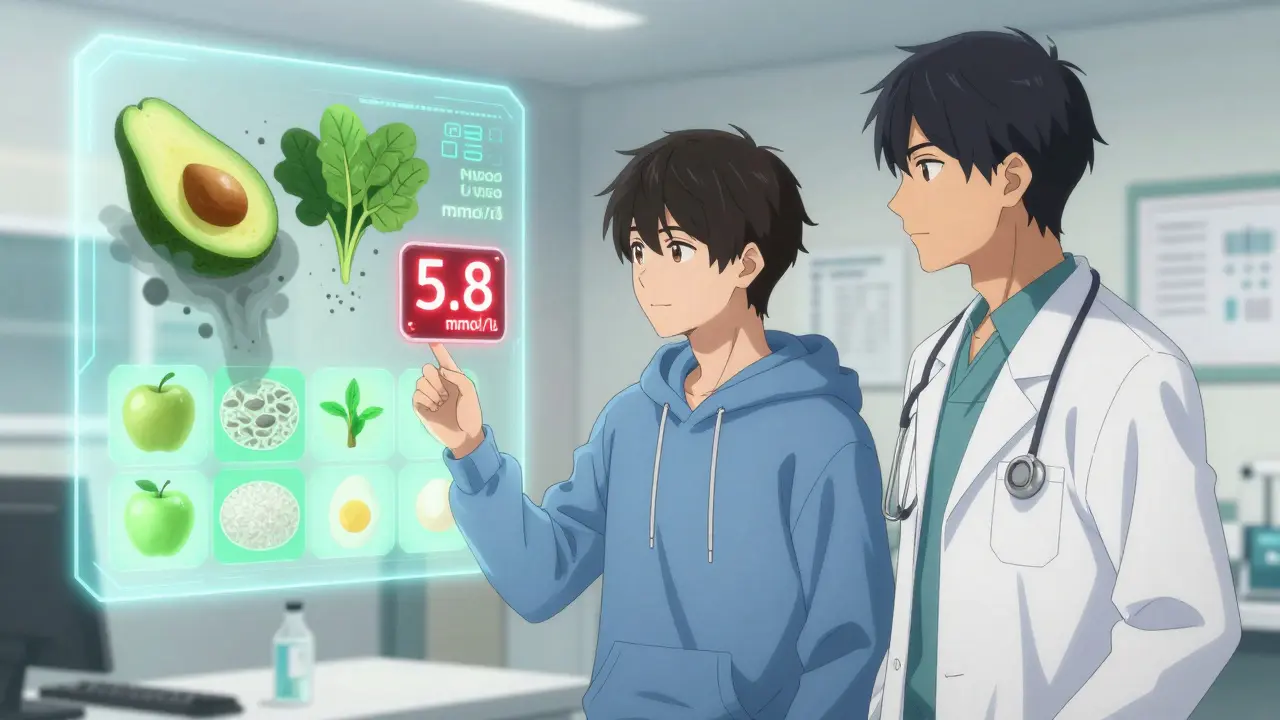
Monitoring and Testing Are Non-Negotiable
If you’re on an ACE inhibitor, you need blood tests. Not just once. Regularly.Guidelines say:
- Test potassium and creatinine before starting the medication
- Test again 7 to 14 days after starting or changing the dose
- Test every 4 months after that
- Test immediately if you feel dizzy, weak, or have an irregular heartbeat
A rise in creatinine by up to 30% is expected and okay if potassium stays normal. But if potassium climbs above 5.5 mmol/L, your doctor may lower your dose, switch meds, or add a potassium binder.
Don’t skip these tests. A lot of people do-and then end up in the ER with a heart rhythm problem they didn’t see coming.
New Tools to Help You Manage
It’s hard to track potassium. You can’t just guess. That’s why tools exist:- Renal Diet Helper (app): Scans food labels and tells you potassium content
- Laminated food charts: Keep one on your fridge. Many hospitals give these out for free
- Registered renal dietitian: One session can change your entire approach. Studies show patients who see one have 42% better adherence to low-potassium diets
One Reddit user shared how they spiked their potassium after drinking 16 oz of coconut water-thinking it was just “natural hydration.” It wasn’t. It was 1,150 mg of potassium. That’s more than three bananas. They ended up with a temporary heart block. Now they use the app.
When Medication Changes Are Needed
Sometimes, diet and monitoring aren’t enough. That’s when newer drugs help.Patiromer (Veltassa) and sodium zirconium cyclosilicate (Lokelma) are potassium binders. They work in your gut to trap potassium and flush it out in your stool. Clinical trials show they reduce the need to stop ACE inhibitors by 41%. That’s huge. It means you can keep your heart-protecting drug without risking your life.
Doctors are starting to use these more often-especially for patients with heart failure and kidney disease who can’t afford to stop their ACE inhibitor.

What Not to Do
Here are common mistakes patients make:- Stopping the ACE inhibitor because they’re scared of potassium
- Assuming “natural” means safe-coconut water, salt substitutes, herbal teas
- Not telling their doctor about over-the-counter meds like NSAIDs (ibuprofen, naproxen)
- Skipping blood tests because “I feel fine”
- Using salt substitutes that contain potassium chloride
Stopping your ACE inhibitor without medical advice can be worse than high potassium. These drugs reduce heart attacks, strokes, and kidney failure. You don’t want to lose those benefits.
The Bottom Line
You can safely take ACE inhibitors. But you need to be smart about it. This isn’t about fear. It’s about awareness.Start by asking your doctor: “What’s my current potassium level? What’s my kidney function? Do I need to change my diet?” Then get a food chart. Download an app. Talk to a dietitian. Test regularly.
High potassium doesn’t come out of nowhere. It builds slowly. And it’s preventable. Most patients who stick to their plan never have a problem.
The goal isn’t to eat less healthy. It’s to eat smarter. Your heart will thank you.
Can I eat bananas while taking ACE inhibitors?
You can eat bananas, but only in very small amounts if you have kidney disease or your potassium is already high. One medium banana has 422 mg of potassium. If your daily limit is 2,000 mg, that’s over 20% of your allowance. If you’re eating other high-potassium foods like potatoes, spinach, or tomato sauce, even one banana can push you over the edge. For most people on ACE inhibitors with reduced kidney function, it’s safer to skip bananas or have half one once a week.
Is coconut water safe with ACE inhibitors?
No, coconut water is not safe for most people on ACE inhibitors, especially if they have kidney disease. One 16-ounce bottle contains about 1,150 mg of potassium-more than two bananas and nearly half the daily limit for high-risk patients. Many people think it’s a healthy sports drink, but it’s essentially a potassium shot. There have been documented cases of heart rhythm problems from drinking coconut water while on ACE inhibitors. Stick to water, tea, or low-potassium sports drinks instead.
Do I need to stop ACE inhibitors if my potassium is high?
Not necessarily. Doctors rarely stop ACE inhibitors outright unless potassium is dangerously high (above 6.0 mmol/L) or you’re having heart rhythm issues. Instead, they’ll adjust your dose, prescribe a potassium binder like Lokelma, or recommend dietary changes. Stopping the medication can increase your risk of heart attack, stroke, or kidney damage. The goal is to keep you on the drug safely, not off it.
Can I use salt substitutes on ACE inhibitors?
No, avoid salt substitutes like NoSalt, Nu-Salt, or Lite Salt. These products replace sodium chloride with potassium chloride. Just one teaspoon can contain over 1,000 mg of potassium. That’s more than half your daily limit if you have kidney disease. Even if you’re trying to cut sodium, these substitutes are dangerous with ACE inhibitors. Use herbs, lemon juice, or vinegar instead.
How often should I get my potassium checked?
You should get a blood test for potassium and creatinine before starting an ACE inhibitor. Then again 7 to 14 days after starting or changing the dose. After that, every 4 months is standard. If you have diabetes, kidney disease, or are over 75, your doctor may want tests every 2 to 3 months. Don’t wait for symptoms. High potassium often has none until it’s too late.
Can I still eat potatoes if I’m on ACE inhibitors?
Yes, but not raw or baked with the skin. A baked potato with skin has over 900 mg of potassium. To reduce it, peel the potato, cut it into small pieces, and boil it in plenty of water for at least 10 minutes. Then drain and rinse it. This process can cut potassium by 50% or more. Stick to smaller portions-half a potato instead of a whole one-and avoid pairing it with tomato sauce or spinach.
Are protein powders safe with ACE inhibitors?
Many protein powders, especially those marketed for athletes or muscle gain, contain added potassium. Some have over 500 mg per scoop. Always check the label. If potassium is listed, avoid it. Look for brands labeled “renal-friendly” or ask your dietitian for recommendations. Whole food sources like egg whites, chicken, or fish are safer and more predictable.
What Comes Next?
If you’re on an ACE inhibitor, your next step is simple: check your last potassium result. If you don’t know it, call your doctor’s office. Ask for a copy of your recent blood work. Then ask: “Do I need to change my diet?” If yes, request a referral to a renal dietitian. If you’re not sure what’s high in potassium, download a free app like Renal Diet Helper. Start tracking for a week.Hyperkalemia doesn’t happen overnight. It’s a slow creep. But with the right checks, it’s completely avoidable. You don’t have to choose between heart health and potassium safety. You can have both.
Comments (9)
-
Gregory Parschauer January 14, 2026
Let me just say this: if you’re taking ACE inhibitors and still chowing down on avocado toast with a banana on the side, you’re not just irresponsible-you’re playing Russian roulette with your heart. I’ve seen patients code blue because they thought ‘natural’ meant ‘safe.’ Coconut water? Please. That’s potassium in a fancy bottle. You want to live? Stop treating your diet like a TikTok trend.

-
Vinaypriy Wane January 14, 2026
Thank you for this. I’ve been on lisinopril for 5 years, and my nephrologist just told me my K+ was 5.8 last month. I had no symptoms. None. I thought I was fine. Now I’ve swapped bananas for apples, boiled my potatoes, and ditched the salt substitute. I didn’t realize how much I was risking. I’m so grateful for this post. Please keep sharing.

-
Diana Campos Ortiz January 16, 2026
omg i just realized i’ve been drinking coconut water every morning after my workout… like, for years. i thought it was ‘healthy hydration.’ i’m gonna go check my last labs right now. also, boiling potatoes?? why didn’t anyone tell me this?? i’m saving this post.

-
Jesse Ibarra January 17, 2026
Of course the internet is full of people who think ‘diet’ means ‘deprivation.’ You don’t need to become a bland, beige, hospital-food zombie. You need to be *informed.* The real villain here isn’t spinach-it’s lazy doctors who don’t educate patients. If you’re prescribing an ACE inhibitor and not giving them a potassium chart on day one, you’re failing. Period.

-
laura Drever January 18, 2026
so bananas bad. potatoes bad. coconut water bad. what’s left? rice? water? i’m just gonna die. lol

-
Randall Little January 20, 2026
Interesting how the ‘natural’ label gets weaponized by wellness cults. Coconut water isn’t a health drink-it’s a potassium bomb disguised as a lifestyle product. Meanwhile, the FDA doesn’t regulate potassium content in beverages. So we’re left with people like me, Googling ‘is this gonna kill me?’ at 2 a.m. while sipping tea. Thanks, capitalism.

-
jefferson fernandes January 21, 2026
If you’re over 75, diabetic, or have kidney disease-you’re not just ‘at risk.’ You’re in the danger zone. But here’s the thing: you’re not alone. I’ve helped over 200 patients manage this. The key? Don’t panic. Don’t quit your meds. Just track. Use the Renal Diet Helper app. Print the food chart. Talk to a dietitian. It’s not hard. It’s just not sexy. And that’s why people ignore it.

-
Acacia Hendrix January 21, 2026
It’s fascinating how the RAAS axis modulates renal potassium excretion via aldosterone suppression-yet laypersons conflate this with ‘eating too many fruits.’ The real issue is the lack of pharmacokinetic literacy among the general population. Most patients don’t understand that drug-metabolite interactions are not binary; they’re dynamic, dose-dependent, and physiologically nuanced. You can’t manage hyperkalemia with memes.

-
James Castner January 22, 2026
Let’s not lose sight of the bigger picture: we’re talking about people who are already fighting heart failure, diabetes, and kidney disease-and now we’re asking them to become nutrition scientists on top of it. This isn’t just about potassium levels-it’s about systemic neglect. Why is it so hard to get a referral to a renal dietitian? Why do insurance companies deny these services? Why are we forcing patients to navigate this alone? The science is clear. The tools exist. But the system? It’s broken. And until we fix that, no amount of boiled potatoes or apps will save the people slipping through the cracks. We need policy. We need access. We need compassion. Not just warnings on a Reddit post.
