
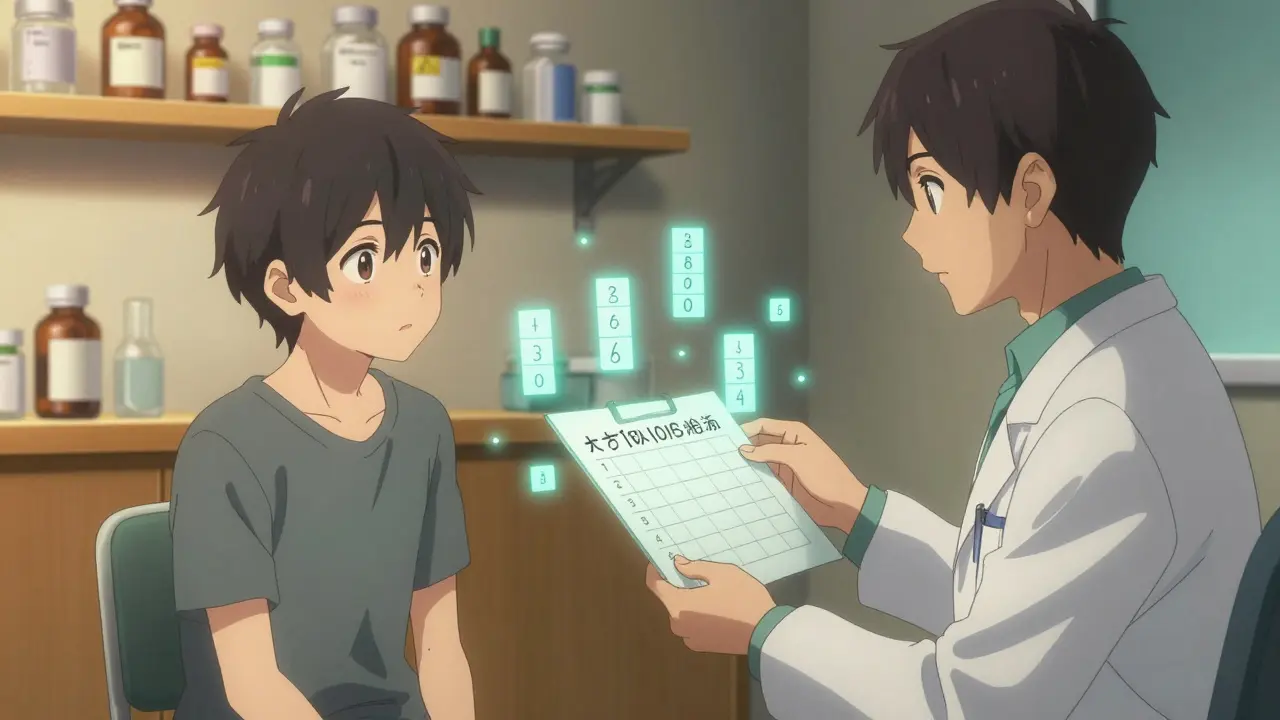
Stopping a medication isn’t as simple as saying, "I’m done." For many people, suddenly quitting a drug-whether it’s an antidepressant, opioid, or benzodiazepine-can lead to intense withdrawal symptoms, rebound effects, or even life-threatening complications. The key to doing this safely isn’t just about the dose you reduce, but how you talk about it with your provider.
Every year, tens of thousands of people end up in emergency rooms because they were told to stop a medication cold turkey. The CDC estimates that 17,000 deaths annually are linked to abrupt discontinuation of opioids alone. But it’s not just opioids. Antidepressants like paroxetine (Paxil) and benzodiazepines like alprazolam (Xanax) can cause seizures, severe anxiety, and insomnia if stopped too quickly. The good news? These risks drop dramatically when tapering is planned, discussed, and personalized.
Why Tapering Isn’t One-Size-Fits-All
Not all medications behave the same way when you stop taking them. Your body adapts differently depending on the drug’s half-life, how long you’ve been using it, and even your genetics. For example, fluoxetine (Prozac) has a half-life of up to seven days, meaning it lingers in your system longer. That’s why some people can stop it with minimal issues-even within a week. But paroxetine? It clears from your body in about 24 hours. Tapering it too fast can trigger dizziness, brain zaps, and nausea. The same goes for opioids: someone on a low dose for three months might safely cut back by 20% per week. But someone on high-dose opioids for five years? That could take months.
Guidelines back this up. The American Society of Addiction Medicine (ASAM) recommends 4 to 26 weeks for benzodiazepine tapers, depending on how long you’ve been taking them. For opioids, the Department of Veterans Affairs suggests 20-50% reductions weekly for short-term users, while Mayo Clinic advises a slower 10% drop every 5-7 days. Antidepressants? A 2021 review found that 71% of clinical guidelines recommend tapering, but 43% still say some can be stopped abruptly-if you know what you’re doing.
The Conversation That Saves Lives
Here’s the hard truth: most people don’t get the full story from their doctor. A 2023 analysis of patient reviews showed that 68% of negative tapering experiences stemmed from poor communication. Patients felt blindsided, scared, or even betrayed when symptoms hit and no one warned them.
Successful tapering starts with a conversation-not a prescription change. The ASAM Provider Pocket Guide outlines five steps every provider should follow:
- Assess readiness. Ask: "On a scale of 1 to 10, how ready are you to reduce this medication?" If the answer is below 6, don’t push. Build trust first.
- Explain why. Use their own health data. "Your pain has improved 60% over the last year, but your dose hasn’t changed. That’s why we’re considering a taper."
- Co-create the plan. Give them options. "We can reduce by 10% every two weeks, or 5% every week. Which feels more manageable?"
- Set up monitoring. Provide a symptom tracker. Ask them to log headaches, sleep, mood, or nausea daily. Text-based check-ins work better than waiting for an appointment.
- Schedule follow-ups. Weekly visits for the first month. No exceptions. This isn’t optional-it’s what separates success from relapse.
Dr. Wilson Compton from the National Institute on Drug Abuse says patient buy-in reduces taper failure by 63%. That’s not because patients are stubborn. It’s because they’re scared. And fear makes people stop talking.
What Patients Really Want to Know
When you ask people what they needed during tapering, the answers are consistent:
- "I needed to know how long withdrawal would last." (74% of antidepressant users in a Mind charity survey)
- "I needed a written schedule." (82% of positive reviews on Healthgrades)
- "I needed someone to adjust the pace when I felt worse." (85% satisfaction when flexibility was offered)
Most people don’t panic because of physical symptoms-they panic because they don’t understand what’s happening. A brain zap from an antidepressant taper feels like a neurological emergency. But if you’ve been told it’s temporary, common, and will fade in 3-5 days, it’s just an annoyance.
One patient on Reddit shared: "My doctor said, ‘Just stop.’ I thought I was dying. I went back to my old dose. I felt like a failure." That’s not failure. That’s bad communication.
Red Flags in Tapering Plans
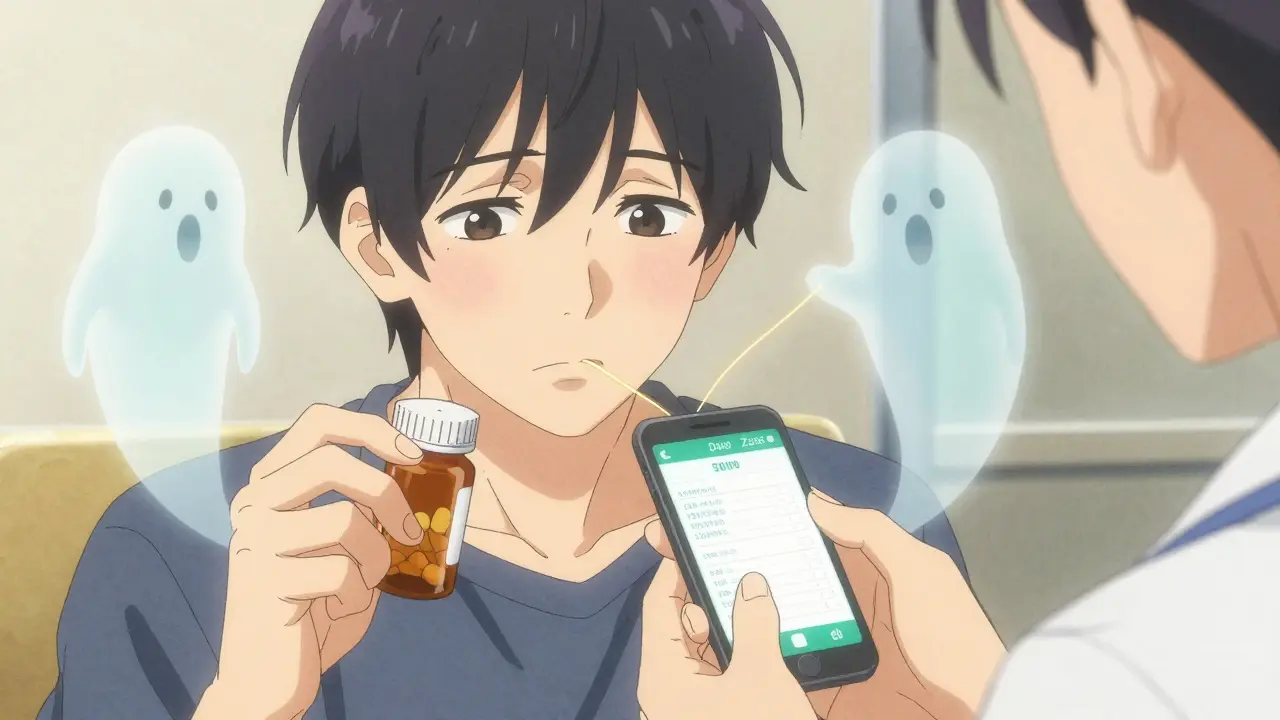
Not all tapering advice is safe. Watch out for these warning signs:
- "Just cut your dose in half tomorrow." That’s dangerous for most medications, especially benzodiazepines and SSRIs.
- "We’re doing this because insurance won’t cover it." Cost should never override safety.
- "All patients on this dose must taper by X date." Mandated tapers led to a 60% spike in suicide attempts in one University of Washington study.
- No written plan. If you don’t have a schedule in writing, you’re flying blind.
And don’t be fooled by "quick fix" solutions. Some clinics promise a 2-week opioid taper. That’s possible for a few-but for most? It’s a setup for relapse or overdose. The CDC and ASAM both warn against rapid tapers unless the patient is in acute danger.
Tools That Make Tapering Work
There are practical tools that help both providers and patients:
- Dose reduction charts. Visual guides showing weekly reductions make it easier to follow. Some pharmacies now offer pre-printed taper strips for antidepressants.
- Symptom trackers. Apps like MyTaper or simple paper logs help patients report changes in real time.
- 24/7 access. A direct line to a nurse or provider during tapering cuts anxiety in half. One study found that patients with phone access were 50% more likely to complete their taper.
- Pharmacogenomic testing. Emerging in 2024, this tests how your body metabolizes drugs. If you’re a slow metabolizer, your taper needs to be slower. Fifteen clinical trials are now testing this approach.
Mayo Clinic reports an 85% success rate when patients follow their 10% weekly taper protocol. That’s not magic-it’s consistency, communication, and control.
What’s Changing in 2026
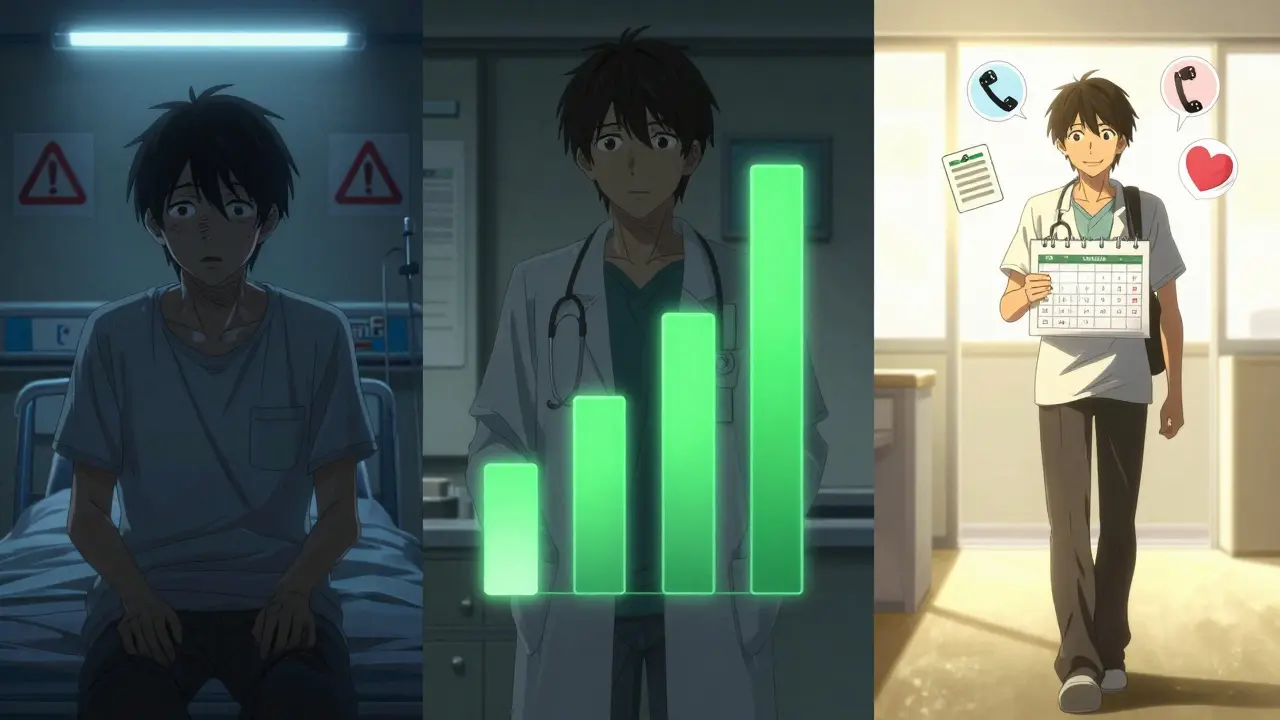
The rules are shifting. In 2023, Medicare began requiring individualized taper plans for high-dose opioid users. In 2024, ASAM launched a digital toolkit that uses AI to generate personalized taper schedules based on age, weight, duration of use, and medication history. The CDC is finalizing new guidelines (expected Q2 2024) that show patient-controlled tapers-where you adjust the pace within safe limits-reduce withdrawal severity by 31% compared to rigid schedules.
By 2027, experts predict that tapering will be standard for all medications with dependence risk-not just opioids and benzos. That means doctors will need to be trained in motivational interviewing, withdrawal symptom recognition, and shared decision-making. Right now, only 41% of clinics consistently involve patients in planning. That number has to rise.
What You Can Do Today
If you’re thinking about stopping a medication, don’t wait for your doctor to bring it up. Ask these questions:
- "Is this medication one that requires a taper?"
- "What will withdrawal feel like, and how long might it last?"
- "Can we write out a step-by-step plan together?"
- "Who can I text if I feel worse between appointments?"
- "Is there a symptom tracker I can use?"
Bring a notebook. Record the answers. If your provider refuses to give you a written plan or dismisses your concerns, it’s time to find someone who will listen. Your safety isn’t negotiable.
Stopping a medication should never feel like a gamble. It should feel like a plan you helped build-one that respects your body, your history, and your goals.
Comments (10)
-
Michelle Jackson March 16, 2026I can't believe how many doctors just hand out prescriptions like candy and then act shocked when people can't stop. No plan, no warning, just 'stop it.' That's not healthcare, that's negligence. People get labeled as addicts or crazy when it's the system that failed them. This post nails it - communication isn't optional, it's the difference between life and a breakdown.

-
Suchi G. March 17, 2026I’ve been tapering off sertraline for 11 months now and honestly? The hardest part wasn’t the brain zaps or the insomnia - it was the silence from my doctor. I asked for a written schedule, they sent me a PDF from 2018. I started logging symptoms daily, sent them screenshots every Monday. Still no reply. Then one day, I got a text: 'You’re doing great.' No context. No adjustment. Just vibes. I cried. Not because I was failing - because no one cared enough to see me.

-
Paul Ratliff March 17, 2026My doc said 'just cut it in half' for my benzo. I thought I was having a stroke. Turns out I was just going through withdrawal. Now I use MyTaper app. Best thing I ever did. 10% every week. Done. No drama.

-
SNEHA GUPTA March 18, 2026There’s a deeper philosophical layer here that rarely gets discussed - when we treat medication as a binary: on or off - we reduce human biology to a switch. But the body is not a machine. It adapts, remembers, holds memory in its cells. A taper isn’t just pharmacological - it’s an act of relearning your nervous system. The real victory isn’t stopping the drug - it’s reclaiming autonomy over your own physiology. That’s why the 5-step conversation matters: it restores dignity.

-
Gaurav Kumar March 20, 2026I’m from India and let me tell you - here, doctors don’t even know what tapering means. They say 'stop' and you’re lucky if they say 'maybe' after you beg. And don’t even get me started on the pharma companies pushing quick fixes. We need regulation. Real regulation. Not just guidelines. I’m sick of seeing people die because of lazy medicine. 💀

-
David Robinson March 22, 2026I work in a clinic. We had a mandatory taper policy last year. 60% of patients relapsed. 3 ended up in psych. One tried to jump off a bridge. We stopped the policy. Now we do individual plans. Guess what? Compliance went up. Deaths went down. It’s not hard. It’s just inconvenient. And convenience is what kills people.

-
Jeremy Van Veelen March 23, 2026I’ve read every guideline. Every study. Every paper. And let me say this - the most dangerous thing in medicine isn’t the drug. It’s the arrogance of the provider who thinks they know better than the person living in the body. You don’t get to decide when someone’s ready. You don’t get to decide their pace. You get to facilitate. That’s it. The rest? That’s their journey. Stop playing god.

-
Laura Gabel March 25, 2026My doctor said stop Paxil cold turkey I did it now I have brain zaps every time I sneeze

-
jerome Reverdy March 26, 2026There’s a lot of jargon in this post but here’s the TL;DR: if your provider doesn’t talk to you like a human, walk out. Tapering isn’t about chemistry - it’s about trust. The tools? Charts, trackers, texts - they’re just scaffolding. What matters is someone saying: 'I see you. I’m here. We’ll go slow.' That’s the magic. And yeah, pharmacogenomics? That’s the future. But empathy? That’s the foundation.

-
Andrew Mamone March 27, 2026I’m a nurse and I’ve seen this play out 100 times. Patients panic because they’re not told what to expect. One guy thought brain zaps meant a tumor. He Googled. Panicked. Ended up in ER. We gave him a 1-pager: 'Here’s what’s normal. Here’s what’s not. Call us.' He finished his taper. No drama. 😊 The solution isn’t rocket science. It’s clarity. And care.
