

Forget where you are in your medication schedule? You're not alone. For many, managing a handful of different pills every day feels like a part-time job. Pill organizers is a system of compartmentalized containers designed to organize daily doses of medication by day and time to improve adherence. Whether it's a simple plastic tray from the pharmacy or a high-tech electronic dispenser, these tools can be lifesavers-or potential risks-depending on how you use them.
The goal is simple: stop guessing if you took your blood pressure pill this morning. Research shows that using these boxes correctly can boost medication adherence by about 26.4%. But here is the catch: not every pill is happy in a plastic box. Some medications break down when exposed to air or humidity, and a simple mistake during the "weekly fill" can lead to dangerous dosing errors. If you're using a pill organizers to manage your health, you need to know which drugs stay in the bottle and how to keep your organizer sanitary.
Key Safety Takeaways
- Check for moisture-sensitive drugs: Some medications (like Pradaxa) lose potency rapidly if removed from original blister packs.
- Sanitize regularly: Plastic boxes can harbor bacteria like Staphylococcus aureus if not cleaned weekly.
- Secure the lids: Ensure compartments lock tightly to prevent pills from spilling during travel.
- Child-proof your setup: Use locking versions if children under 5 live in or visit your home.
- Verify before filling: Always double-check the prescription label against the compartment you're filling.
Which Medications Should NEVER Go in a Pill Box?
This is the most critical safety rule: original pharmaceutical packaging isn't just for branding; it's often a protective shield. Many drugs are hygroscopic, meaning they absorb moisture from the air. When you move these from a foil blister pack to a plastic organizer, you're stripping away that protection.
A major example is Pradaxa (dabigatran etexilate mesylate). The FDA explicitly warns against putting this drug in pill organizers. Why? Because exposure to ambient humidity can cause up to 37% potency loss within just 30 days. In some cases, this has led to serious medical complications because the drug simply stopped working as intended.
Other medications that generally need to stay in their original packaging include:
- Effervescent tablets: These react instantly with moisture.
- Nifedipine: Highly sensitive to both light and humidity.
- Sodium valproate: Prone to degradation when exposed to moisture.
- Cabergoline: Known for its hygroscopic properties.
Choosing the Right Organizer for Your Needs
Not all boxes are created equal. Depending on your routine and the number of medications you take, you might need something more advanced than a basic $2 plastic tray. The market has evolved from simple plastic grids to electronic dispensers, which use alarms and locks to prevent double-dosing.
| Type | Best For | Key Pro | Key Con |
|---|---|---|---|
| Basic Weekly | 1-2 stable medications | Cheap and portable | Low environmental protection |
| Multi-Time (AM/PM) | Complex daily schedules | Clear time distinctions | Bulkier size |
| Electronic/Smart | High-risk patients/Dementia | Alarms and locking lids | Expensive; steep learning curve |
| Child-Resistant | Families with young children | Prevents accidental ingestion | Harder for elderly to open |
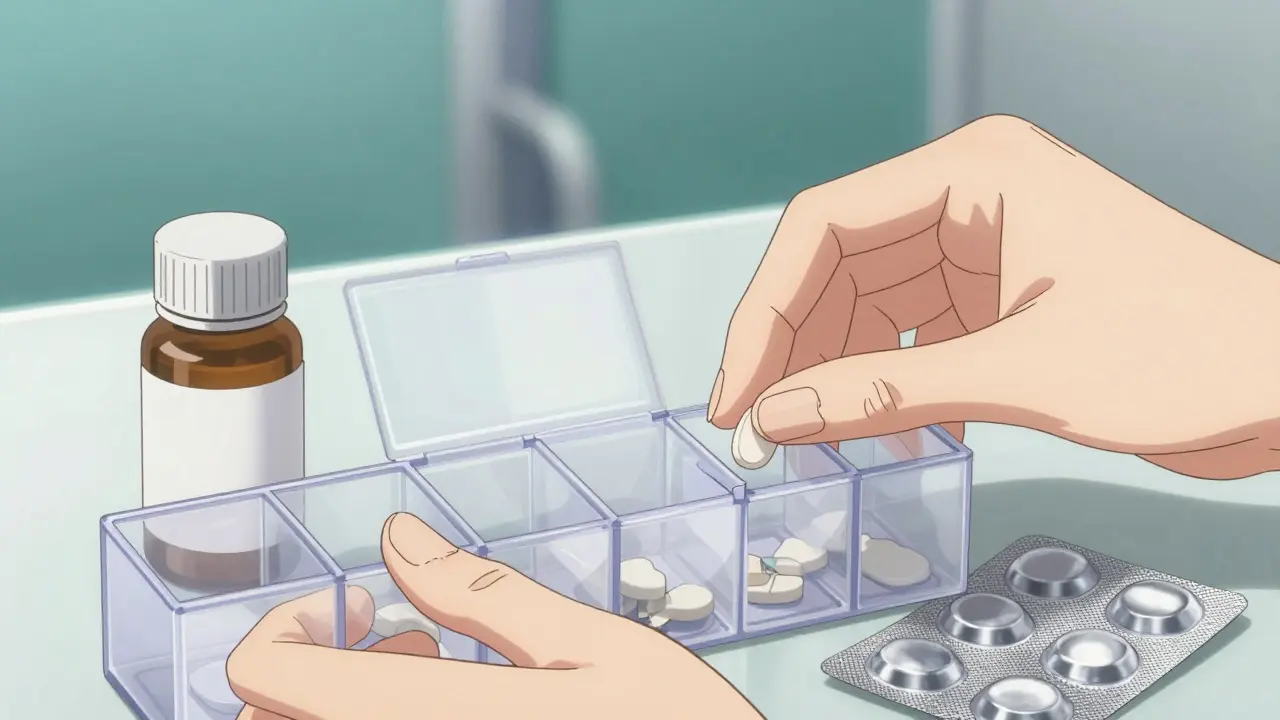
The Safe Loading Protocol: Step-by-Step
Loading your pills for the week should be a mindful process, not a rushed chore. A few minutes of precision can prevent a major medical error. Follow this routine to ensure your doses are accurate and clean.
- Clean your workspace: Start by wiping down your counter with 70% isopropyl alcohol. This prevents bacteria from transferring to your medication.
- Wash your hands: Use antimicrobial soap for at least 30 seconds.
- The "Double-Check" Method: Place the prescription bottle next to the organizer. Read the label aloud as you drop the pill into the compartment. If you have a partner or caregiver, have them verify the pill count.
- Immediate Closure: Close the lid as soon as the dose is dropped to minimize the time the medication is exposed to open air.
- Verify the dates: Ensure you haven't skipped a day or accidentally doubled a dose in one slot-a mistake that has led to hypoglycemia in diabetic patients using glipizide.
Maintenance and Hygiene
Most people buy a pill box and use it for years without ever washing it. That's a mistake. Plastic organizers can accumulate "pill dust"-tiny particles of degraded medication-and bacteria. Some studies have found Staphylococcus aureus in nearly 12% of used organizers in clinical settings.
To keep yours safe, implement a cleaning schedule. For basic plastic models, wipe the exterior and interior lids daily with alcohol. Once a week, perform a deep clean. If your model is dishwasher-safe, use the "sanitize" cycle, which typically hits about 160°F (71°C) for ten minutes. Always let the box air-dry completely before adding new pills; trapped moisture is the enemy of medication stability.

Common Pitfalls and How to Fix Them
Even with the best intentions, errors happen. One of the most common complaints is lids that pop open during transport, spilling meds everywhere. If you travel, consider a secondary locking container or a pouch to hold your weekly box.
Another issue is "compartment confusion." If you have four different times of day to take meds, the labels can start to blend together. Try color-coding your compartments or using a magnifying organizer if your vision is blurring. If you're managing five or more medications, don't do this alone-schedule a medication reconciliation with your pharmacist to ensure your setup is safe.
Can I put all my vitamins and prescriptions in one box?
Generally, yes, but be cautious. Some vitamins or supplements can react with other medications if they touch or are stored in high-humidity environments together. If you notice pills changing color or developing a strange smell, they may be interacting. Always check with your pharmacist about potential incompatibilities.
How often should I replace my plastic pill organizer?
Replace your organizer if the plastic becomes cracked, cloudy, or if the lids no longer snap shut securely. Over time, plastic can degrade and lose its ability to protect meds from the environment. Most pharmacists recommend replacing basic plastic organizers every 12 to 24 months.
What do I do if I miss a dose and see a pill still in the box?
Don't panic and definitely don't double up. Contact your healthcare provider or pharmacist immediately to ask if you should take the missed dose now or wait until the next scheduled time. Every medication has different rules for missed doses.
Are smart pill dispensers worth the cost?
For people with memory impairment or very complex regimens, they are often worth it. They provide reminders and prevent dangerous double-dosing. However, they have a learning curve-especially for those over 75-and are significantly more expensive than manual boxes.
Why does my pharmacist tell me to keep some meds in the original bottle?
Some pills are sensitive to light, air, or moisture. Original bottles often contain desiccants (small packets that absorb moisture) or are made of light-blocking amber plastic. Moving these to a clear plastic box can make the medication lose its strength or expire faster.
Next Steps for Your Safety
If you are currently using a pill organizer, your first move should be a "bottle audit." Go through every medication you own and check the insert or ask your pharmacist: "Is this safe for a weekly pill box?"
For those managing medications for a loved one, consider a weekly reconciliation. Every Sunday, sit down together to fill the boxes. This not only ensures the doses are correct but also provides a moment to check for any new side effects or changes in health that need to be reported to a doctor.