
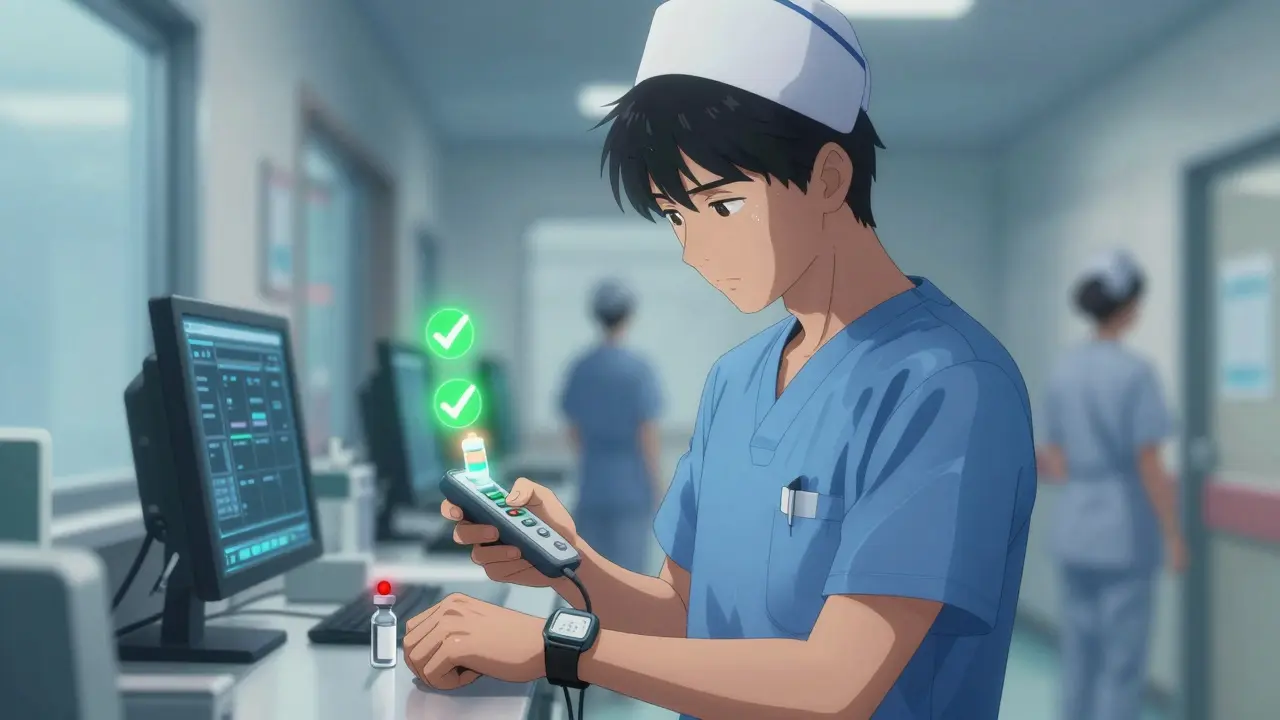
Every year, hundreds of thousands of patients in U.S. hospitals suffer harm from medication errors-many of them preventable. It’s not about bad people. It’s about broken systems. A patient gets the wrong dose of methotrexate because the system didn’t block a daily order. A nurse administers insulin without double-checking because the barcode scanner was down. A senior citizen leaves the clinic with conflicting instructions for their blood thinner. These aren’t rare accidents. They’re symptoms of a system that still relies too much on memory, trust, and luck.
What Medication Safety Really Means
Medication safety isn’t just about checking labels. It’s a full-system approach to stopping errors before they reach the patient. The American Society of Health-System Pharmacists defines it as preventing any event that could lead to inappropriate use or harm while the medication is under care of a healthcare provider. That means every step-from prescribing to dispensing to giving the drug to the patient-needs layers of protection.
The Institute of Medicine’s landmark 1999 report, To Err is Human, shocked the medical world by showing that up to 98,000 people die each year in U.S. hospitals due to preventable errors. About 7,000 of those deaths were tied to medications. Today, that number hasn’t dropped nearly enough. Studies still show at least one medication error per hospital patient per day. The cost? Around $21 billion a year in extra care, lawsuits, and lost productivity.
The Big Three: High-Alert Medications
Not all drugs are created equal. Some are so dangerous that even a small mistake can kill. These are called high-alert medications. The Institute for Safe Medication Practices (ISMP) keeps the official list, and hospitals are required to treat them differently. The big three you’ll see everywhere:
- Insulin-too much can crash blood sugar and cause coma or death.
- Opioids-overdose leads to stopped breathing.
- Anticoagulants (like warfarin or heparin)-wrong dose causes bleeding or clots.
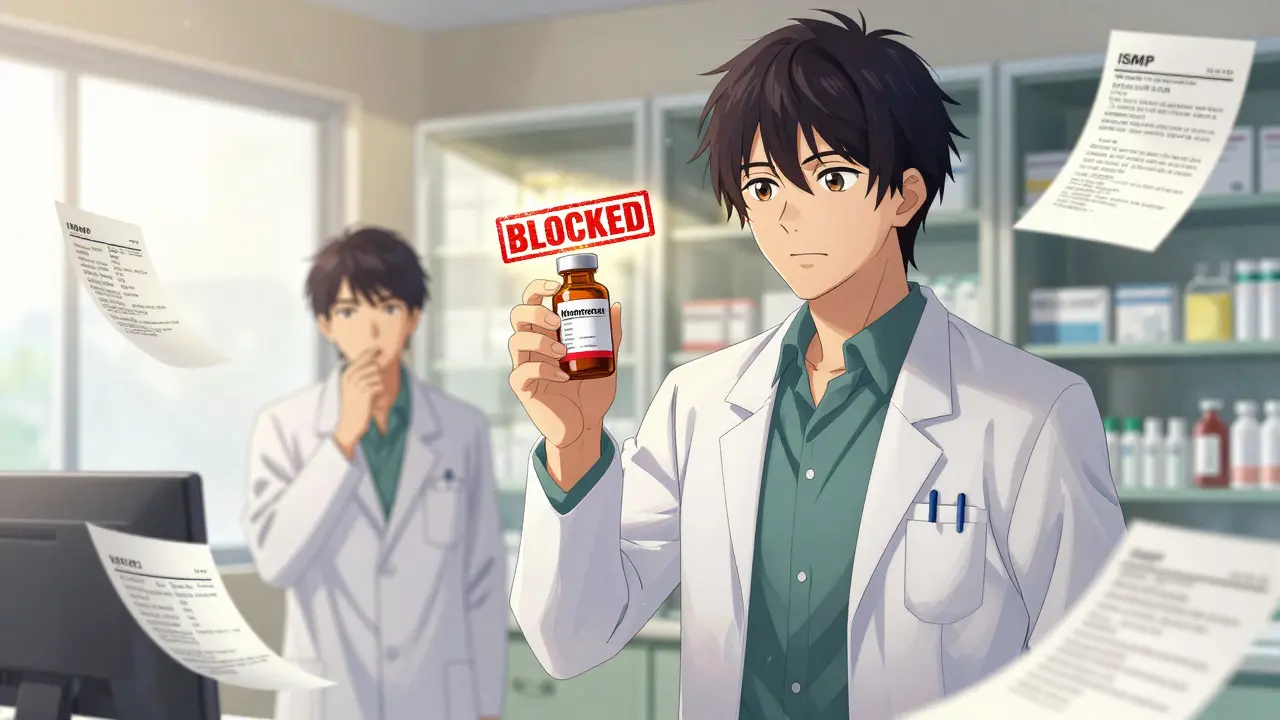
But there are others that sneak under the radar. Methotrexate, for example. Used for cancer and autoimmune diseases, it’s deadly if taken daily instead of weekly. A single wrong dose can be fatal. That’s why the ISMP’s 2020-2021 Targeted Best Practices require hospitals to do three things:
- Set the default dose in electronic systems to weekly, not daily.
- Block any daily order unless the prescriber confirms it’s for cancer (with a hard stop).
- Give patients both written and verbal instructions, and have them repeat back the schedule.
One hospital in Ohio reported three near-misses in the first month after implementing the hard stop. That’s three patients who didn’t get poisoned. Simple fixes, massive impact.
Technology That Actually Works
Electronic health records (EHRs) were supposed to fix everything. And they helped-but only if they’re built right. The biggest win? Barcode medication administration (BCMA). Nurses scan the patient’s wristband, scan the drug, and scan their own badge. If anything doesn’t match, the system won’t let them proceed.
According to the Agency for Healthcare Research and Quality (AHRQ), hospitals using full BCMA systems saw 55% fewer serious errors than those using partial systems. But here’s the catch: 54% of small hospitals (under 100 beds) still don’t have it. Why? Cost. Complexity. Vendor lock-in. Some EHRs won’t let you build hard stops without paying extra. A 2021 survey found 63% of hospitals struggled to get their vendor to fix this.
So what do they do? Workarounds. Pharmacists manually review high-risk orders. Nurses print double-check lists. These aren’t ideal, but they’re lifesavers when tech fails.
Who’s in Charge? The Team Approach
Medication safety isn’t just the pharmacist’s job. It’s not just the nurse’s job. It’s not even just the doctor’s job. It’s everyone’s job. A 2023 study showed that hospitals with interdisciplinary safety teams-pharmacists, nurses, IT, doctors, even patient reps-cut errors by 40% more than those that didn’t.
Here’s how it works in practice:
- Pharmacists audit orders daily, flagging wrong doses or interactions.
- Nurses are trained to speak up if something feels off-even if the doctor ordered it.
- IT builds in smart defaults, hard stops, and alerts.
- Patient advocates teach patients to ask: “Is this the right drug? Is this the right dose? Is this the right time?”
At a clinic in Minnesota, they started asking patients to hold up their medication bottle before taking it. If the label didn’t match what they were told, they stopped. Within six months, they cut oral methotrexate errors to zero.
Where the System Still Fails
Even the best rules don’t work if no one follows them. A nurse on Reddit described how a neuromuscular blocker-used to paralyze patients during surgery-was given to the wrong person because two safety layers were bypassed. Why? “We were short-staffed. The system was slow. We just… did it.”
That’s the real problem: implementation fatigue. Hospitals get bombarded with guidelines-from ISMP, the Joint Commission, CMS, ACOG. Each has different rules. Staff get overwhelmed. One study found only 42% of community hospitals fully implemented ISMP’s best practices. Academic centers? 78%. The gap isn’t about knowledge. It’s about resources.
And then there’s the outpatient side. While hospitals got better, clinics didn’t. Between 2018 and 2022, medication errors in ambulatory settings jumped 47%. Why? No barcode scanners. No pharmacists on-site. Patients get prescriptions by mail. They take them at home. No one’s watching.

What’s Changing in 2025?
Things are moving. The FDA just required clearer labeling for high-concentration electrolytes like potassium chloride-no more confusing 10mL vials that look like saline. By the end of 2024, all hospitals must comply.
The AHRQ’s 2023 National Action Plan wants to cut opioid-related harm by 50% by 2027. That means tighter prescribing, better pain alternatives, and mandatory training.
And AI? It’s coming fast. In 2022, only 22% of U.S. hospitals used artificial intelligence to catch errors in real time. By 2025, Gartner predicts that number will hit 75%. Imagine a system that flags a 75-year-old patient getting four blood thinners at once-and alerts the pharmacist before the order is filled.
Even patient feedback is being used. Mayo Clinic and Johns Hopkins are testing tools where patients report if their meds “feel wrong.” In pilot programs, this caught 32% more errors than staff alone.
What You Can Do
If you’re a patient-or a family member-here’s what you can do right now:
- Always ask: “What is this medicine for? What does it do? What are the side effects?”
- Check the label against what your doctor told you.
- If you’re taking more than five medications, ask for a medication review.
- Bring a list of all your meds (including supplements) to every appointment.
- If you’re in the hospital, ask if they’ll scan your wristband before giving you anything.
And if you’re a healthcare worker? Speak up. Even if it’s awkward. Even if you’re tired. One question can stop a death.
What are the most common medication errors in hospitals?
The top three are wrong dose (40%), wrong drug (25%), and wrong timing (18%). These often happen during shift changes, when staff are rushed, or when electronic systems don’t block risky orders. High-alert drugs like insulin, opioids, and methotrexate account for the majority of serious errors.
How do barcode scanning systems prevent errors?
Barcode systems match the patient’s wristband, the medication’s barcode, and the nurse’s ID. If any piece doesn’t line up-wrong patient, wrong drug, wrong dose-the system blocks administration. This stops 80% of dosage errors and nearly all wrong-patient events. Hospitals with full implementation cut serious errors by over half.
Why is methotrexate so dangerous if taken daily?
Methotrexate is meant to be taken once a week for conditions like rheumatoid arthritis or psoriasis. But if taken daily, it builds up to toxic levels, destroying bone marrow and damaging organs. The ISMP’s hard stop rule requires prescribers to confirm cancer use before allowing daily dosing. Since its adoption, an estimated 1,200 serious errors have been prevented each year.
Do small clinics have the same safety rules as hospitals?
No. Hospitals follow strict standards like ISMP’s Targeted Best Practices and Joint Commission requirements. Most clinics don’t have the staff, tech, or budget to implement them fully. As a result, outpatient medication errors rose 47% between 2018 and 2022. New efforts are underway to extend safety protocols to clinics by 2025.
What’s the role of patients in medication safety?
Patients are the last line of defense. Studies show 68% of older adults feel safer when hospitals verify identity with name, birth date, and wristband. When patients are taught to ask questions and double-check labels, error rates drop. Hospitals that include patient feedback in safety audits catch 32% more mistakes than those relying only on staff.
Comments (13)
-
John Smith February 25, 2026So let me get this right-we’re relying on barcodes and hard stops because humans can’t be trusted to read a label? Wow. Groundbreaking. Next they’ll invent a device that stops people from walking into walls.
Also methotrexate? Yeah, it’s dangerous. But so is everything else when you give it to someone who doesn’t know what it is. The real problem? The system doesn’t train people. It just slaps on bandaids and calls it safety.

-
Shalini Gautam February 27, 2026I work in a small clinic in India and I can tell you-no barcode scanners here. No pharmacists on-site. Just me, a printer, and a stack of papers. But we do one thing right: we ask the patient to say the name of their medicine out loud before they leave. It’s old-school. It works. No one’s died yet.

-
Natanya Green February 27, 2026I just want to say… OMG… THIS IS SO IMPORTANT!!!
I had my mom on methotrexate last year… and she almost died… because the doctor wrote ‘daily’ instead of ‘weekly’… and NO ONE caught it… until she was in the ICU…
I cried for three days… and now I scream at every nurse… ‘DO YOU SCAN?!’…
PLEASE… JUST SCAN… PLEASE…

-
Steven Pam February 28, 2026This is actually one of the most hopeful things I’ve read all year.
We talk about healthcare like it’s broken beyond repair, but look-simple changes like hard stops and patient checks? They’re working.
The fact that one hospital stopped three poisonings just by changing a default setting? That’s not luck. That’s genius.
Let’s not wait for AI or billion-dollar overhauls. Start here. Now. Scan. Confirm. Ask. Repeat. It’s that simple.

-
Timothy Haroutunian March 2, 2026Let’s be real. The whole medication safety industrial complex is a money racket. EHR vendors charge $200k just to enable a hard stop. Hospitals pay because they’re scared of lawsuits. Nurses don’t get paid more to double-check. Pharmacists are overworked. Patients are told to ‘speak up’ like it’s a magic spell.
Meanwhile, the real issue? We have too many people doing too many jobs with too little training. And now we’re pretending that scanning a barcode fixes that. It doesn’t. It just makes us feel better while the system keeps crumbling.

-
Erin Pinheiro March 3, 2026i cant believe people still dont know that insulin is dangerous?? like duh?? it's like giving a toddler a gun and saying 'be careful'
and why do hospitals even have daily methotrexate as an option?? that's just asking for a lawsuit
also why is everyone so quiet about the fact that most nurses are just winging it??

-
Michael FItzpatrick March 5, 2026You know what’s beautiful about this? It’s not about fancy tech. It’s about culture.
The clinic in Minnesota? They didn’t buy a new system. They didn’t hire consultants. They just asked patients to hold up their bottle. That’s radical trust. That’s human-centered design.
We’ve been treating patients like liabilities. What if we treated them like co-pilots? Suddenly, the whole system gets smarter. And cheaper. And safer.

-
Brandice Valentino March 5, 2026I work in health IT. Let me tell you-the reason hospitals don’t implement hard stops isn’t cost. It’s vendor politics. One EHR company owns 70% of the market. They know if they make it easy to block dangerous orders, hospitals will switch. So they bury it in 17 submenus. They charge extra. They make it ‘custom.’
This isn’t about safety. It’s about monopoly power. And the FDA? They’re too busy fighting vape pens to care.

-
Larry Zerpa March 7, 2026Let’s debunk this myth: ‘medication errors are preventable.’
No. They’re inevitable. Humans are fallible. Systems are complex. You can scan, you can hard-stop, you can train, you can audit-but you can’t eliminate risk. You can only redistribute it.
Now we blame nurses for bypassing scanners. We blame patients for not asking questions. We blame vendors for not being perfect.
The truth? We’re all just trying not to die. And that’s not a system. That’s a survival game.

-
Gwen Vincent March 7, 2026I’ve been a nurse for 18 years. I’ve seen it all. The barcode scanners? They help. The hard stops? They save lives. But the thing that matters most? The person next to you who says, ‘Wait. That doesn’t look right.’
Not the tech. Not the policy. Not the training. The courage to pause. That’s what stops the train. That’s what keeps people alive.

-
Nandini Wagh March 9, 2026So you’re telling me the same system that gave us $1000 insulin co-pays also thinks scanning a barcode is the solution? Cute.
Meanwhile, my cousin in rural Ohio gets her methotrexate by mail. No pharmacist. No nurse. No scan. Just a pill bottle and a prayer.
This isn’t safety. It’s a luxury for urban hospitals. The rest of us? We’re just hoping we don’t die.

-
Holley T March 9, 2026I’ve read every word of this. And I’m still not convinced. The data is cherry-picked. The success stories? They’re outliers. The 54% of small hospitals without BCMA? They’re not dumb. They’re resource-constrained. And yes, they have workarounds. But workarounds aren’t solutions-they’re bandaids on a hemorrhage.
Also, who says patients are the last line of defense? What if they’re confused? What if they’re scared? What if they’re illiterate? What if they’re 80 years old and on six meds?
This whole thing feels like a PR campaign for healthcare tech startups. Not a real fix.

-
Ashley Johnson March 11, 2026I know what’s really going on. The pharmaceutical companies know methotrexate is dangerous. They don’t want it to be harder to prescribe. Because if it’s harder, people will switch to cheaper alternatives. And they don’t want that.
The whole ‘hard stop’ thing? It’s a distraction. The real reason errors happen? Profit.
You think they care about patients? They care about stock prices.
And don’t even get me started on AI. That’s just more data mining. More surveillance. More control.
Wake up. This isn’t about safety. It’s about power.
