
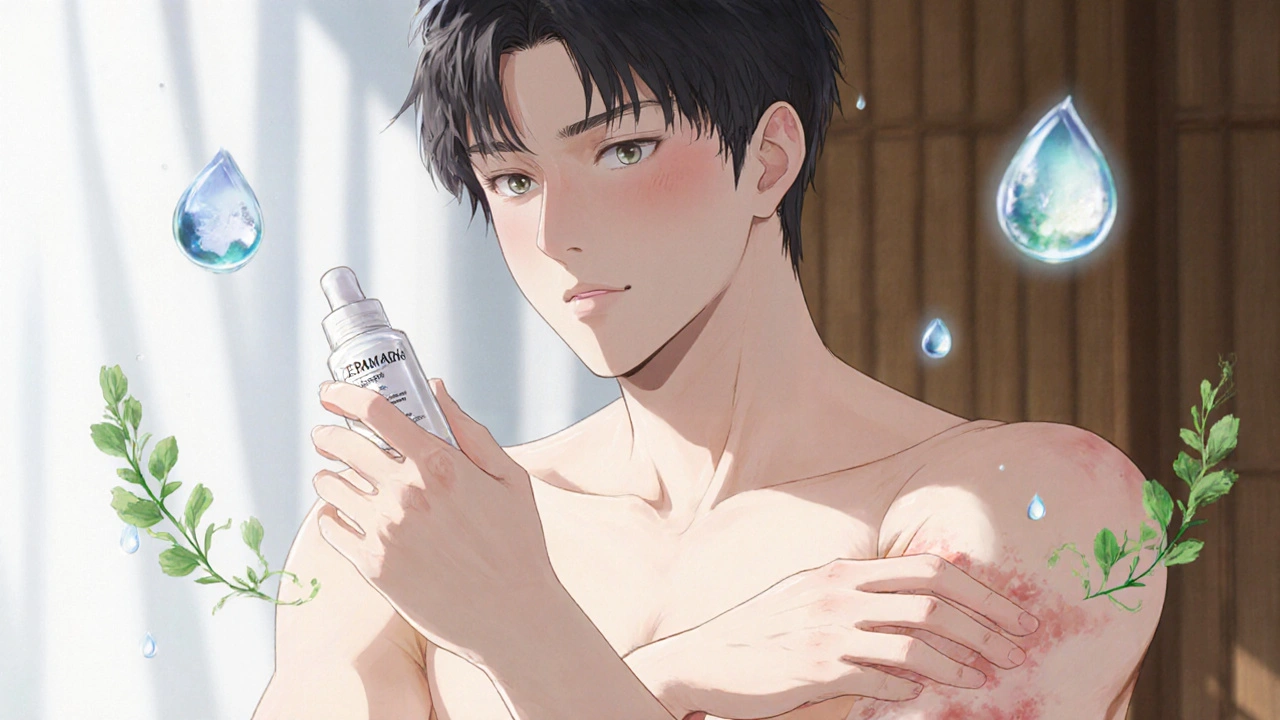
Stopping halobetasol isn’t like turning off a light switch. It’s a process that needs planning, patience, and often, medical guidance. Halobetasol is a potent topical corticosteroid - one of the strongest available by prescription. It’s used for severe eczema, psoriasis, and other inflammatory skin conditions. But it’s not meant for long-term use. If you’ve been using it for weeks or months, your skin may have adapted to it. Stopping suddenly can trigger rebound flare-ups, redness, burning, or even worse symptoms than before you started. That’s why how you stop matters just as much as how you started.
Why You Can’t Just Quit Halobetasol Cold Turkey
Halobetasol works by suppressing your skin’s immune response. It reduces inflammation, itching, and scaling - fast. But over time, your skin can become dependent. The blood vessels narrow, natural steroid production slows, and your skin loses its ability to regulate itself. When you stop abruptly, your body doesn’t know how to kickstart its own healing response. This is called topical steroid withdrawal (TSW), and it’s real. People report intense redness, swelling, oozing, and burning that can last weeks or even months.
A 2023 study in the Journal of the American Academy of Dermatology tracked 187 patients who stopped potent topical steroids suddenly. Over 60% experienced moderate to severe rebound symptoms within 1-2 weeks. Only 12% of those who tapered gradually reported significant discomfort. The difference isn’t subtle - it’s life-changing.
How to Safely Taper Off Halobetasol
The safest way to stop halobetasol is to reduce its use slowly. This gives your skin time to relearn how to function without the drug. There’s no one-size-fits-all plan, but here’s what works for most people under medical supervision.
- Don’t stop all at once. Even if your skin looks better, don’t quit immediately. Keep using it, but reduce frequency.
- Go from daily to every other day. If you’ve been applying halobetasol once a day, switch to every other day for 7-10 days.
- Then reduce to twice a week. After that, cut back to just two days a week - for example, Monday and Thursday.
- Switch to a weaker steroid. After a week on twice-weekly halobetasol, replace it with a mid-potency steroid like triamcinolone 0.1%. Use it on the same days, same amount.
- Drop to a low-potency steroid. After another week, switch to hydrocortisone 1% or desonide. Use it for 1-2 weeks.
- Stop completely. Once you’re using only the mildest steroid, you can stop. Wait a few days before switching to non-steroid treatments.
This process can take 4-8 weeks, sometimes longer. Rushing it increases the risk of rebound. Stick to the schedule. Track your symptoms in a notebook - note redness, itching, dryness, and flaking. That data helps your doctor adjust the plan.
What to Use Instead After Stopping
Once you’ve tapered off halobetasol, your skin needs support - not another steroid. You’re not done caring for it. Here’s what works:
- Moisturizers with ceramides. Skin barrier repair is critical. Look for products with ceramide NP, cholesterol, and fatty acids. CeraVe Moisturizing Cream and Eucerin Advanced Repair are clinically proven to help.
- Non-steroid anti-inflammatories. Tacrolimus (Protopic) and pimecrolimus (Elidel) are prescription options that reduce inflammation without steroids. They’re safe for long-term use.
- Colloidal oatmeal baths. Soak for 15 minutes daily. It calms itching and soothes irritation without chemicals.
- Wet wrap therapy. After applying moisturizer, cover the area with damp gauze, then a dry layer. Leave on overnight. This boosts hydration and healing.
- Avoid triggers. Harsh soaps, hot showers, wool clothing, and stress can worsen flare-ups. Stick to fragrance-free, gentle products.
Some people find relief with over-the-counter topical probiotics or CBD creams, but evidence is still limited. Don’t assume natural means safe - some plant oils can irritate sensitive skin.
Signs You’re Having a Rebound Reaction
Rebound isn’t just a little redness. It’s a full-blown flare that feels worse than your original condition. Watch for these signs:
- Redness spreading beyond the original treated area
- Burning or stinging that doesn’t go away after applying moisturizer
- Peeling, oozing, or crusting skin
- Intense itching that wakes you up at night
- New bumps, pustules, or hair follicle inflammation
If you see any of these within 1-2 weeks of stopping, you’re likely experiencing TSW. Don’t panic. Don’t reach for halobetasol again. Call your dermatologist. They may recommend a short, controlled course of a weaker steroid or non-steroid therapy to bring things under control.
When to See a Doctor
You don’t have to figure this out alone. See a dermatologist before you stop halobetasol - not after you’re in pain. They can help you design a taper plan based on how long you’ve used it, how much you’ve used, and your skin type.
Also see a doctor if:
- You’ve used halobetasol for more than 2 weeks continuously
- Your skin is thinning, bruising easily, or showing stretch marks
- You’re using it on your face, groin, or armpits - areas more sensitive to side effects
- You’ve tried to stop before and had a bad reaction
These are red flags that you need professional help. Self-managing potent steroids can lead to permanent skin damage.

What Not to Do
There are common mistakes people make when trying to quit halobetasol. Avoid these:
- Using it “just a little” when symptoms return. That reinforces dependence. You’re not curing anything - you’re delaying withdrawal.
- Switching to another strong steroid. Like mometasone or clobetasol. That’s just swapping one problem for another.
- Trying home remedies like apple cider vinegar or tea tree oil. These can burn your skin, especially when it’s already damaged.
- Waiting too long to get help. The longer you wait, the harder recovery becomes.
There’s no shame in needing help. Many people struggle with steroid withdrawal. It’s not your fault. It’s the medication’s effect - not your skin’s failure.
How Long Does Recovery Take?
There’s no fixed timeline. Some people feel better in 2-4 weeks. Others take 3-6 months. It depends on how long you used halobetasol, how often, and your skin’s natural healing ability.
Recovery isn’t linear. You’ll have good days and bad days. Some weeks you’ll feel fine. Then, out of nowhere, your skin flares again. That’s normal. Don’t interpret it as failure. It’s part of the process. Your skin is rebuilding its natural balance.
Focus on progress, not perfection. If your redness is less intense, your itching is shorter, or you’re sleeping better - those are wins. Track them. Celebrate them.
Support and Resources
You’re not alone. Many people have walked this path. Online communities like the International Topical Steroid Withdrawal Association (ITSWA) and Reddit’s r/steroidwithdrawal offer peer support. They don’t replace medical advice, but they help you feel less isolated.
Books like The Steroid Withdrawal Guide by Dr. Marisa Garshick and Healing the Skin by Dr. Gary Goldenberg provide science-backed approaches. Look for authors with dermatology credentials.
Remember: healing takes time. It’s not about speed. It’s about sustainability. Your skin doesn’t need a miracle. It needs patience, consistency, and care.
Can I stop halobetasol if I’ve only used it for a week?
If you’ve used halobetasol for less than 7-10 days, you can usually stop without tapering. Short-term use rarely causes dependence. Still, check with your doctor before stopping, especially if your skin is still irritated. They may recommend switching to a gentle moisturizer instead.
Will my skin return to normal after stopping?
Yes, most people’s skin does return to normal - but it takes time. Skin that was thinned or damaged by long-term steroid use can rebuild its barrier with proper care. Moisturizers with ceramides, avoiding irritants, and protecting your skin from sun exposure help. It can take 3-12 months for full recovery, depending on usage history.
Is halobetasol withdrawal dangerous?
It’s not life-threatening, but it can be very uncomfortable and disrupt your daily life. Severe rebound can lead to infections if skin breaks open. That’s why medical supervision is important. Never ignore signs of infection - increased warmth, pus, fever, or spreading redness - and get help right away.
Can I use over-the-counter hydrocortisone after halobetasol?
Yes, but only as part of a taper plan. Hydrocortisone 1% is much weaker than halobetasol and can help ease the transition. Don’t use it daily for more than 2 weeks unless directed by your doctor. It’s a bridge, not a long-term solution.
Why do some doctors say it’s safe to stop cold turkey?
Some doctors aren’t familiar with topical steroid withdrawal because it’s under-recognized in medical training. Others assume patients only used the cream briefly. But if you’ve used halobetasol for more than 2 weeks, especially on large areas or sensitive skin, sudden stopping carries real risk. Always ask your doctor about tapering - it’s the standard of care for long-term users.
Comments (10)
-
Sherri Naslund November 18, 2025so i just stopped halobetasol cold turkey after 3 months and my face looks like a tomato that got hit by a truck 🍅🔥 like... why does everyone act like this is normal? my skin is literally screaming. no one warned me. no one. i thought it was just "bad skin". turns out it was my body revolting. now i'm in a war with my mirror.

-
Ashley Miller November 20, 2025Funny how the FDA and Big Pharma never mention TSW on the label. Coincidence? Or just another way to keep you hooked on their $200 creams while they profit off your suffering? 🤔 They don’t want you to know you can heal without chemicals. They want you to come back. Again. And again.

-
Martin Rodrigue November 21, 2025The clinical evidence supporting tapering protocols for potent topical corticosteroids is robust and well-documented in peer-reviewed dermatological literature. Abrupt discontinuation is contraindicated for prolonged use due to the risk of rebound inflammation and hypothalamic-pituitary-adrenal axis suppression. The regimen outlined in the original post aligns with the 2023 JAAD guidelines and represents the current standard of care.

-
Lauren Hale November 22, 2025I’ve been through this. Took me 7 months. Some days I cried because my skin looked worse than before. But I stuck with ceramides, wet wraps, and cold showers. No more steroids. No more panic. Your skin isn’t broken - it’s just learning how to be itself again. Be gentle. You’re not failing. You’re healing.

-
Greg Knight November 22, 2025Look, I know it sounds scary - but you’ve got this. I used halobetasol for 6 months after my psoriasis went wild. Tapered over 10 weeks like the post says. Switched to Elidel. Started doing oatmeal baths every night. Honestly? The first 3 weeks sucked. But by week 8? My skin started breathing again. It’s not magic. It’s just patience. Write down your wins - even if it’s just ‘no burning after moisturizer.’ That’s progress. Keep going.

-
rachna jafri November 23, 2025In India, we’ve been using neem, turmeric, and aloe for centuries - and guess what? No one needs this Western chemical slavery. Why do you trust a pill from a lab when your grandmother’s oil healed your aunt’s eczema? They don’t want you to know natural remedies work better. Big Pharma owns your doctors. Your skin is sacred - stop letting them poison it with steroids. Go back to the earth. It remembers how to heal.

-
darnell hunter November 23, 2025The notion that topical steroid withdrawal constitutes a clinically recognized syndrome remains controversial within the dermatological community. While anecdotal reports abound, controlled longitudinal studies demonstrating causality are lacking. The observed phenomena may reflect underlying disease reactivation rather than pharmacological dependence. Caution is advised against overinterpretation of non-peer-reviewed narratives.

-
Kenneth Meyer November 25, 2025There’s a deeper truth here: we’ve outsourced our body’s wisdom to chemicals. We don’t trust skin to heal itself because we’ve been taught that pain = failure. But healing isn’t about control. It’s about surrender. Letting go of the cream isn’t weakness - it’s the bravest thing your skin has asked you to do. The redness? That’s your body remembering how to be alive. Not broken. Not defective. Just... reborn.

-
Donald Sanchez November 26, 2025bro i did the taper but then i got lazy and used hydrocortisone every day for a week 😅 my skin went full demon mode. now i’m back to square one. why is this so hard??? i just want my skin back. anyone got a magic lotion? 🙏 #tswstruggles

-
Danielle Mazur November 28, 2025The medical establishment has systematically suppressed evidence of topical steroid dependence for decades. Patient testimonies are dismissed as anecdotal, while pharmaceutical interests remain unchallenged. This is not a skin condition - it is a systemic failure of ethics in dermatology. Until regulators acknowledge this, thousands will continue to suffer in silence.
