
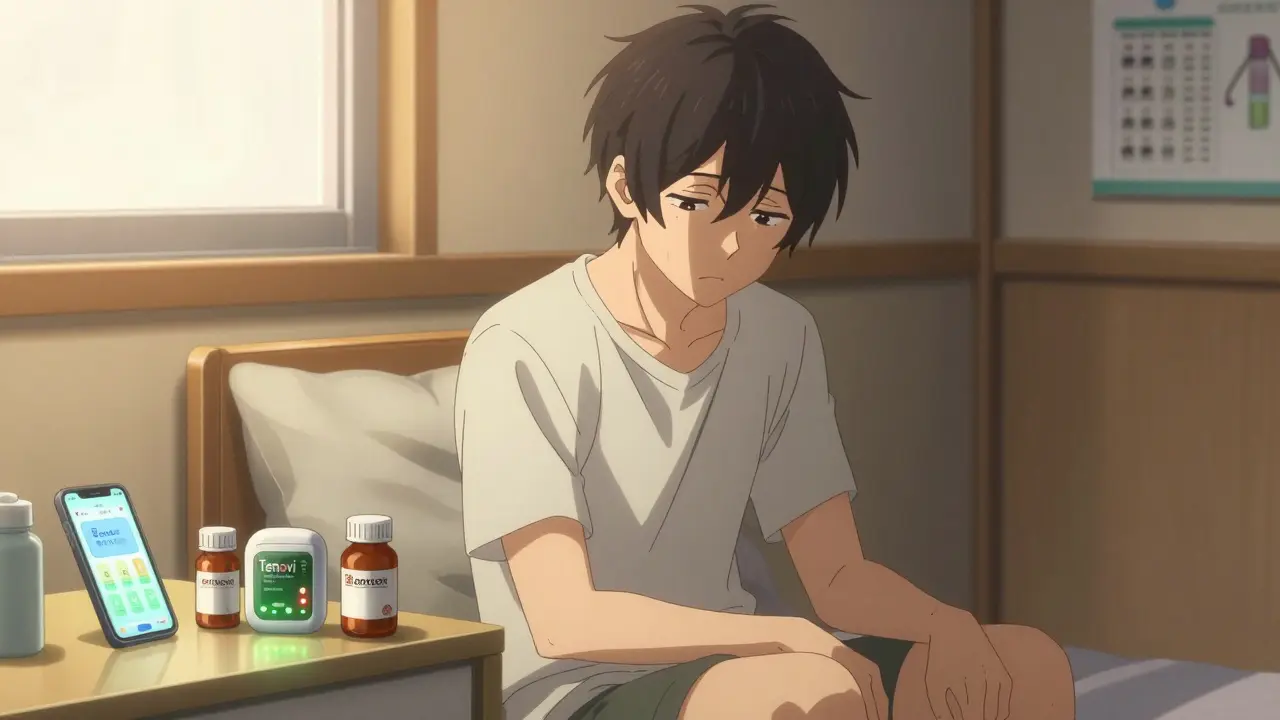
When you fill a prescription for a generic blood pressure pill, do you ever wonder if you’ll actually take it tomorrow? Or the next day? For millions of people managing chronic conditions with generics, the answer is often no. Studies show that 50% of patients stop taking their generic medications within a year. That’s not laziness - it’s forgetfulness, confusion, cost stress, or just plain burnout. And it’s costing the U.S. healthcare system $300 billion every year in avoidable hospital visits and complications. The real problem? Unlike brand-name drugs that come with free apps, reminders, and support programs, generic meds have always been the forgotten stepchild of adherence efforts. That’s changing - fast.
How Digital Tools Are Fixing the Generic Adherence Gap
Digital adherence tools are no longer just for clinical trials. They’re now being used in real pharmacies, by real patients, with real results. These aren’t your old-school pill organizers with alarms. These are smart systems that track exactly when a pill is removed from its container, send real-time alerts to caregivers, and even sync with your doctor’s electronic health record.Take the MEMS AS system from AARDEX Group. It uses digitally enabled pill bottles that record every time the cap is opened. With over 70 proprietary algorithms, it claims 100% accuracy in tracking medication events. Used mostly in clinical research, it’s become the gold standard for measuring adherence in drug trials. But here’s the catch: it’s not built for daily patient use. It’s complex, expensive, and designed for doctors, not people trying to manage five different meds at home.
Then there’s the Tenovi Pillbox. This one’s built for real life. It’s a smart, cellular-connected box that holds up to four medications. Each compartment has an LED light - red if you haven’t taken your dose, green if you have. It sends alerts to your phone, your family, or your pharmacist. In a 2022 study tracking heart failure patients on generics, users improved adherence by 32% over six months. The downside? It costs $149 upfront and $30 a month to keep the cellular connection alive. Not cheap for someone on a fixed income.
What’s Actually Working in Real-World Settings
Not every tool needs to be high-tech. Some of the most effective systems are simple, but smart.Video Directly Observed Therapy (VDOT) lets patients record themselves taking their meds using a smartphone. In a 2022 mHealth study, it boosted adherence to asthma and COPD generics by 15% during the pandemic. But 30% of users quit after a few weeks because they didn’t like being watched. Privacy matters. So does dignity.
Meanwhile, Wisepill Technologies uses electronic blister packs. Each dose is sealed in its own compartment. When you peel it off, the pack sends a signal. It’s durable, cheap, and works without Wi-Fi. Used in rural clinics and by Medicare patients, it’s become a quiet hero in adherence tracking.
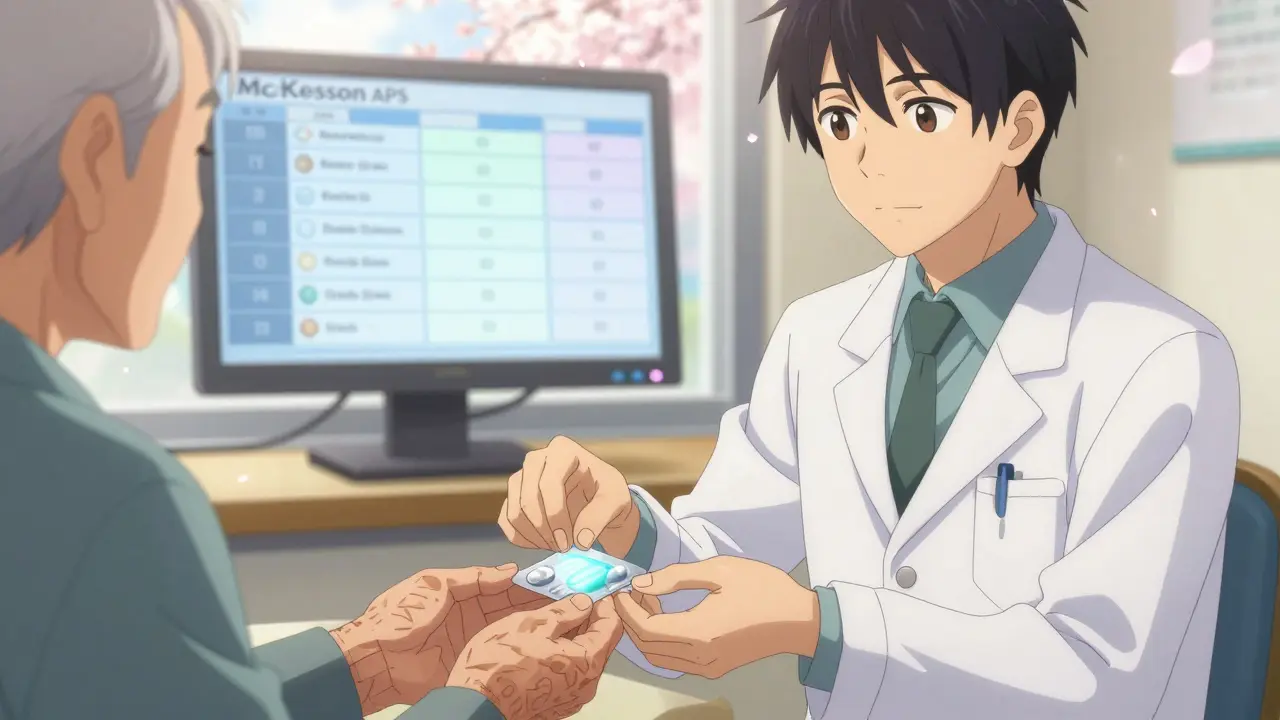
And then there’s McKesson APS, a dashboard pharmacies use to monitor refill patterns. If a patient hasn’t picked up their generic statin in 45 days, the system flags them. It’s not perfect - it can’t tell if the pill was actually taken - but it’s better than nothing. One pharmacy in Ohio used it to lift diabetes adherence from 62% to 78% over 18 months. They had to hire a tech just to manage the alerts.
The Hidden Costs and Real Challenges
It’s easy to think digital tools = automatic solution. But the data tells a different story.According to a 2021 U.S. Pharmacist study, 36% of patients found devices like Med-eMonitor too bulky or confusing. Another 40% said constant monitoring felt invasive. One Amazon reviewer of the Tenovi system wrote: “The cellular gateway dies every three days with four meds tracked.” That’s not a feature - that’s a flaw.
And then there’s the training gap. A pharmacist in Sydney told me (in a private chat) that educating a patient on a basic reminder app takes 15 minutes. Teaching them to use Tenovi or MEMS AS? That’s 90 minutes. Most pharmacies don’t have the staff. Independent pharmacies - which serve 60% of Medicare patients - are especially behind. Only 18% have any digital adherence system in place. The big chains? 67% do.
Reimbursement is another wall. Medicare Advantage plans only cover remote therapeutic monitoring for adherence in 38% of cases. That means even if a patient uses a $30-a-month device, their insurance won’t pay for it. No wonder adoption is slow.
What Experts Say - And What Patients Need
Dr. Esther Kellen from Erasmus University put it simply: “Digital tools didn’t create adherence. They revealed how bad it was.”Dr. Richard Haynes from Oxford says the biggest mistake is treating adherence like a tech problem. “If you don’t integrate this into daily care - if your pharmacist doesn’t ask about it during pickup - the data is useless.” He’s right. A 2022 AHRQ study found patients who got a 3-minute chat with their pharmacist + a smart pillbox had 35% better outcomes than those who got the device alone.
And then there’s the WHO framework - the five dimensions of adherence. Most digital tools only hit two: healthcare system (reminders, refills) and socioeconomic (cost tracking). They ignore the psychological ones: fear, denial, shame, stigma. A patient who skips their generic antidepressant isn’t just forgetting. They’re struggling.
What’s Next? AI, Integration, and Consolidation
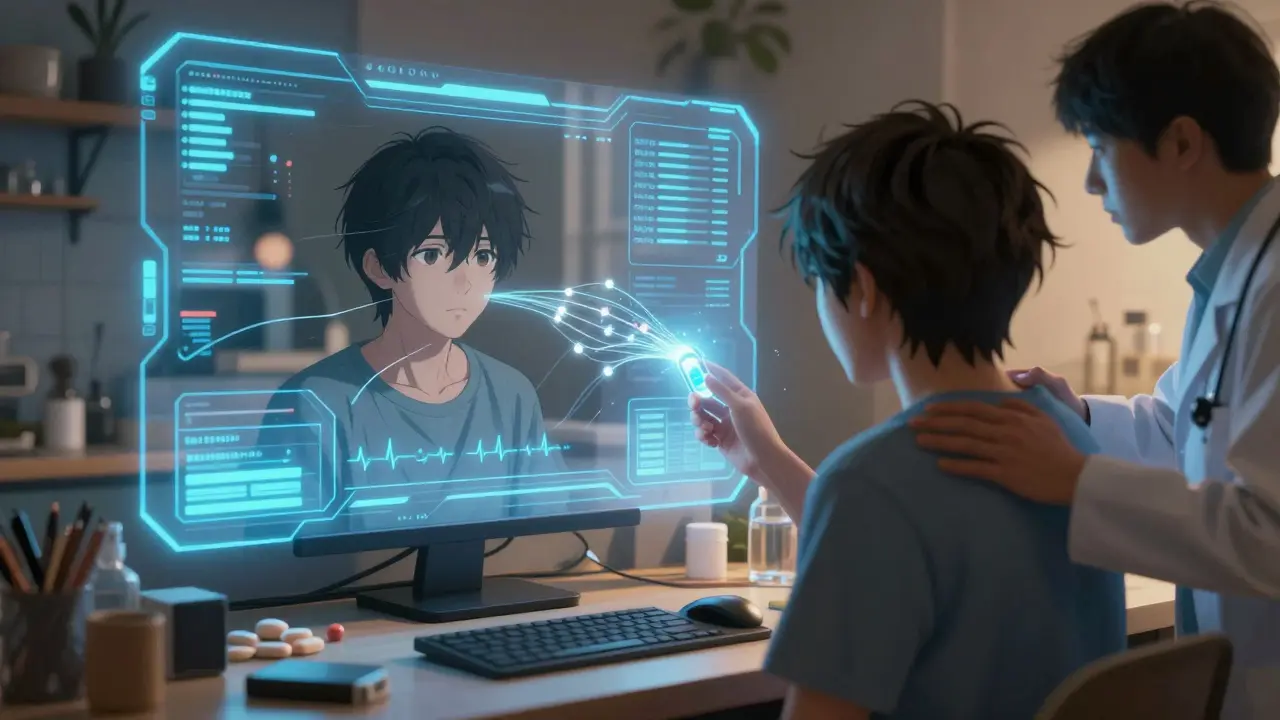
The market is exploding. The global adherence tech space will hit $8 billion by 2030, with generics making up 65% of that growth.Companies are racing to improve. MEMS AS version 5.2, launched in March 2023, now has algorithms tuned specifically for generic regimens. Tenovi added direct EHR integration in June 2023 - meaning your doctor can see your adherence data without you lifting a finger.
CVS Health is testing AI that predicts who’s at risk of stopping their meds - not by refill patterns, but by behavior. Did they stop calling in refills? Did they skip their last checkup? Did they start using a different pharmacy? Machine learning spots the patterns humans miss. Early results? 22% better at identifying at-risk patients.
But the real game-changer will be consolidation. Right now, there are over 2,000 adherence apps. Only seven meet basic quality standards. Experts predict only 3-5 platforms will survive by 2025, all stitched into pharmacy benefit managers like Express Scripts or Optum. That’s when we’ll see real change - when adherence data isn’t siloed, but used to adjust prescriptions, reduce costs, and save lives.
What Should You Do Right Now?
If you’re managing generics:- Ask your pharmacist: “Do you have a tool to help track my meds?”
- Try a simple app first - like Medisafe or MyTherapy. Free. Easy. No hardware needed.
- If you’re on five or more meds, ask about Tenovi or Wisepill. They’re built for complexity.
- Never accept “We don’t have that” as an answer. Demand options. Your health depends on it.
If you’re a pharmacy owner:
- Start with McKesson APS. It’s affordable. It integrates fast. It’s proven.
- Train your staff to ask one question: “Do you ever miss a dose?”
- Partner with local clinics. Share data. Save lives. It’s cheaper than ER visits.
Adherence isn’t about compliance. It’s about connection. The best digital tool won’t matter if no one’s listening. But when a pharmacist notices you haven’t picked up your generic blood thinner in 60 days - and calls you - that’s when the real healing begins.
Are digital adherence tools covered by insurance?
Most insurance plans don’t cover digital adherence tools yet. Only 38% of Medicare Advantage plans reimburse for remote therapeutic monitoring as of late 2022. Some private insurers cover devices like Tenovi under DME (Durable Medical Equipment) codes if prescribed by a doctor. Always ask your pharmacy or insurer for specific coverage details - policies vary widely.
Can these tools track multiple generic medications?
Yes. Systems like Tenovi and Wisepill are designed for polypharmacy - patients taking four or more medications. MEMS AS can track multiple bottles, and electronic blister packs like Wisepill can hold up to 28 doses in one unit. The key is matching the tool to your regimen. Simpler tools work best for one or two meds; complex systems are better for five or more.
Do these tools work without Wi-Fi or cellular?
Some do, some don’t. MEMS AS and Tenovi require cellular or Wi-Fi to send data in real time. Wisepill’s blister packs store data locally and sync when you plug them into a charger. Med-eMonitor uses Bluetooth to connect to a hub that then transmits data. If you live in a low-signal area, look for devices that store data offline and sync later - they’re more reliable.
Are there privacy risks with tracking my medication use?
Yes. A 2022 AHRQ survey found 63% of patients worry about who sees their adherence data. Companies that are HIPAA-compliant (like MEMS AS and Tenovi) encrypt data and limit access. But many apps - especially consumer-grade ones - sell anonymized data to third parties. Always check the privacy policy. Look for terms like “HIPAA-compliant,” “no third-party sharing,” and “encrypted storage.”
Can digital tools replace pharmacist counseling?
No. Technology can remind you to take your pill - but it can’t explain why you’re taking it, or help you deal with side effects, or adjust your dose if your condition changes. The best outcomes happen when digital tools are paired with regular check-ins from a pharmacist or nurse. Even a 3-minute conversation every few weeks can double adherence rates.
Adherence isn’t a tech problem. It’s a human one. And the best tools don’t just track pills - they help people stay in control of their health.
Comments (16)
-
Annie Joyce February 11, 2026
Man, I’ve been on five generics for years and honestly? The only thing that kept me sane was Medisafe. Free, stupid simple, and it sends me a little emoji every time I log a dose. 🎉 No fancy boxes, no cellular bills - just my phone going ‘ding’ like a good friend. I don’t need surveillance, I need a nudge. And yeah, sometimes I ignore it. But at least I know I tried.
PS: If your pharmacist looks at you like you’re asking for a unicorn when you ask about tracking tools? Keep asking. They’re not used to it, but they’ll learn. We’re not lazy. We’re just tired.
Also - why does no one talk about how scary it is to take a pill you can’t even afford? That’s the real ghost in the machine.

-
Luke Trouten February 12, 2026
It’s worth noting that adherence is not merely a behavioral issue but a structural one. The assumption that digital tools alone can compensate for systemic neglect - underfunded pharmacies, lack of insurance coverage, and fragmented care - is a form of technological solutionism. The data shows that even the most precise tracking devices fail when the underlying conditions of care are not addressed. The MEMS AS system, for instance, is a marvel of engineering, yet it remains irrelevant to the 70% of patients who cannot afford its associated costs or lack the cognitive bandwidth to manage it. We must stop conflating measurement with intervention.

-
Kristin Jarecki February 14, 2026
While the technological innovations described are indeed impressive, it is imperative to recognize that patient-centered care must remain the cornerstone of any adherence strategy. The integration of digital tools into clinical workflows must be accompanied by deliberate, trained human interaction - not as an afterthought, but as a core component. The 35% improvement in outcomes observed when digital tools were paired with pharmacist consultation is not incidental; it is evidence of the irreplaceable value of relational care. Without this, we risk creating a surveillance apparatus that monitors compliance while neglecting the human experience of illness.

-
Jonathan Noe February 15, 2026
Okay but let’s be real - the whole ‘smart pillbox’ thing is just corporate wellness theater. I work in med tech and I’ve seen the data. Most of these gadgets are overengineered junk. Tenovi? That thing dies every three days? That’s not a feature - it’s a warranty nightmare. And don’t get me started on VDOT. Recording yourself taking a pill like you’re in a TikTok challenge? No. Just no.
Here’s what actually works: a sticky note on the mirror. A phone alarm. A family member who calls once a week. No app. No subscription. No data sell-off. Just someone who cares. The real innovation isn’t in the box - it’s in the human connection that’s been erased by tech bros trying to monetize your hypertension.

-
Jim Johnson February 16, 2026
Y’all are overthinking this. I’m 68, on six meds, and I use a pill organizer with big numbers. I set my TV remote to beep at 8am. My granddaughter checks in every Sunday. That’s it. No app. No Bluetooth. No $30/month fee. And I haven’t missed a dose in 18 months.
Stop selling us gadgets. Start selling us dignity. We don’t need to be tracked - we need to be seen. My pharmacist remembers my dog’s name. She asks if I’m sleeping okay. That’s the magic. Not LEDs. Not cellular. Just someone who notices you’re still here.
Also - if you’re gonna charge $149 for a box that dies every few days? You’re not helping. You’re just trying to get rich off old people. I call BS.

-
Suzette Smith February 16, 2026
Wait - so you’re telling me the solution to 50% non-adherence is… more tech? Are you serious? Why not just make generics cheaper? Or pay pharmacists to actually talk to people? Or give people paid time off to go to the pharmacy?
Every single one of these ‘solutions’ assumes the problem is that patients are forgetful. But what if the problem is that we’re broke, overworked, and scared? You can’t app your way out of poverty. And you sure as hell can’t track your way out of shame.
Also - who designed these devices? Someone who’s never had to choose between insulin and rent? Just saying.

-
Pat Mun February 18, 2026
I’ve been watching this space for years, and honestly? The most fascinating thing isn’t the tech - it’s how little we talk about the emotional labor of adherence. Taking pills every day isn’t just a chore - it’s a daily reminder that your body is broken. That you’re not ‘normal.’ That you’re a patient. And every time a device lights up, it’s not just reminding you to take your pill - it’s reminding you that you’re still sick. That’s heavy.
I’ve seen people delete their apps because the notifications felt like guilt. I’ve seen folks stop taking their meds because they couldn’t bear the constant ping of their own failure. The tools are supposed to help, but sometimes they just amplify the loneliness.
So maybe the real innovation isn’t in the sensor - it’s in how we stop treating adherence like a math problem and start treating it like a story. And every story needs someone to listen.

-
Skilken Awe February 18, 2026
Let’s cut the corporate BS. These ‘adherence tools’ are just another way for Big Pharma to monetize your compliance. MEMS AS? That’s not a tracker - it’s a data harvest. Tenovi? Subscription trap. VDOT? Surveillance with a smiley face. And don’t even get me started on McKesson’s dashboard - it’s a profit engine disguised as a ‘care improvement tool.’
The real agenda? Get you hooked on tech so they can upsell you on branded drugs later. Why do you think generics get zero support? Because they’re cheap. And cheap meds don’t make money - unless you charge you $30/month to track them.
Wake up. This isn’t healthcare. It’s a subscription service for sick people.

-
andres az February 19, 2026
50% non-adherence? That’s not a failure - that’s a rebellion. People aren’t forgetting - they’re opting out. Why? Because the system is rigged. Generics are sold like commodities, but we’re expected to treat them like life-or-death miracles.
And these ‘tools’? They’re just surveillance with a price tag. You think your doctor cares if you took your pill? Nah. They care if the pharmacy gets reimbursed. You think your insurer cares about your health? Nope. They care if you don’t go to the ER - so they can keep the money.
So you’re telling me the solution is to make people feel more watched? More guilty? More like a data point?
That’s not innovation. That’s control. And I’m not playing.

-
Craig Staszak February 20, 2026
Interesting piece. I’ve worked in rural clinics in Wales and the UK and honestly - the Wisepill blister packs are a quiet revolution. No Wi-Fi, no batteries, no app. Just peel, take, and the pack knows. Simple. Durable. Cheap. And in places where the signal is worse than my ex’s texts? It works.
But the real win? When the pharmacist says ‘I saw you didn’t pick up your lisinopril’ - and then hands you a bag of free samples and asks how your grandkids are. That’s the tech. The rest is just noise.

-
alex clo February 21, 2026
The assertion that digital adherence tools are primarily addressing a technological gap is misleading. In fact, these systems primarily serve as proxies for the absence of systemic healthcare infrastructure. The reliance on consumer-facing devices to compensate for under-resourced pharmacy networks, lack of insurance coverage, and insufficient clinician time reflects a fundamental policy failure. The market response - innovation in tracking - is a symptom, not a solution. The real imperative lies in structural reform: equitable reimbursement, workforce investment, and universal access to care. Technology can enhance, but it cannot replace, a functional health system.

-
Gloria Ricky February 21, 2026
So I got the Tenovi last year. Thought I was gonna be all high-tech. Nope. It died after two weeks. Then I got the Wisepill. Worked great. Then my cousin said ‘why are you paying $30 a month to track pills?’ and I was like… good point.
Now I just use a calendar on my phone. Set alarms. Write ‘took it’ with a little ✅. And I call my mom every Sunday. She doesn’t care about data - she just says ‘you good?’ and I say ‘yeah.’
Turns out, the best tracker isn’t a box. It’s someone who asks.

-
Jason Pascoe February 22, 2026
I’ve been a pharmacist for 22 years. I’ve seen every tool come and go. The truth? The ones who stick with their meds? They’re not the ones with the smart boxes. They’re the ones with a support system. A partner. A kid who reminds them. A church group that checks in. A nurse who remembers their cat’s name.
The tech? It’s nice. But it’s not the hero. The human connection? That’s the magic. And it’s free. Why are we paying $149 for a box when all we really need is a little kindness?

-
Sonja Stoces February 22, 2026
OMG this is sooo true!! 😭 I’ve been on 7 meds since 2020 and I HATE how every tool makes me feel like a robot. Like ‘take your pill or we’ll flag you!!’ 🤬
And the privacy thing?? I don’t want my insurance company knowing I skipped my antidepressant because I cried all day and couldn’t get out of bed. That’s not ‘adherence’ - that’s emotional blackmail.
Also - why is no one talking about how 70% of these tools are designed by 25-year-old men who’ve never taken a pill for anxiety?? 😒
Just… give us free meds and a hug. That’s it. 🙏

-
Vamsi Krishna February 24, 2026
Look - I’m from Mumbai and we’ve been doing adherence tracking for decades. No apps. No boxes. Just the local pharmacist who knows your family, your job, your kid’s birthday. When you don’t show up? He calls. Not because he’s got a dashboard. Because he cares.
Here’s the truth: the U.S. doesn’t need more tech. It needs more community. You think a pillbox is gonna fix the fact that 40% of patients can’t afford their meds? That’s not a tech problem - that’s a moral failure.
And while you’re over here designing Bluetooth pill dispensers, people are choosing between insulin and rent. That’s the real ‘adherence gap.’ Not the one in your algorithm.

-
Annie Joyce February 24, 2026
Jim Johnson hit it. My mom’s pharmacist called her last week. Just to say ‘hey, I saw you missed your statin. You okay?’ No tech. No alert. Just a voice. She cried. Said it was the first time anyone asked if she was *okay* - not if she was *adherent*.
That’s the future. Not LEDs. Not subscriptions. Just someone who shows up.