

When you stop breathing for 10, 20, even 40 seconds while you sleep, your heart doesn’t just wait it out. It panics. Every time your airway collapses during sleep - a hallmark of obstructive sleep apnea - your body reacts like it’s under attack. Oxygen drops. Your heart rate spikes. Blood pressure surges. And over time, this nightly stress turns into permanent damage.
Why Sleep Apnea Isn’t Just About Snoring
Most people think sleep apnea is just loud snoring or daytime tiredness. But it’s far more dangerous. Obstructive sleep apnea (OSA) happens when the muscles in your throat relax too much during sleep, blocking your airway. Each blockage lasts at least 10 seconds. In severe cases, this can happen 30, 40, or even 60 times an hour. That’s not just poor sleep - it’s a silent assault on your heart.
The American Heart Association estimates over 1 billion adults worldwide have OSA. And here’s the kicker: 80% of them don’t know it. Many assume they’re just "old" or "stressed." But the real culprit is the repeated oxygen drops and pressure swings inside your chest that happen every time you stop breathing.
How OSA Spikes Your Blood Pressure - Even During the Day
Every time your airway closes, your brain senses low oxygen and triggers a fight-or-flight response. Your sympathetic nervous system goes into overdrive, releasing adrenaline. Your blood pressure can jump 20 to 40 mmHg in seconds. That’s like running a sprint every few minutes - all night long.
Here’s what that does: your heart has to pump harder against higher pressure. Your arteries stiffen. Your kidneys hold onto more salt and water. Over months and years, this isn’t just temporary spikes. It becomes chronic high blood pressure - even when you’re awake.
Studies show people with severe OSA (30+ breathing pauses per hour) are 50% more likely to develop hypertension than those without it. Even more telling: 30-40% of people with high blood pressure have undiagnosed OSA. And if your blood pressure won’t come down despite taking three or more medications? That’s called resistant hypertension - and OSA is often the hidden cause.
Arrhythmias: When Your Heart Loses Its Rhythm
High blood pressure is bad enough. But OSA doesn’t stop there. It’s one of the strongest triggers for irregular heartbeats - especially atrial fibrillation (AFib).
Here’s how it works: during an apnea, your heart gets slammed by sudden changes in pressure. The right side of your heart stretches. Your blood oxygen plummets. Then, when you gasp for air, your heart gets flooded with blood all at once. This rollercoaster confuses your heart’s electrical system.
Research from UT Southwestern Medical Center found OSA patients have 3 to 5 times more AFib episodes than people without sleep apnea. And it’s not just older adults. A 2024 study showed even people under 40 with OSA have significantly higher arrhythmia risk - shattering the myth that this only affects older, overweight men.
Compare that to other risk factors: obesity raises AFib risk by about 40%. Hypertension by 50%. But severe OSA? It raises it by 140%. That’s higher than diabetes. Higher than smoking. And it’s entirely treatable.
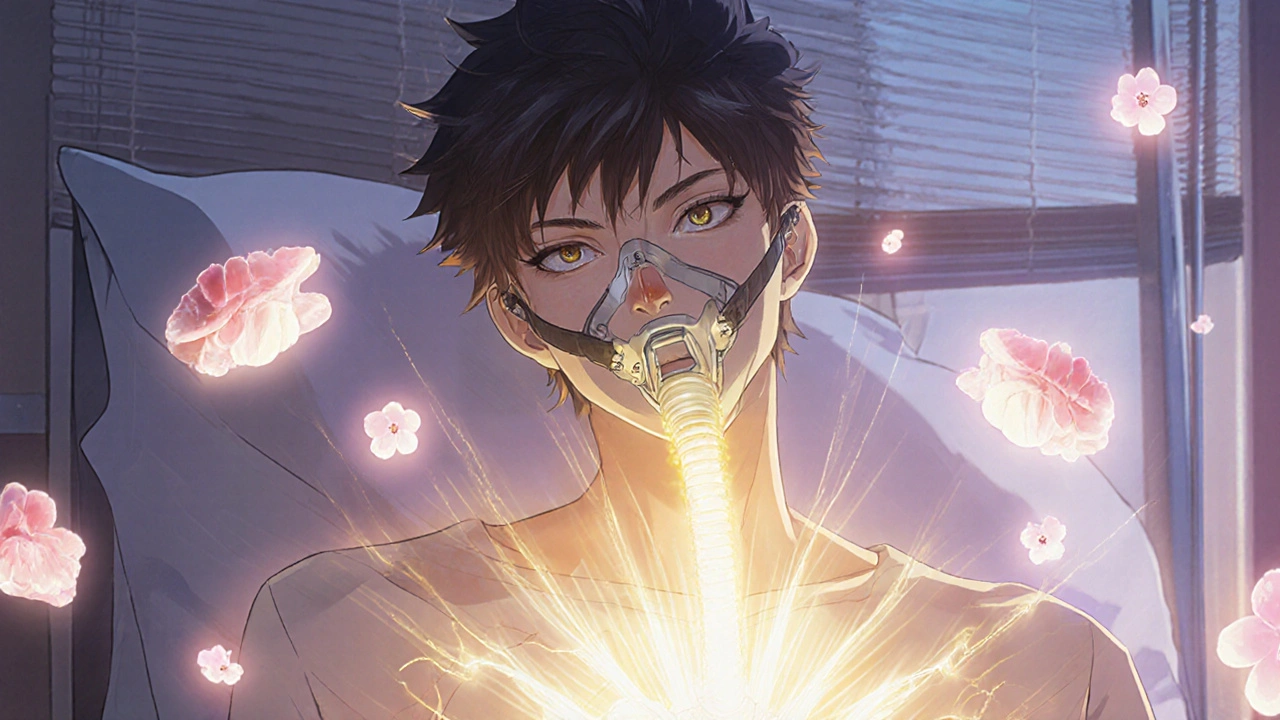
The Hidden Damage: Diastolic Dysfunction and Heart Failure
OSA doesn’t just make your heart race - it makes it stiff. Over time, the repeated pressure spikes and oxygen drops cause the walls of your heart’s left ventricle to thicken and lose flexibility. This is called diastolic dysfunction. It means your heart can’t relax properly between beats, so it can’t fill with enough blood.
Up to 45% of people with OSA show signs of this on an echocardiogram. Left untreated, this condition can lead to heart failure - and OSA increases that risk by 140%. It’s not just a side effect. It’s a direct cause.
And it’s not just the heart muscle. The constant inflammation from low oxygen damages the lining of your blood vessels. Platelets become stickier. Clots form more easily. That’s why OSA raises stroke risk by 60% and coronary artery disease risk by 30% - even after accounting for obesity, age, and cholesterol.
CPAP Therapy: The Proven Fix
The good news? You can reverse most of this damage.
Continuous Positive Airway Pressure (CPAP) therapy is the gold standard. It uses a mask and gentle air pressure to keep your airway open while you sleep. No surgery. No pills. Just consistent use.
Studies show that after just 12 months of using CPAP 4+ hours a night, people with OSA see:
- A drop in systolic blood pressure by 5-10 mmHg
- A 42% reduction in atrial fibrillation recurrence
- Improved heart function and reduced inflammation markers
Real people report the same. One user on the American Heart Association’s forum said his AFib episodes dropped from weekly to once every two months after six months of CPAP. Another, diagnosed with severe OSA (AHI of 42), saw his blood pressure fall from 160/95 to 128/82 in three months.
Adherence is the biggest hurdle. About 30% of people quit CPAP within the first year. But those who stick with it - even just 4 hours a night - report better sleep, more energy, and fewer heart-related hospital visits.

Who Should Get Screened - And When
You don’t need to be snoring loudly or obese to have OSA. The American Academy of Sleep Medicine now recommends screening for anyone with:
- High blood pressure (especially if it’s hard to control)
- Atrial fibrillation or other arrhythmias
- Heart failure
- History of stroke
And here’s the reality: 45-65% of people with these conditions have undiagnosed OSA. That means if you’re on medication for high blood pressure or AFib and still not feeling better, OSA could be the missing piece.
Diagnosis is simple. Most people can start with a home sleep test - a small device you wear overnight. It tracks your breathing, oxygen levels, and heart rate. If results show 5 or more breathing pauses per hour, you have OSA. If it’s 15 or more, treatment is strongly recommended, even if you don’t feel tired.
What If CPAP Doesn’t Work for You?
Not everyone tolerates CPAP. Mask discomfort, dry mouth, or claustrophobia are common complaints. But there are other options.
Oral appliances - custom-fitted mouthpieces that hold your jaw forward - work well for mild to moderate OSA. Weight loss helps, especially if you’re overweight. Positional therapy (sleeping on your side) reduces apneas for some. And for those who don’t respond to other treatments, a new implantable device called Inspire Therapy stimulates the nerve that controls your tongue, keeping your airway open. Clinical trials show it cuts apnea events by 79%.
The key isn’t perfection. It’s consistency. Even 3 hours of CPAP a night is better than none. And if you’re struggling, talk to your sleep specialist. Adjustments - humidifiers, different masks, ramp settings - can make all the difference.
The Bottom Line: Your Heart Can’t Take Another Night of This
Sleep apnea isn’t just a sleep problem. It’s a heart problem. Every time you stop breathing at night, your heart pays the price. The longer it goes untreated, the higher your risk of stroke, heart attack, and sudden cardiac death.
But the flip side is just as powerful. Treating OSA doesn’t just improve sleep. It lowers blood pressure. Reduces arrhythmias. Reverses heart strain. And in many cases, it cuts the need for heart medications.
If you’ve been told you snore, feel exhausted in the morning, or have high blood pressure or an irregular heartbeat - get tested. You don’t need to wait until you’re in crisis. The fix is simple. The risk of doing nothing? It’s not worth it.
Comments (13)
-
James Allen December 1, 2025
So let me get this straight - the government and Big Pharma are letting millions of people die from sleep apnea because they don’t want you to know CPAP is cheaper than heart surgery? I’ve seen the data - they’re hiding the real cause: EMF pollution from smart meters messing with your brain’s breathing signals. You think your mask is helping? It’s just a distraction while they keep poisoning the airwaves.

-
Kelly Essenpreis December 2, 2025
My cousin had this and just started sleeping on his stomach now he’s fine no mask needed

-
Karandeep Singh December 2, 2025
in india we dont have this problem we sleep on floor and dont use machines

-
Kenny Leow December 3, 2025
Interesting how the article frames OSA as purely a medical issue - but what about the cultural shift away from natural sleep rhythms? We’ve replaced candlelight with blue light, silence with white noise, and rest with productivity. Maybe the real epidemic isn’t apnea - it’s the loss of ancestral sleep patterns. 🌙

-
Debbie Naquin December 4, 2025
The pathophysiology is clear - intermittent hypoxia triggers sympathetic overdrive, oxidative stress, and endothelial dysfunction. But the clinical translation remains inconsistent. Why? Because adherence metrics are conflated with therapeutic efficacy. The 4-hour CPAP threshold is arbitrary. We need biomarker-guided titration, not arbitrary time thresholds.

-
Alexander Williams December 5, 2025
They say CPAP works but 30% quit - that’s not noncompliance, that’s systemic failure. The mask design is from the 90s. No ergonomic consideration. No customization. They treat a neurological breathing disorder like it’s a broken toaster you just need to plug in harder.

-
Scotia Corley December 7, 2025
It’s alarming how casually this article dismisses the role of obesity as the primary driver. OSA is not an independent disease - it’s a consequence of metabolic collapse. Blaming the machine instead of the lifestyle is not just misleading, it’s irresponsible.

-
Amber-Lynn Quinata December 8, 2025
I used to think I was just tired... then I got tested. My AHI was 52. CPAP changed my life. I can now play with my kids without falling asleep. ❤️

-
Lauryn Smith December 9, 2025
If you’re reading this and you snore or feel exhausted - don’t wait. Get tested. It’s not weak to need help. It’s brave to take care of your heart. You’re worth the mask.

-
elizabeth muzichuk December 10, 2025
They never tell you that CPAP machines are made by companies that also make heart meds. Coincidence? Or is this a billion-dollar loop designed to keep you dependent? I stopped mine. Now I sleep on my side with a tennis ball sewn into my pajamas. And guess what? My BP dropped. No pills. No machine.

-
Edward Hyde December 11, 2025
This whole thing is a scam. You think your heart’s breaking because you snore? Nah. It’s because you’re eating processed crap, sitting all day, and drinking caffeine like it’s water. CPAP? That’s just the glitter on a dying system.

-
Mary Ngo December 12, 2025
Let’s be honest - the medical-industrial complex thrives on pathologizing normal human variation. Sleep apnea is not a disease. It’s your body’s intelligent response to a toxic environment - synthetic bedding, fluorescent lighting, chronic stress. The real cure isn’t a machine. It’s radical reconnection: sleep in darkness, breathe through your nose, ground yourself to the earth. The body knows how to heal. We just forgot how to listen.

-
amit kuamr December 14, 2025
you say cpap helps but in rural india we dont have access to this so what do you suggest old people with heart issues do they just die
