

Every year, millions of people buy medications online. Some are looking for better prices. Others need drugs not available locally. But how many of them know if the pharmacy they’re using is real-or if they’re risking their life on fake pills?
Counterfeit drugs are not a distant threat. They’re in your mailbox. They’re in your medicine cabinet. The FDA estimates that 1% to 3% of the $575 billion U.S. prescription drug market comes from unlicensed sources. That’s between $5.75 billion and $17.25 billion in fake, dangerous, or ineffective medications. And it’s growing. In 2023, enforcement actions against illegal online pharmacies jumped 22% from the year before.
So how do you make sure the pharmacy you’re using is legitimate? It’s not hard-but you have to know where to look.
What Makes a Pharmacy Licensed?
A licensed pharmacy isn’t just a website with a nice logo and a “FDA Approved” badge. That badge could be fake. A real licensed pharmacy must be registered with the state board of pharmacy where it operates. In the U.S., that means each state has its own rules, but all follow the same core standards.
To get licensed, a pharmacy must:
- Have at least one licensed pharmacist in charge
- Pass a facility inspection
- Submit detailed financial and ownership records
- Prove the pharmacist passed the NAPLEX exam (minimum score of 75 out of 150)
- Complete a state-specific law exam, like California’s CPJE
These aren’t just paperwork checks. They’re safety layers. A licensed pharmacist doesn’t just fill prescriptions-they review them for dangerous interactions, check for dosage errors, and make sure the medication matches the doctor’s order. Unlicensed operations skip all of this. They’re shipping pills from warehouses with no quality control. Some contain the wrong drug. Others have no active ingredient at all. A few even have rat poison, lead, or fentanyl mixed in.
How to Check if a Pharmacy Is Legit
You don’t need a degree in pharmacy to verify a pharmacy. You just need five minutes and these five steps.
- Check if they require a valid prescription. Any legitimate pharmacy will ask for a prescription from a licensed doctor. If a site lets you buy controlled substances like oxycodone or Adderall without a prescription, it’s illegal. Period.
- Find their physical address. Type it into Google Maps. Look at Street View. Is it a real building? Does it look like a pharmacy? Fake pharmacies often use PO boxes or virtual office addresses. Legit ones have storefronts, warehouses, or clinic spaces you can verify visually.
- Verify the license with your state board. Every state has a public database. In California, go to www.pharmacy.ca.gov and search by license number or pharmacist name. In Florida, it’s free and instant. In New York, you can search by pharmacy name. Don’t skip this. A 2023 University of Florida study found 92% of consumers could verify a pharmacy in under 5 minutes.
- Look for pharmacist availability. Legitimate pharmacies must have a pharmacist on call to answer questions. Call them. Ask about side effects. Ask if the drug interacts with your other meds. If they don’t answer or say “just take it,” walk away.
- Check for VIPPS accreditation. The Verified Internet Pharmacy Practice Sites (VIPPS) program, run by the National Association of Boards of Pharmacy (NABP), is the gold standard for online pharmacies. Only about 3,000 U.S. pharmacies have this seal. You can search for them at www.nabp.pharmacy/vipps. If they’re not listed, they’re not verified.
One woman in San Diego, Maria Chen, used step three in March 2024. She checked her new pharmacy’s license and found the pharmacist-in-charge had resigned six months earlier. The pharmacy was operating without a licensed professional. She reported it. The state shut them down.
The NABP Verify Program: What It Is and Why It Matters
The National Association of Boards of Pharmacy (NABP) runs the most comprehensive verification system in the country: NABP Verify. It’s not a certification. It’s a live database that pulls real-time license status from all 50 states and territories.
Before 2018, checking a pharmacy’s license meant calling five different state boards if you were buying from a multi-state pharmacy. Now, NABP Verify lets you search once and see status across all participating states. It’s fast. It’s free for consumers. And it’s updated daily.
But here’s the catch: not all pharmacies use it. Only 43 states are fully integrated as of October 2023. California, for example, still processes manual requests in 30 days. So if you’re using NABP Verify and it says “not found,” that doesn’t mean the pharmacy is fake-it just means you need to check the state board directly.
Pharmacists pay $125 a year to subscribe to NABP Verify. That’s on top of their state renewal fees. Critics say it’s redundant. But for consumers, it’s one of the most reliable tools we have.
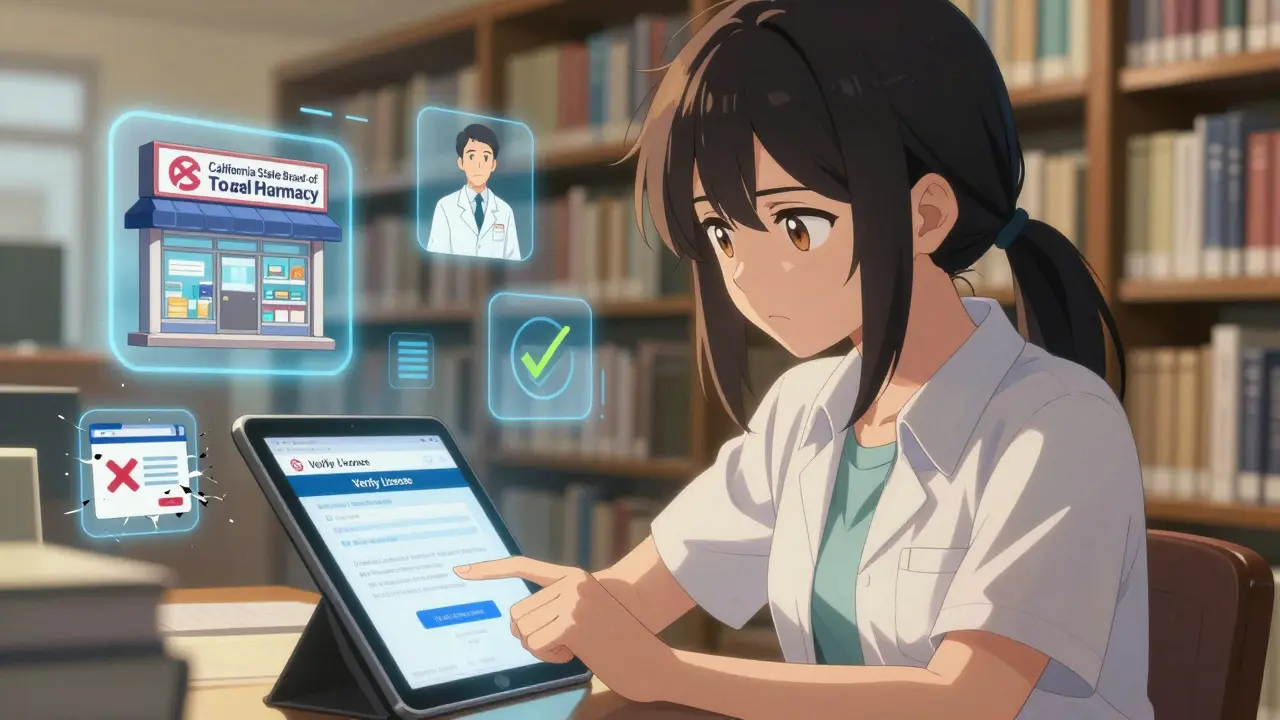
Red Flags That Mean Walk Away
Here’s what fake pharmacies do to look real-and how to spot the lies:
- Fake seals: They copy the VIPPS or NABP logo. But real logos link to official websites. Click them. If it takes you to a random site or a broken page, it’s fake.
- Too-good-to-be-true prices: A 90-day supply of Lipitor for $15? That’s impossible. Legit pharmacies pay wholesale prices. If it’s 80% cheaper than CVS or Walgreens, it’s likely counterfeit.
- No phone number or live support: Real pharmacies have a phone number. You can call and talk to a pharmacist. If the only contact is a contact form, that’s a warning.
- Payment only by wire transfer or cryptocurrency: Legit pharmacies take credit cards. They have merchant accounts. If they only accept Bitcoin or Western Union, run.
- “No prescription needed” or “Doctor on call”: These are red flags. No pharmacy can legally dispense controlled substances without a valid prescription. If they say they’ll “prescribe for you,” they’re breaking the law.
In July 2023, a consumer lost $850 to a site that displayed a fake NABP accreditation seal. The pills? Placebos. The site? Shut down by the FDA three weeks later.
Why This Matters More Than You Think
Counterfeit drugs don’t just waste your money. They kill.
NABP’s 2022 enforcement data shows unlicensed pharmacies are 4.7 times more likely to dispense the wrong medication-and 8.2 times more likely to be involved in controlled substance diversion. That means someone could get a fake version of insulin, heart medication, or antibiotics. The results? Hospitalizations. Organ failure. Death.
And it’s not just online. Some brick-and-mortar pharmacies in rural areas operate without proper oversight. That’s why checking the license-even if you walk in-is critical.
Dr. Carmen Catizone of NABP says the licensure system is the first line of defense. Without it, we’re trusting strangers with our lives.
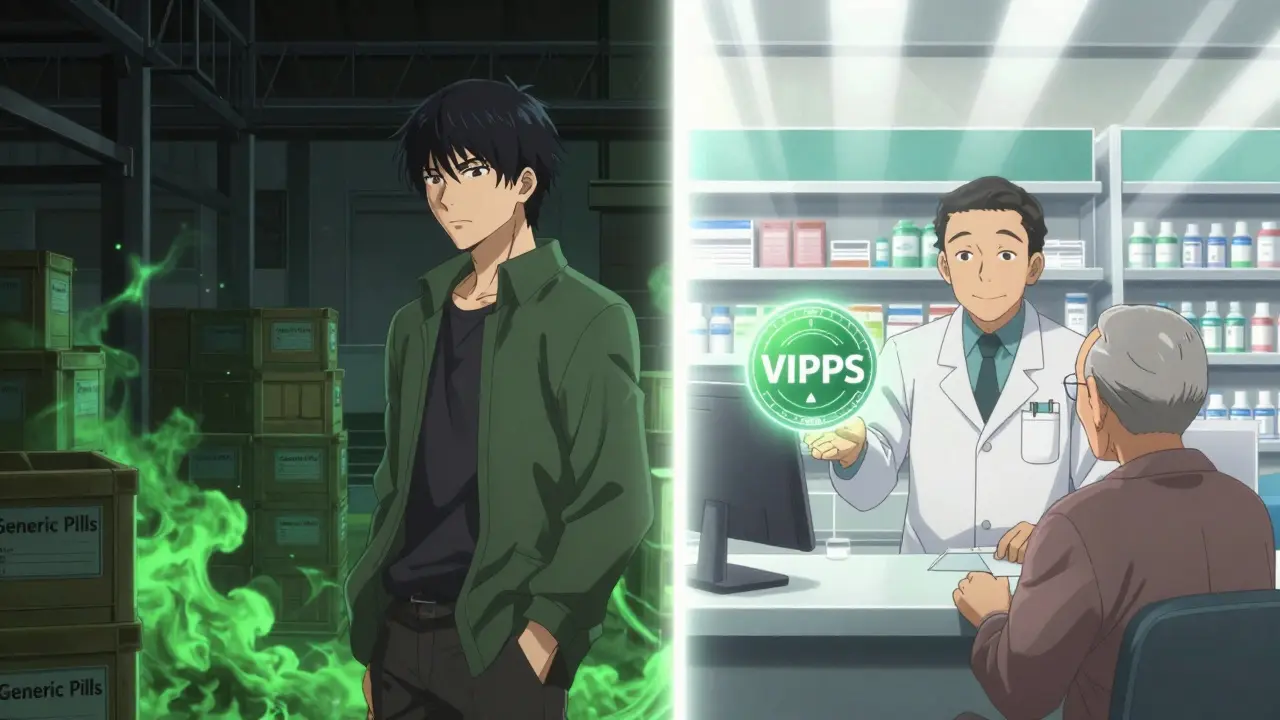
What’s Changing in 2024 and Beyond
The system isn’t perfect-but it’s getting better.
In January 2024, California started requiring out-of-state online pharmacies shipping to residents to provide an 800 number for pharmacist access. That’s a big step. The FDA also launched a $15 million initiative to detect fake online pharmacies, aiming for a 40% drop in consumer harm by 2026.
Meanwhile, 87% of state boards now offer online license verification-up from 63% in 2019. That means checking a pharmacy now takes minutes, not weeks.
Experts predict by 2027, we’ll see national licensing standards that cut through the current patchwork of state rules. That will make verification easier and more consistent.
But until then, you have to be your own watchdog.
What to Do If You’ve Been Scammed
If you bought medicine from a fake pharmacy:
- Stop taking the pills immediately.
- Call your doctor and tell them what you took.
- Report it to the FDA’s MedWatch program: www.fda.gov/medwatch
- File a complaint with the FTC: www.reportfraud.ftc.gov
- Check your bank statement for recurring charges.
Don’t wait. Fake drugs can cause damage days or weeks after you take them.
How do I know if an online pharmacy is licensed?
Check the pharmacy’s license through your state’s board of pharmacy website. Look for the VIPPS seal from NABP. Avoid sites that sell prescription drugs without a valid prescription. Verify their physical address on Google Maps and confirm they have a live pharmacist available to answer questions.
Can I trust pharmacies that offer discounts on brand-name drugs?
Not necessarily. Legitimate pharmacies offer discounts, but if the price is 50% or more below retail (like $15 for a 90-day supply of Lipitor), it’s a red flag. Counterfeiters use low prices to lure customers. Always verify the license and check for VIPPS accreditation before buying.
Is NABP Verify free for consumers?
Yes. NABP Verify is free for consumers to use. Pharmacists and businesses pay an annual fee to access the system, but anyone can search for a pharmacy’s license status at no cost. Go to www.nabp.pharmacy/verify and enter the pharmacy name or license number.
What’s the difference between a licensed pharmacy and a VIPPS-accredited pharmacy?
All VIPPS-accredited pharmacies are licensed, but not all licensed pharmacies have VIPPS. VIPPS is an extra level of verification for online pharmacies. It means they meet strict standards for privacy, security, and pharmacist availability. Look for the VIPPS seal on the website and verify it through the NABP website.
What should I do if I find a fake pharmacy?
Report it to the FDA’s MedWatch program and the FTC. If you bought medication, stop taking it and contact your doctor. Share your experience with friends and family. Fake pharmacies rely on silence to keep operating. Your report helps shut them down.
If you’re buying medication, don’t guess. Don’t trust logos. Don’t fall for discounts. Verify. It takes five minutes. It could save your life.
Comments (13)
-
Neela Sharma January 3, 2026This isn't just about safety-it's about dignity. We treat our bodies like temples, yet we scroll past red flags like they're ads for discount socks. A pill is not a snack. It's a promise. And when that promise is broken? You don't just lose money. You lose trust. In systems. In people. In yourself.

-
Shruti Badhwar January 4, 2026The statistical data presented here is both alarming and statistically underreported. The FDA's 1-3% estimate fails to account for unregulated cross-border shipments, which likely inflate the figure to 8-12% in high-demand therapeutic categories. Regulatory fragmentation remains the core failure.

-
Brittany Wallace January 5, 2026I used to buy my insulin from a 'Canadian' site because it was half the price... turns out it was shipped from a warehouse in Manila. I got sick for three weeks. Now I drive 45 minutes to a local pharmacy that lets me talk to the pharmacist. Worth every mile. ❤️

-
Haley Parizo January 6, 2026The VIPPS seal is a joke. It's a membership club for pharmacies that can afford the $125 fee. Meanwhile, rural clinics with licensed pharmacists but no IT budget get labeled 'unverified'-while shady operators with fake websites and VPNs slip through. This system protects corporations, not patients.

-
Ian Detrick January 7, 2026You don’t need a degree to protect yourself-you just need to stop being lazy. Five minutes. That’s all it takes. Check the license. Call the pharmacist. Google the address. If you won’t do that for your life, who will?

-
Angela Fisher January 8, 2026I know for a fact the FDA is in on this. They don’t shut down these sites because they want us to keep buying from Big Pharma. Look at the timeline-every time a new drug gets price-gouged, a dozen fake pharmacies pop up. Coincidence? Or strategy? They profit from fear. And from pills. Always from pills.

-
Vincent Sunio January 9, 2026The phrase 'FDA Approved' is legally meaningless when applied to online pharmacies. The FDA does not approve pharmacies; it regulates them. Furthermore, the NABP Verify database is not a certification mechanism but a directory of licensure status. Misuse of terminology undermines public comprehension.

-
Shanahan Crowell January 9, 2026I used to think this was just a scam thing... until my dad took fake blood pressure meds and ended up in the ER. He didn’t even know he’d been scammed. He thought the pills were just 'weaker.' Now I check every pharmacy he uses. Every. Single. One. Don’t wait for the hospital to teach you this lesson.

-
Kerry Howarth January 10, 2026Verify. Don’t guess.

-
Tiffany Channell January 10, 2026Let’s be real-most people don’t care. They want cheap. They want fast. They want magic pills. This post is preaching to the choir. The people who need to read this are the ones who already bought the $15 Lipitor and are now Googling 'why do I feel like I’m dying?'

-
Joy F January 11, 2026The entire pharmaceutical-industrial complex is a gilded cage. We’re told to trust the system, but the system is designed to obfuscate. NABP? VIPPS? State boards? These are performative safeguards. The real power lies in patent monopolies, opaque supply chains, and the psychological manipulation of chronic illness. We’re not just buying pills-we’re buying false security.

-
Liam Tanner January 12, 2026I’m a nurse in rural Ohio. We’ve got folks driving 2 hours to fill prescriptions because their local pharmacy closed. Some turn to online sellers out of desperation. We need better access-not just warnings. Let’s fix the system so people don’t have to risk their lives to afford medicine.

-
Palesa Makuru January 13, 2026I live in Cape Town and I’ve seen this firsthand. People order HIV meds from 'South African' sites that are actually hosted in Nigeria. The labels say 'Gilead' but the pills are chalk. And when they get sick? They blame the disease. Not the scam. We need education. Not just lists. We need stories.
