

Medication Driving Safety Checker
Check Your Medication Safety
Medications:
Key Risks:
More people are driving while impaired by medications than by alcohol - and most don’t even realize it. You take your pill, feel fine, hop in the car, and drive to work. But your reaction time is slower. Your focus is blurred. Your body isn’t reacting like it used to. And if you’re over 65, the risk is even higher. The FDA, NHTSA, and leading medical researchers agree: medications and driving is one of the most dangerous, overlooked public safety issues today.
What Medications Actually Do to Your Driving Skills
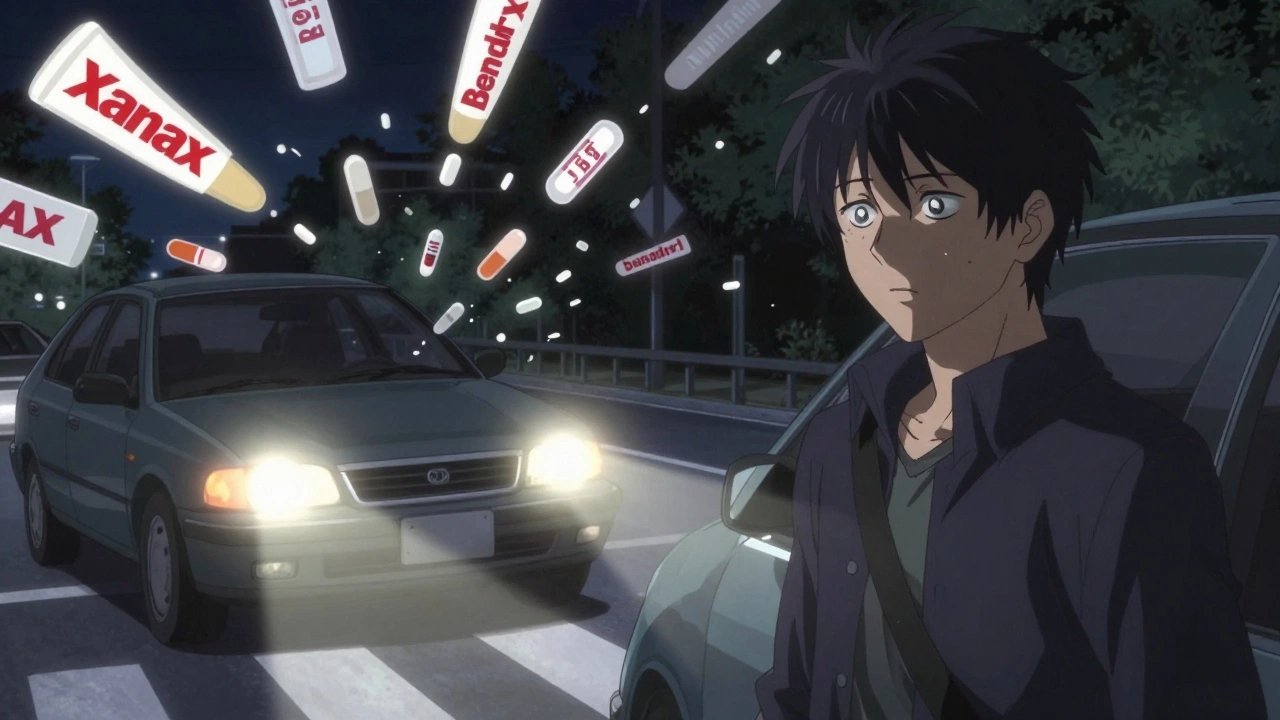
It’s not just about feeling sleepy. Medications can mess with your brain’s ability to process information, control your movements, and react quickly - all things you need to drive safely. Think of it like this: your car doesn’t care if you feel awake. It only cares if your hands can turn the wheel, your feet can hit the brake, and your eyes can spot a child stepping off the curb. Benzodiazepines - like Xanax or Valium - slow down brain processing by 25% to 40%. That means if you’re driving at 60 km/h and a car stops suddenly 50 meters ahead, you might not react in time. Opioids like oxycodone or fentanyl cause droopy eyelids, constricted pupils, and reduce reaction time by up to 300 milliseconds. That’s longer than it takes to blink. For comparison, a 0.08% blood alcohol level (the legal limit in most places) slows reactions by about 200 milliseconds. Even common over-the-counter meds are dangerous. Diphenhydramine - the active ingredient in Benadryl, Tylenol PM, and many sleep aids - impairs driving as much as a 0.10% BAC. That’s above the legal limit in every U.S. state and in Australia. And it doesn’t just last an hour. Studies show it can linger for up to 11 hours after taking it. So if you took a sleep aid at 10 p.m., you might still be impaired at 9 a.m. the next day - even if you feel wide awake. NSAIDs like ibuprofen and naproxen? They’re not just for pain. Research shows users have a 58% higher crash risk. Antidepressants, especially older ones like amitriptyline or mirtazapine, increase accident rates by 40%. And if you’re taking more than one of these? The effects multiply. One drug might slow you down. Two? You’re barely functional.The Hidden Danger: Poly-Drug Driving
The biggest threat isn’t one medication. It’s combinations. Alcohol + sleeping pills. Opioids + anti-anxiety meds. Painkillers + cold medicine. These mixtures don’t just add up - they multiply. A 2020 study found that 22% of drivers brought into trauma centers had multiple drugs in their system. Many didn’t even know they were combining risky substances. One Reddit user shared: "Took one Tylenol PM before bed, woke up at 7am, felt fine, got in the car at 9am - failed a field sobriety test." That’s not rare. That’s normal. Doctors rarely warn patients about this. A 2022 NHTSA study showed 68% of people prescribed impairing meds got no driving advice from their provider. Pharmacists are better - 89% now give warnings when dispensing - but most people don’t ask. And labels? They say "may cause drowsiness." That’s it. No time frame. No warning about mixing. No mention that the effect can last longer than you think.Legal Consequences Are Real - And Getting Tougher
In Australia, you can be charged with drug-impaired driving even if you’re not drunk. The law doesn’t care if you have a prescription. If a drug affects your driving, you’re breaking the law. All 50 U.S. states now include prescription drugs in their DUI laws. Some have specific blood concentration limits for certain drugs. But here’s the problem: unlike alcohol, there’s no simple roadside test. Police can’t just blow into a tube. They rely on Drug Recognition Experts (DREs) - officers trained to spot signs like pupil size, balance, and eye movement. It’s subjective. It’s slow. And it’s not always accurate. In 2023, NHTSA launched a $22 million initiative to develop saliva tests that can detect 12 common prescription drugs in under 5 minutes. Early results show 92.7% accuracy. But until those tests are widely used, enforcement is inconsistent. That doesn’t mean you’re safe. It just means you’re gambling. Penalties vary. In some states, a first offense means fines, license suspension, mandatory education. In others, it’s jail time. In Australia, a drug-driving conviction can mean losing your license for 6 months to 3 years - and a criminal record that affects jobs, travel, and insurance for years.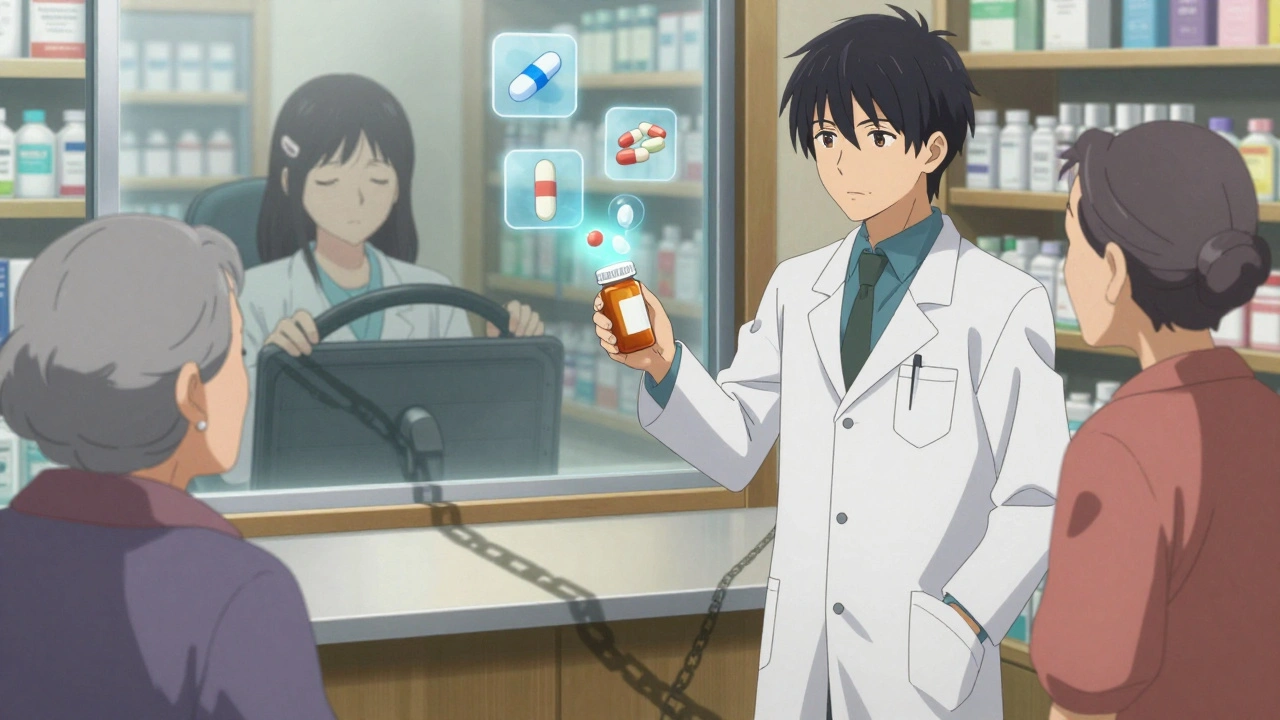
Who’s at Highest Risk?
Older adults. That’s the group most at risk. As we age, our bodies change. We process drugs slower. Our liver and kidneys don’t clear them as fast. We’re more sensitive to side effects. The Beers Criteria - a guide used by doctors in the U.S. and Australia - lists over 30 medications that should be avoided in people over 65 because they increase fall and crash risk. But it’s not just age. People taking three or more medications are 3 times more likely to drive while impaired. Chronic pain patients on opioids. Seniors on multiple prescriptions for arthritis, blood pressure, and sleep. People who self-medicate with OTC sleep aids. These are the hidden populations driving with dangerous levels of impairment. And here’s the kicker: 70% of drivers who take three or more impairing drugs say they still drive within two hours of taking them. They think they’re fine. They’re wrong.What You Can Do - Practical Steps to Stay Safe
You don’t have to stop taking your meds. But you need to take control.- Ask your doctor or pharmacist: "Will this affect my ability to drive?" Don’t assume they’ll tell you. Ask.
- Check the label. Look for words like "drowsiness," "dizziness," "blurred vision," or "avoid operating machinery." That includes driving.
- Wait it out. For first-gen antihistamines, wait at least 6 hours. For sleep aids like zolpidem, wait 8-12 hours. Don’t guess. Wait.
- Don’t mix. Never combine meds with alcohol, marijuana, or other sedatives. Even if it’s "just one drink."
- Test yourself. Before driving, try this: walk heel-to-toe in a straight line. Can you do it without wobbling? Can you touch your nose with your eyes closed? If not, don’t drive.
- Use alternatives. For allergies, choose loratadine (Claritin) or cetirizine (Zyrtec) - they’re less likely to cause drowsiness. For sleep, try melatonin or behavioral changes instead of diphenhydramine.
The Future Is Coming - But Don’t Wait for It
By 2027, most new cars will have sensors that watch your eyes, steering, and braking patterns. If you’re impaired, the car might beep, slow down, or even stop. That’s great - but it’s not here yet. And even when it is, it won’t replace your responsibility. Right now, the only thing protecting you is your own awareness. The only thing stopping you from being a statistic is your decision to pause, check, and wait. Every year, 18% of traffic deaths are linked to drugs - mostly legal, prescribed, or bought off the shelf. You don’t need to be drunk to be deadly behind the wheel. You just need to be taking the wrong pill at the wrong time.Frequently Asked Questions
Can I drive after taking ibuprofen or other NSAIDs?
Most people can drive after taking standard doses of ibuprofen or naproxen without issue. But research shows these medications increase crash risk by 58% - especially in older adults or when combined with alcohol or other drugs. If you feel dizzy, lightheaded, or unusually tired after taking them, don’t drive. Don’t assume it’s safe just because it’s "over-the-counter."
Is it illegal to drive while on prescription medication in Australia?
Yes. In Australia, it’s illegal to drive with any detectable level of certain drugs in your system - including prescription medications - if they impair your ability to drive. Police can conduct roadside saliva tests for drugs like THC, methamphetamine, and cocaine. While prescription drugs aren’t routinely tested for, if you’re involved in a crash or pulled over for erratic driving, a blood test can be ordered. Having a prescription doesn’t protect you from charges if you’re impaired.
How long after taking sleep meds like Ambien can I drive?
The FDA and manufacturers recommend waiting at least 8 to 12 hours after taking zolpidem (Ambien) before driving. Some people feel fine after 6 hours, but studies show reaction times and coordination can still be impaired. Never rely on how you feel. Wait the full time. If you take it at 11 p.m., don’t drive before 8 a.m. the next day - even if you slept well.
Why don’t doctors always warn patients about driving risks?
Many doctors don’t have enough time during appointments to cover every side effect. Others assume patients will read the label. But research shows 68% of patients get no driving advice from their provider. It’s a gap in care. Always ask. If your doctor doesn’t bring it up, say: "Will this affect my driving?" It’s your safety - and others’ - on the line.
Are newer antihistamines like Claritin safer for driving?
Yes. Second-generation antihistamines like loratadine (Claritin), cetirizine (Zyrtec), and fexofenadine (Allegra) are much less likely to cause drowsiness. Studies show they have minimal impact on driving performance. If you need allergy relief and drive regularly, choose these over older options like diphenhydramine (Benadryl) or chlorpheniramine.
What should I do if I’ve been pulled over for suspected drug-impaired driving?
Stay calm. Politely state you’re on prescribed medication and ask for a copy of the test results. Do not admit guilt. You have the right to legal counsel. If you’re charged, keep all prescription labels, pharmacy receipts, and doctor’s notes. A legal defense can show you were following instructions - but the burden is on you to prove you weren’t impaired. Never assume a prescription is a legal shield.
Next Steps
- Review every medication you take - prescription and OTC - and check for driving warnings.
- Set phone reminders: "Don’t drive after taking [med name]."
- Ask your pharmacist to review all your meds together for interactions.
- If you’re over 65, ask your doctor if any of your meds are on the Beers Criteria list.
- Never drive after combining meds with alcohol, even one drink.
You’re not reckless for taking your meds. But you are at risk if you don’t understand how they affect you. The road doesn’t care if you have a prescription. It only cares if you’re safe to drive.
Comments (8)
-
Jordan Wall December 5, 2025
Let’s be real-this is a classic case of regulatory myopia. The FDA and NHTSA are throwing around stats like confetti, but they’re ignoring the *pharmacokinetic heterogeneity* across populations. You can’t just slap a 0.10% BAC equivalency on diphenhydramine without accounting for CYP2D6 polymorphisms, renal clearance variance in elderly patients, or the gut-brain axis modulation induced by chronic SSRI use. 🤓 The real issue? We’re applying alcohol-centric frameworks to CNS depressants with entirely different mechanisms. We need metabolite-specific thresholds, not lazy analogies. 🚗💨

-
Ben Choy December 6, 2025
I appreciate this post so much. I’m 71 and on 4 meds-blood pressure, arthritis, sleep, and a little for anxiety. I had no idea Benadryl was that bad. I used to take it every night like it was candy. Now I’m switching to melatonin and setting phone reminders. Thank you for the wake-up call. 🙏

-
Emmanuel Peter December 7, 2025
Bro, this is wild. You’re telling me I can’t take NyQuil before my 8 a.m. shift? I’ve been doing that for 12 years. I feel fine. My boss says I’m ‘sharp as a tack.’ You’re just trying to scare people to sell more ‘non-drowsy’ allergy meds. 😒

-
Ashley Elliott December 8, 2025
Thank you for writing this. So many people don’t realize that ‘feeling fine’ doesn’t mean ‘safe to drive.’ I’m a nurse, and I’ve seen too many older patients who think their prescriptions are ‘harmless.’ Please, everyone-ask your pharmacist. Write it down. Share it with your family. This isn’t fear-mongering. It’s care. 💙

-
Chad Handy December 9, 2025
Look, I get it. You’re trying to be responsible. But let’s not pretend this is some epidemic. The data is cherry-picked. You cite a 58% increase in crash risk for NSAIDs-great. But what’s the baseline? Is it 0.1%? 0.5%? You don’t say. And you ignore the fact that people who take multiple meds are more likely to have comorbidities-diabetes, neuropathy, vision loss-that are the *real* risk factors. You’re blaming the pill instead of the patient’s underlying conditions. It’s lazy. And frankly, it’s patronizing. I’m not a child who needs a ‘don’t drive after taking this’ sticker on my medicine bottle. I’m an adult. I know my body. And I drive better than half the people on the road who are texting with one hand and eating a burrito with the other. 🤷♂️

-
Ollie Newland December 10, 2025
Been on gabapentin and amitriptyline for 5 years. Never thought about driving risk until I got pulled over for swerving. Turned out I had a 0.02% blood level of amitriptyline metabolites-way below ‘toxic’ but enough to mess with my reaction time. My doc never mentioned it. Pharmacist just shrugged. This post? Lifesaver. Now I drive only after 10 hours post-dose. And I use Zyrtec instead of Benadryl. Small changes, big difference.

-
Rebecca Braatz December 11, 2025
THIS. IS. CRITICAL. I’m sharing this with every senior group I know. My dad took 8 meds and drove every day. He thought he was fine. He wasn’t. He totaled his car last year-no alcohol, no illegal drugs-just a cocktail of sleep aids, painkillers, and antihistamines. He’s lucky he’s alive. If you take more than three meds, you owe it to yourself and everyone else on the road to sit down, write them all out, and ask: ‘Which of these could kill someone if I’m behind the wheel?’ Don’t wait for a crash to wake up.

-
Benjamin Sedler December 13, 2025
Wow. So now we’re criminalizing common sense? You want us to stop taking meds that help us function, just because some bureaucrat in a lab says ‘it might slow your reflexes’? Next you’ll ban coffee because it makes people jittery. Or chocolate because it has caffeine. This isn’t safety-it’s nanny-state overreach wrapped in a lab coat. I’ll take my chances with my own body thank you very much. 🤷♂️
