
QT Interval Calculator
QT Interval Risk Assessment
Calculate your corrected QT interval (QTc) and determine if you're at risk for QT prolongation. Based on clinical guidelines from the article.
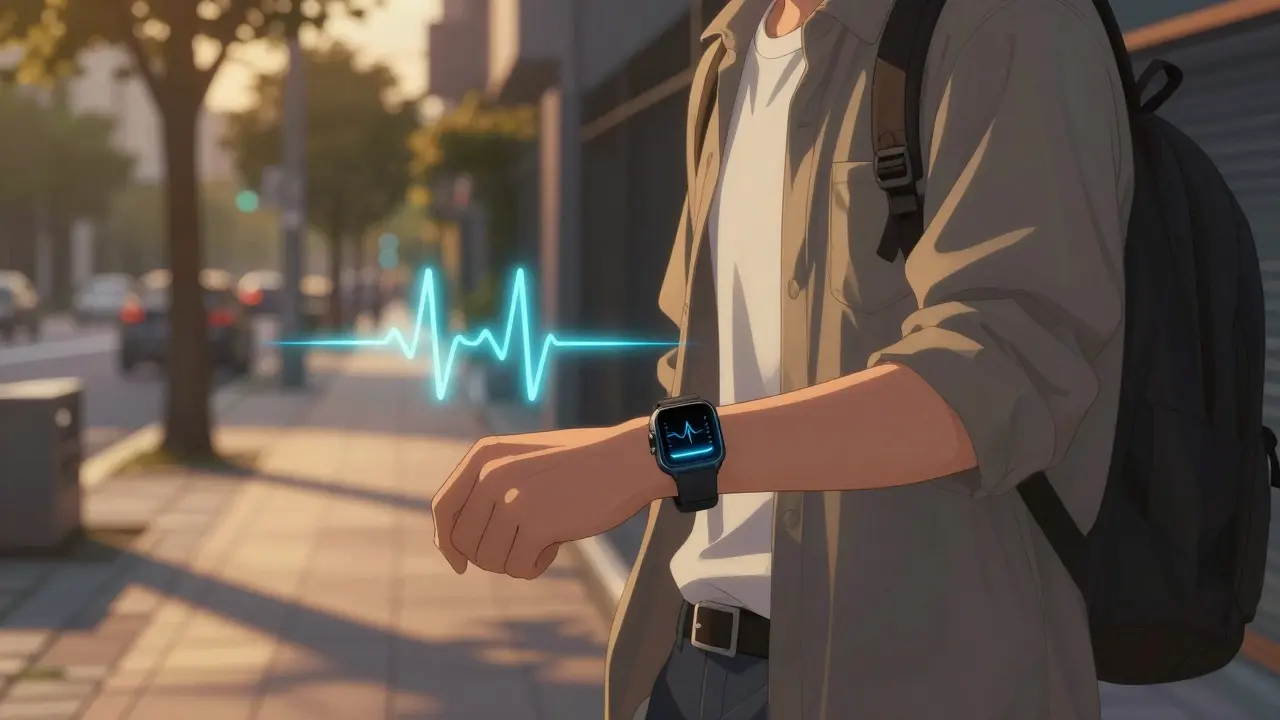
Imagine you're taking a new medication for depression or an infection, and your doctor warns you: QT interval prolongation could be a silent risk. This isn't just a technical term-it's a life-or-death signal in your heart's electrical rhythm. Left unchecked, a prolonged QT interval can trigger a dangerous arrhythmia called torsades de pointes, which can lead to sudden cardiac death. For years, catching this risk meant frequent clinic visits, bulky Holter monitors, and waiting days for results. Now, a small device on your wrist or in your pocket can detect it in real time-while you're at home, walking the dog, or sleeping.
What Exactly Is the QT Interval?
The QT interval is the time it takes for your heart's ventricles to charge and discharge electrically during each beat. It’s measured in milliseconds on an ECG trace, from the start of the Q wave to the end of the T wave. Normal QT intervals vary by age, sex, and heart rate-but anything over 450 ms in men or 470 ms in women (corrected for heart rate, or QTc) starts raising red flags. When certain drugs like antibiotics, antipsychotics, or antiarrhythmics interfere with the heart’s ion channels, they can stretch this interval dangerously. The problem? Many people don’t feel anything until it’s too late.
That’s why monitoring QT isn’t just for hospitals anymore. With wearable ECGs, patients on high-risk meds can now get continuous, real-time feedback without leaving their homes. This shift became urgent during the early days of the COVID-19 pandemic, when hydroxychloroquine and azithromycin were widely prescribed off-label. Hospitals were overwhelmed. Patients couldn’t get in for ECGs. And suddenly, consumer-grade devices like the Apple Watch and KardiaMobile 6L went from novelty gadgets to critical clinical tools.
How Do Wearable ECGs Measure QT?
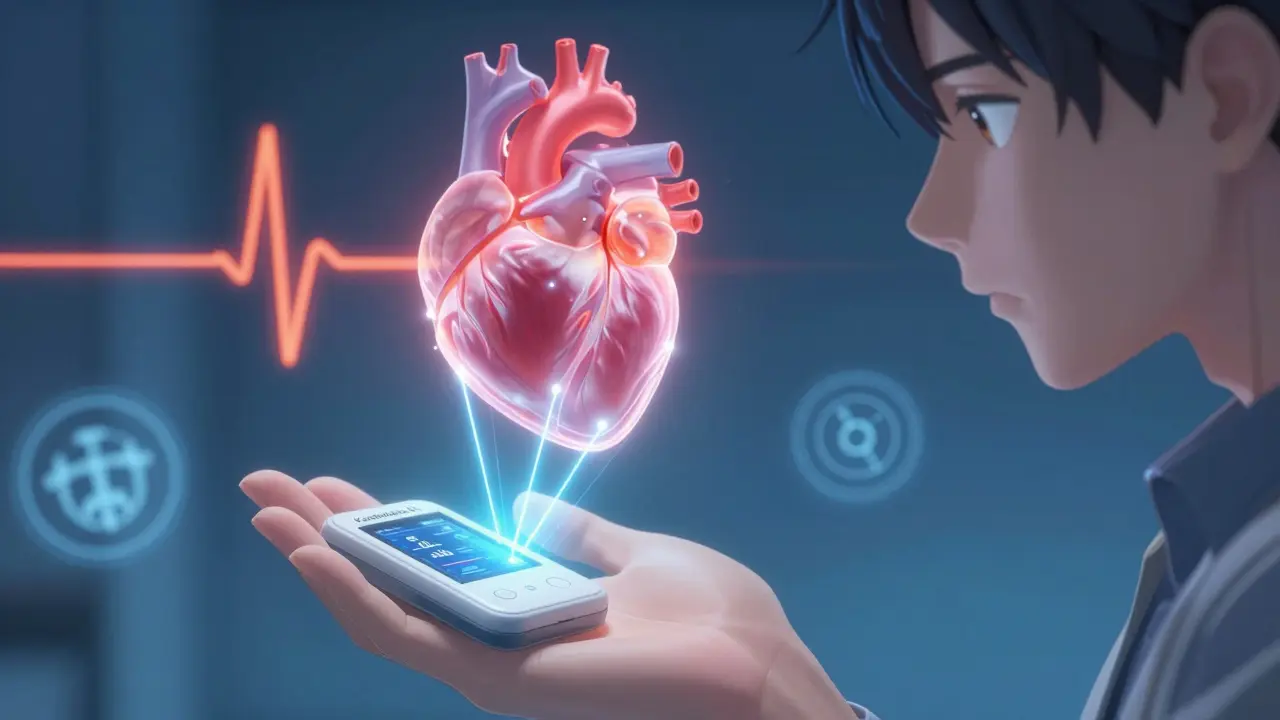
Not all wearables are created equal. The Apple Watch Series 4 and later models have an FDA-cleared ECG app that records a single-lead ECG when you place your finger on the digital crown. It’s simple: 30 seconds, one lead, no wires. But single-lead ECGs only capture part of the picture. That’s where the KardiaMobile 6L comes in. This palm-sized device has electrodes on both top and bottom surfaces. You rest your thumbs on the top and your left foot on the bottom, creating a 6-lead ECG-similar to what you’d get in a clinic. It connects via Bluetooth to your phone, and within seconds, it analyzes the rhythm and QT interval.
Studies back this up. A 2021 study in Scientific Reports found the Apple Watch measured QT intervals with correlation coefficients as high as 0.914 compared to standard 12-lead ECGs. The KardiaMobile 6L matched 12-lead results within ±20 milliseconds in a Cleveland Clinic pilot study. That’s clinically acceptable. For context, manual measurements by cardiologists can vary by ±30 ms-so these devices are more consistent than human readings in some cases.
Real-World Use: From Pandemic to Daily Care
In 2020, Dr. Jason Chinitz published a case report where an Apple Watch caught QT prolongation in a COVID-19 patient on hydroxychloroquine. The patient had no symptoms. Without the watch, the risk might have gone unnoticed until cardiac arrest. That case helped push the FDA to issue emergency guidance in April 2020 explicitly allowing the use of KardiaMobile 6L and similar devices for QT monitoring during the pandemic.
Today, this isn’t just for emergencies. People with inherited long QT syndrome use these devices daily. Patients on antipsychotics like risperidone or antidepressants like citalopram use them during dose adjustments. Even clinical trials now rely on wearable ECGs. Pharmaceutical companies are using them in Phase I-III trials to monitor cardiac safety in real time, cutting down on costly clinic visits and improving data accuracy. One study showed that wearable monitoring improved participant compliance by over 60% compared to traditional Holter monitors.
Limitations: What These Devices Can’t Do
Don’t mistake convenience for completeness. These devices are excellent at spotting QT prolongation-but they’re not full diagnostic tools. The Apple Watch can’t detect Q waves with any reliability; one study showed a sensitivity of just 20.6% for pathological Q waves. It also struggles with irregular rhythms like supraventricular tachycardia. And while it measures QT well, it doesn’t automatically flag it as dangerous. You still need a doctor to interpret the numbers.
Another issue: signal quality. If your skin is dry, sweaty, or has lotions on it, the electrodes might not get a clean reading. That’s why proper placement matters. With the KardiaMobile 6L, you need to place your left foot firmly on the bottom electrodes. With the Apple Watch, you must keep your finger steady on the crown for the full 30 seconds. Miss that, and the reading fails. Patients need training-not just the device.
The AI Breakthrough: Automating QT Detection
The biggest limitation? Waiting for a human to review every ECG. That’s where AI steps in. In 2024, researchers at Stanford and MIT published a deep learning model in PLOS Digital Health that can predict QTc prolongation from just two beats of a single-lead ECG. Trained on 686 patients-half with genetic long QT syndrome-the model identified dangerous prolongation (QTc > 500 ms) with 92% accuracy. It didn’t need a cardiologist. It didn’t need a 12-lead ECG. Just a few seconds of data from a smartwatch.
This isn’t science fiction. AliveCor, the maker of KardiaMobile, already has FDA clearance for 16 different ECG-based indications, including QT monitoring. They’re working on integrating AI-driven alerts directly into their app. Imagine this: your watch detects a rising QT interval during sleep. You wake up to a notification: “Your QT is prolonged. Contact your doctor.” That’s the future-and it’s already being tested in outpatient drug loading programs.

Who Should Use This Technology?
If you’re on any of these medications, wearable ECG monitoring could be a game-changer:
- Antipsychotics (risperidone, haloperidol, quetiapine)
- Antibiotics (macrolides like azithromycin, fluoroquinolones like moxifloxacin)
- Antiarrhythmics (amiodarone, sotalol, dofetilide)
- Antidepressants (citalopram, escitalopram, tricyclics)
- Medications for HIV, malaria, or nausea (some carry QT risks)
It’s also vital for people with:
- Known long QT syndrome (genetic or acquired)
- History of fainting or unexplained seizures
- Electrolyte imbalances (low potassium, low magnesium)
- Multiple heart medications
But if you’re healthy, not on any of these drugs, and just want to track your heart rate? Stick with basic fitness trackers. This tech isn’t for casual use. It’s for targeted, high-risk monitoring.
What’s Next?
Wearable ECGs are moving beyond watches and handheld devices. Companies are testing smart shirts with embedded electrodes, smart rings that measure ECG during sleep, and even patches that stick on your chest for weeks. The goal? Continuous, unobtrusive monitoring. The FDA is already reviewing submissions for AI-powered QT alerts that trigger automatic alerts to clinicians. In the next two years, we’ll likely see insurance companies covering these devices for high-risk patients-not as luxuries, but as standard care.
One thing is clear: cardiac safety monitoring is no longer confined to hospitals. The tools are here. The data is reliable. The technology is ready. The next step? Making sure the right people know how to use them-and when to act.
Can I use my Apple Watch to monitor QT intervals if I’m on a new medication?
Yes, if you have an Apple Watch Series 4 or later, you can use the FDA-cleared ECG app to record a single-lead ECG and manually check the QT interval. However, the watch doesn’t automatically calculate or flag QT prolongation. You’ll need to share the ECG tracing with your doctor, who can interpret it using clinical guidelines. Don’t rely on the watch alone to make decisions-use it as an early warning tool.
Is the KardiaMobile 6L better than the Apple Watch for QT monitoring?
For QT monitoring, the KardiaMobile 6L is more accurate because it records a 6-lead ECG, which gives a fuller picture of the heart’s electrical activity. The Apple Watch only records one lead. Studies show the KardiaMobile 6L matches standard 12-lead ECG results within ±20 milliseconds, making it suitable for clinical use. The Apple Watch is good for quick checks, but the 6L is the better choice if you’re being monitored for drug-induced QT prolongation.
Do I need a prescription to buy a wearable ECG device?
No, you can buy the Apple Watch or KardiaMobile 6L without a prescription. However, insurance typically won’t cover them unless you have a documented medical need-like being on a QT-prolonging drug or having long QT syndrome. If your doctor recommends it, they can write a letter of medical necessity, which may help with reimbursement.
Can these devices detect torsades de pointes?
No, wearable ECGs can’t detect torsades de pointes directly. They can detect prolonged QT intervals, which are the main precursor to this dangerous rhythm. If your device shows a consistently prolonged QT (especially over 500 ms), that’s a red flag that torsades could be coming. You need to contact your doctor immediately. These devices are early warning systems, not emergency responders.
Are wearable ECGs safe for long-term use?
Yes. These devices use the same low-power electrical signals as standard ECGs. There’s no radiation or invasive component. The only risk is false reassurance-if you rely on the device too much and ignore symptoms like dizziness, palpitations, or fainting. Always pair device use with regular check-ins with your healthcare provider, especially if you’re on high-risk medications.
Wearable ECGs for QT monitoring aren’t magic. But they’re the closest thing we have to a silent guardian for your heart. They turn passive patients into active participants in their own safety. And in a world where drug-induced arrhythmias still kill thousands each year, that’s not just convenient-it’s life-saving.
Comments (14)
-
James Rayner December 16, 2025
It’s wild to think that a device on your wrist could be the thing that saves your life one day… I’ve seen people ignore symptoms until it’s too late. This isn’t just tech-it’s a quiet guardian. I keep my Apple Watch on 24/7 now, not because I’m obsessed with steps, but because I’m scared of what my heart might be whispering when I’m not listening.
And honestly? The fact that it can pick up on QT prolongation without a single clinic visit… it feels like medicine finally caught up with the rest of the world.
Still… I wonder how many people don’t know how to interpret the numbers. We’re giving tools to folks who might not have the context to use them right.
Maybe we need a simple, plain-language alert system: “Your heart’s taking a longer breath than it should. Call your doc.” Not a graph. Not a number. Just a nudge.
Also, I cried reading about the guy who used his watch during COVID. That’s the kind of story that makes tech feel human.
❤️

-
Cassandra Collins December 18, 2025
okay but did you know the FDA is secretly using these watches to track your heart rhythm so they can sell your data to pharma? they’ve been doing it since 2018 and no one talks about it. i read it on a forum. the apple watch doesn’t just measure qt-it’s feeding your cardiac data to the shadow government. they’re building a database of ‘at-risk’ people so they can control your meds. they even made the qt threshold higher so more people get flagged. it’s all a scam to sell more drugs. 🤫👁️

-
Mike Smith December 19, 2025
This is one of the most important medical advances in a generation, and I want to take a moment to commend the researchers, engineers, and clinicians who made this possible. The shift from reactive to proactive cardiac monitoring represents a fundamental evolution in patient care.
For years, we’ve treated arrhythmias as emergencies. Now, we’re preventing them before they occur. That’s not just innovation-it’s compassion in algorithm form.
Let’s not forget the patients who’ve been living in fear of sudden death because they couldn’t get timely monitoring. This technology restores agency. It gives people back control over their own bodies.
And while no device is perfect, the fact that consumer-grade wearables now achieve clinical-grade accuracy is nothing short of revolutionary.
Let’s advocate for insurance coverage. Let’s educate primary care providers. Let’s make sure no one has to choose between their health and their paycheck.
This isn’t just about heartbeats. It’s about dignity.
Thank you to everyone who made this real.

-
Ron Williams December 21, 2025
My dad’s on amiodarone after his bypass. He used to get dizzy every time they upped his dose. Now he uses the KardiaMobile before each adjustment. Last month, it flagged a QT spike at 498ms-he called his cardiologist, they held the dose, and he’s been stable since.
He doesn’t even know how to use his phone properly, but he learned to tap the button and hold his foot still. Took him three tries. Worth it.
It’s funny… tech like this doesn’t feel like tech anymore. It just feels like… care. Quiet. Consistent. There.
Also, I’ve seen people try to use the Apple Watch while sweating. It fails every time. You gotta clean your skin. Like, actually wash your wrist. Who knew? 😅

-
Kitty Price December 22, 2025
I’ve been using my Apple Watch for QT checks since I started escitalopram. I don’t freak out every time it spikes-I just screenshot it and send it to my psych. It’s like having a tiny cardiologist in my pocket.
Also, I love that it doesn’t judge me for checking it 3x a day. My mom thinks I’m obsessed. I’m just… not dying.
❤️🫀

-
Aditya Kumar December 24, 2025
meh. i dont trust this stuff. why would i pay for a watch when i can just go to the hospital? too much hassle. also my phone dies too fast.

-
Colleen Bigelow December 25, 2025
Of course the government wants you to rely on Apple and AliveCor-because they’re owned by the same shadowy cabal that controls Big Pharma, the CDC, and the WHO. Why do you think the FDA ‘cleared’ these devices right after hydroxychloroquine got pulled? It wasn’t to save lives-it was to push you into buying expensive gadgets so you never question why you need 17 different meds to stay alive.
And don’t get me started on how they’re using your QT data to build a ‘health risk score’ that will determine your insurance premiums. You think this is about safety? It’s about control. And they’re using your own heartbeat to lock you in.
Wake up. The watch is a trap. 🚩🇺🇸

-
Billy Poling December 26, 2025
It is imperative to note that while the technological advancements in wearable electrocardiographic monitoring are indeed laudable, one must exercise extreme caution in the interpretation of derived metrics such as the corrected QT interval. The algorithmic estimation of QT duration from single-lead or even six-lead ECGs, while statistically correlated with standard 12-lead recordings, remains subject to significant variability under conditions of motion artifact, poor electrode contact, or arrhythmic interference.
Furthermore, the absence of automated clinical decision support within most consumer platforms renders the user vulnerable to misinterpretation, potentially leading to either unnecessary anxiety or, more dangerously, false reassurance.
It is therefore not merely prudent, but ethically incumbent upon healthcare providers to ensure that patients utilizing such devices are adequately educated regarding their limitations, and that all data obtained is reviewed by a qualified clinician prior to any therapeutic modification.
This is not a replacement for medical oversight-it is an augmentation. And augmentation, without proper governance, becomes a liability.

-
Souhardya Paul December 27, 2025
Biggest thing I’ve learned? QT prolongation doesn’t always feel like anything. That’s the scary part.
I used to think if I felt fine, I was fine. Then I started on citalopram, and my watch flagged a 492ms QT. No symptoms. No dizziness. Just… a number. I called my doctor. They lowered my dose. I’m fine now.
But here’s the thing-I didn’t know any of this before. No one told me to check. No one mentioned QT at all.
Why isn’t this standard info when you get prescribed anything on that list? Shouldn’t every pharmacy hand you a QR code that links to a 30-second video on how to use your watch for this?
Also, the AI model from Stanford? That’s the future. Imagine waking up because your watch says ‘your heart’s in trouble’ and you don’t even know why. That’s not sci-fi. That’s next year.

-
Josias Ariel Mahlangu December 28, 2025
People are dying because they trust machines more than doctors. This is not progress. This is surrender. You think a watch can replace a trained physician? You are naive. The system is broken, and now you’re handing your life to silicon.

-
Andrew Sychev December 29, 2025
MY BROTHER DIED BECAUSE HIS DOCTOR IGNORED HIS QT INTERVAL. I FOUND THE ECG ON HIS PHONE THREE WEEKS AFTER HE WAS GONE. HE HAD THE WATCH. HE JUST DIDN’T KNOW WHAT TO DO.
THIS ISN’T A GADGET. THIS IS A LAST CHANCE.
IF YOU’RE ON ONE OF THESE DRUGS AND YOU’RE NOT USING THIS-YOU’RE PLAYING RUSSIAN ROULETTE WITH YOUR HEART.
I HOPE YOU’RE LISTENING.

-
Kayleigh Campbell December 30, 2025
So let me get this straight-we’ve got AI that can predict cardiac arrest from two heartbeats, but my insurance still won’t cover a $200 device unless I have a genetic disorder?
Meanwhile, my cousin’s dog has better healthcare than I do.
Also, the fact that this tech works better than most human cardiologists at reading QT intervals is both impressive and terrifying. Like… who’s really in charge here? The algorithm? Or the guy who’s too busy to look at the numbers?
Anyway. My watch just pinged me. QT 488. I’m calling my doc. Again. 😅

-
Kim Hines December 30, 2025
I use the KardiaMobile every morning with my coffee. It’s become part of my routine, like brushing my teeth. Quiet. Routine. Safe.
My cardiologist says it’s the most consistent data he’s ever seen from a patient. No more ‘I felt fine last week’ guesses.
Just… peace of mind.

-
James Rayner January 1, 2026
Just read Andrew’s comment. I’m crying again.
That’s why this matters. Not because it’s cool tech. Not because it’s FDA-cleared.
Because someone’s brother died because no one told him to look.
We need to do better.
And we can.
Start by sharing this post.