
Hypoglycemia Risk Calculator
Assess Your Alcohol Risk
This tool helps you understand your risk of low blood sugar when drinking alcohol with diabetes medications. Always consult your doctor before drinking.
Drinking alcohol while taking diabetes meds isn’t just a bad idea-it can be dangerous. For many people with diabetes, a glass of wine or a beer after dinner feels harmless. But when you’re on insulin, sulfonylureas, or even metformin, that drink can trigger a silent, life-threatening drop in blood sugar. And it’s not just about feeling shaky or sweaty. The real danger is that the symptoms look exactly like being drunk: slurred speech, dizziness, confusion, even passing out. No one around you knows you’re in medical distress-they just think you’ve had too much.
Why Alcohol Makes Blood Sugar Drop
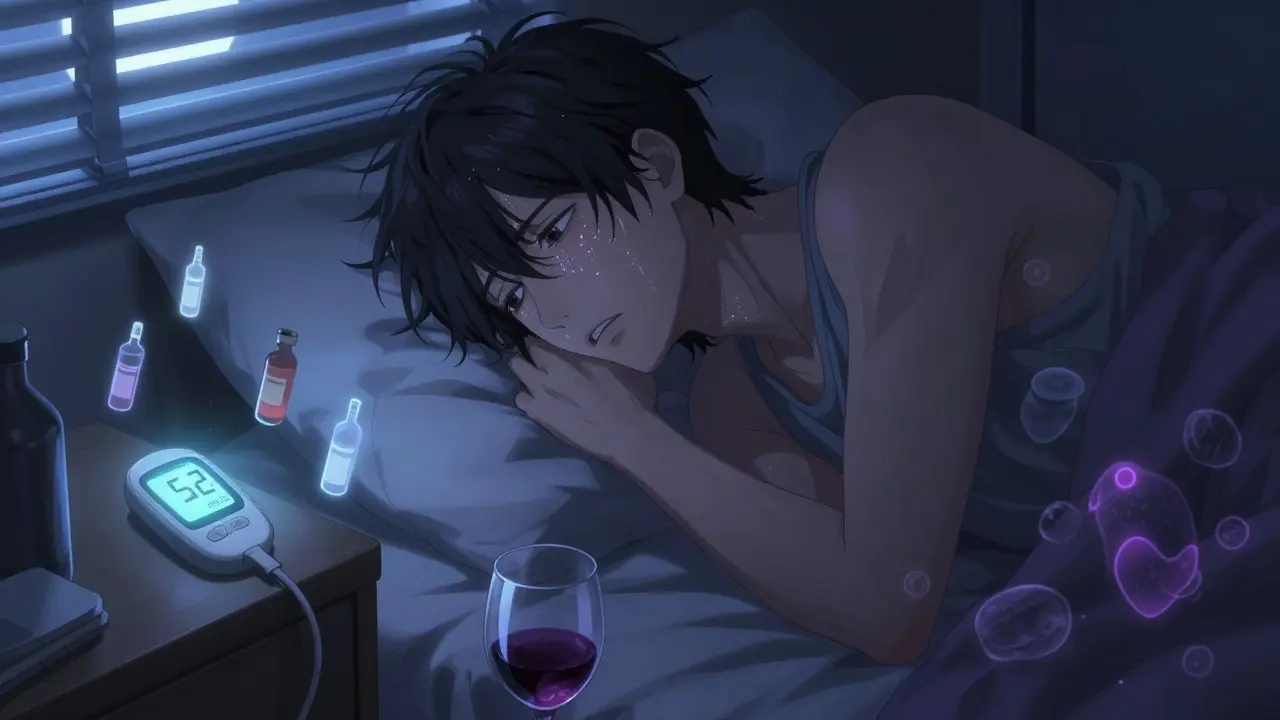
Your liver has two jobs: keep your blood sugar steady and break down alcohol. When you drink, it drops everything else to focus on detoxifying. That means it stops releasing glucose into your bloodstream. If you’re on medication that already pushes your blood sugar down-like insulin or glipizide-your body has no backup. Blood sugar can plummet, sometimes hours after your last sip, especially if you’ve been active or skipped a meal. This isn’t theoretical. People with diabetes report waking up in the middle of the night with sweating, heart palpitations, or confusion-only to find their glucose reading at 52 mg/dL. They didn’t eat after drinking. They didn’t realize the alcohol was still working in their system. That’s the silent risk: hypoglycemia doesn’t happen right away. It sneaks in later, when you’re asleep, alone, or unaware.Metformin and Alcohol: A Risky Mix
Metformin is one of the most common diabetes pills. It’s generally safe. But when combined with alcohol, things get tricky. Both are processed by the liver. Together, they put extra strain on it. Over time, this can raise your risk of lactic acidosis-a rare but serious condition where lactic acid builds up in your blood. Symptoms? Nausea, vomiting, stomach pain, muscle weakness, rapid breathing. It’s easy to mistake these for just a bad hangover. Even if you don’t develop lactic acidosis, mixing metformin and alcohol worsens the usual side effects: bloating, gas, cramps, diarrhea. One person in Sydney told me they’d drink two beers after dinner and end up vomiting by midnight. They thought it was food poisoning. It was the metformin reacting with the alcohol. They stopped drinking, and the symptoms vanished.Insulin and Sulfonylureas: The Highest Risk
If you’re on insulin or sulfonylureas like glimepiride or glyburide, alcohol is a red flag. These drugs force your pancreas to release more insulin, which lowers blood sugar. Alcohol shuts off your liver’s glucose supply. The result? A double hit. Your body is trying to push sugar down while simultaneously losing its ability to pull it back up. Studies show that people on these medications are three times more likely to have severe hypoglycemia after drinking than those not on meds. And because the symptoms look like drunkenness, emergency responders often miss the real problem. There are documented cases where people were taken to the hospital for intoxication, only to be treated for low blood sugar once their glucose meter was checked.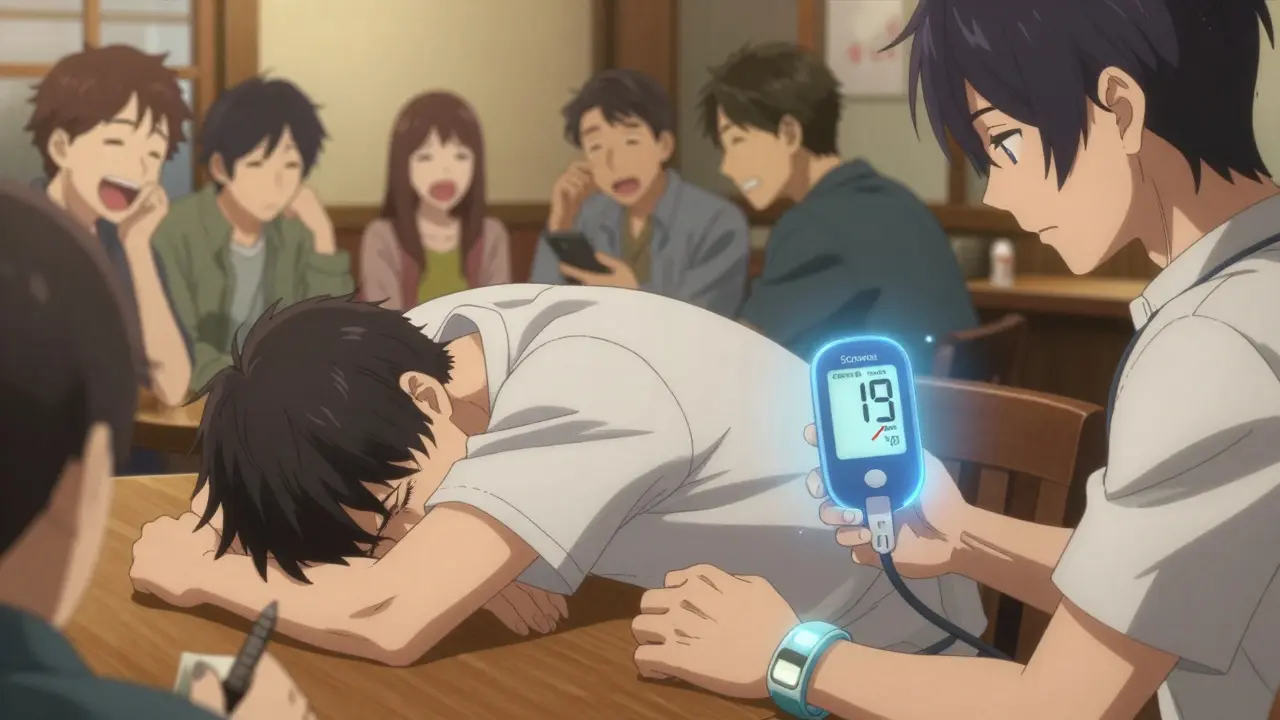
What Happens to Your Liver?
Your liver doesn’t just regulate sugar-it filters toxins. Chronic alcohol use damages liver cells, leading to fatty liver, inflammation, and eventually cirrhosis. If you already have diabetes, your liver is under more stress. High blood sugar causes fat to build up in the liver. Alcohol does the same. Together, they accelerate damage. People with type 2 diabetes who drink regularly are more likely to develop non-alcoholic fatty liver disease (NAFLD), which turns into alcoholic fatty liver disease when alcohol is added. This isn’t just about long-term damage. A damaged liver can’t respond to low blood sugar at all. It stops releasing glucose, even when your body screams for it. That makes hypoglycemia harder to treat and more likely to recur.How to Drink Safer-If You Choose To
The American Diabetes Association doesn’t say never. They say: know your risk. If you want to drink, follow these rules:- Never drink on an empty stomach. Always eat a meal or snack with carbs before or while drinking. A slice of whole-grain toast with peanut butter or a small bowl of oatmeal helps slow alcohol absorption and gives your liver something to work with.
- Choose wisely. Skip sugary cocktails, sweet wines, and regular beer. Opt for light beer, dry wine, or spirits with soda water and lime. One drink means 12 oz of beer, 5 oz of wine, or 1.5 oz of distilled spirits.
- Check your blood sugar. Test before you drink, during, and again before bed. If it’s below 100 mg/dL, eat something. Keep fast-acting carbs like glucose tablets or juice nearby.
- Set an alarm. If you’ve had more than one drink, set a reminder to check your glucose in 3-4 hours. That’s when delayed hypoglycemia often hits.
- Wear medical ID. A bracelet or necklace that says “Diabetic” can save your life if you’re found unconscious. Paramedics need to know it’s not intoxication-it’s low blood sugar.
- Tell someone. Let a friend or family member know you have diabetes. Teach them the signs of hypoglycemia. If you’re slurring your words and they think you’re drunk, they might not help.
When to Say No
Some people should avoid alcohol entirely:- If you have liver disease or high liver enzymes
- If you’ve had severe hypoglycemia before, especially without warning
- If you’re pregnant or trying to get pregnant
- If you struggle with alcohol use
- If you’re on metformin and have kidney issues

What’s New in Monitoring
Continuous glucose monitors (CGMs) like the Dexcom G7 and FreeStyle Libre 3 don’t detect alcohol directly. But they show patterns. If you see your glucose dropping hours after a drink-even if you didn’t eat-you’re seeing the liver’s response. Many users now log their alcohol intake in their CGM apps. Over time, they notice consistent drops after two drinks. That’s personal data. That’s power. The American Diabetes Association updated its guidelines in 2023 to stress individualized risk. There’s no one-size-fits-all answer. Your age, liver health, medication, activity level, and history of low blood sugar all matter.Real Stories, Real Risks
One man in Melbourne, 62, took metformin and had two glasses of wine every Friday. He felt fine-until he passed out at a family barbecue. His daughter found him, checked his glucose, and gave him juice. He was in the hospital for two days. He didn’t know his liver was already fatty. He stopped drinking. His liver enzymes improved in six months. A woman in Brisbane, 48, used insulin. She drank one glass of wine with dinner. One night, she woke up confused, shaking, and couldn’t walk. She thought she was having a stroke. Her husband called an ambulance. They found her glucose at 41 mg/dL. She now checks her levels before bed every night after drinking-even if it’s just one drink.Bottom Line
Alcohol and diabetes meds don’t mix well. The risks are real, silent, and sometimes deadly. Hypoglycemia can sneak up hours later. Your liver can’t handle the double load. Symptoms are easy to misread. But if you’re informed, prepared, and cautious, you can reduce the danger. If you drink, don’t do it alone. Don’t do it on an empty stomach. Don’t ignore your body’s signals. And if you’re unsure? Skip it. Your health isn’t worth the gamble.Can alcohol cause low blood sugar even if I don’t feel drunk?
Yes. Alcohol blocks your liver from releasing glucose, which can cause hypoglycemia even if you feel fine or aren’t intoxicated. This can happen hours after drinking, especially during sleep or after physical activity. You don’t need to feel drunk to have dangerously low blood sugar.
Is it safe to drink one beer with metformin?
An occasional beer with food may be okay for some people on metformin, but it’s not risk-free. Alcohol can worsen stomach side effects like nausea and cramps, and it increases the rare but serious risk of lactic acidosis. Always eat first, limit to one drink, and monitor your blood sugar. Talk to your doctor if you have liver or kidney issues.
Why do I feel dizzy after drinking even a small amount of alcohol?
You may be experiencing low blood sugar masked as intoxication. Alcohol prevents your liver from releasing glucose, and if you’re on insulin or sulfonylureas, your blood sugar can drop quickly. Dizziness, confusion, and fatigue are common signs of hypoglycemia-not just being drunk. Check your glucose next time it happens.
Does alcohol make diabetes worse over time?
Yes. Regular alcohol use can increase insulin resistance, raise triglycerides, and damage your liver-making blood sugar control harder. It can also lead to weight gain and worsen nerve damage (diabetic neuropathy). Heavy drinking (more than 15 drinks a week for men, 8 for women) raises your risk of developing complications like liver disease and heart problems.
Should I avoid alcohol if I have hypoglycemia unawareness?
Absolutely. Hypoglycemia unawareness means you don’t feel the warning signs of low blood sugar. Alcohol masks those signs even more. You could pass out before realizing you’re in danger. Most diabetes specialists recommend complete avoidance of alcohol for people with this condition.
What should I do if I suspect someone with diabetes is having alcohol-induced hypoglycemia?
Don’t assume they’re just drunk. Check their blood sugar if possible. If it’s below 70 mg/dL, give them 15 grams of fast-acting carbs-glucose tablets, juice, or regular soda. If they’re confused, unconscious, or can’t swallow, call emergency services immediately. Do not give them insulin or let them sleep it off.
Comments (9)
-
RAJAT KD January 8, 2026
Alcohol + diabetes meds = silent killer. No sugar-coating. Your liver isn't a backup generator-it's a stressed-out intern working double shifts. Skip the drink. Your pancreas will thank you.

-
Pooja Kumari January 10, 2026
I used to drink two glasses of wine every night with my metformin... thought it was fine until I woke up sobbing at 3 a.m. because my glucose was 38. I didn't even know I was crying. My husband had to call 911. Now I just sip sparkling water with lime and feel like a rebel. 😭🍷

-
Angela Stanton January 12, 2026
Let’s be real-this post is just a glorified PSA wrapped in clinical jargon. CGMs don’t ‘detect alcohol,’ they detect *glucose trends*. You’re not ‘powering up’ with data-you’re just playing whack-a-mole with your numbers. And no, wearing a medical ID won’t save you if your friend thinks you’re just ‘that guy who gets drunk on one beer.’
Also, ‘lactic acidosis’? That’s a 0.01% risk. But hey, let’s scare everyone into sobriety. Classic medical fearmongering. 😏

-
Drew Pearlman January 14, 2026
I want to believe we can all make smart choices here. I’ve seen people with type 1 diabetes enjoy a single glass of dry wine with dinner for 20 years-no issues, no crashes, no hospital visits. Why? Because they tested. Because they ate. Because they listened to their bodies. It’s not about demonizing alcohol-it’s about respecting your own physiology. We’re not broken. We’re just different. And that difference deserves nuance, not fear.
My cousin, 54, on insulin, drinks one glass of pinot noir every Friday with a turkey sandwich. She checks her glucose before bed. She’s never had a low. She’s also never missed a family reunion. That’s not luck-that’s discipline. And discipline doesn’t come from alarmist headlines. It comes from knowledge, not panic.
So yes, alcohol is risky. But so is never letting yourself enjoy a quiet moment. The goal isn’t to eliminate pleasure-it’s to make it safe. And that’s possible.
Maybe the real problem isn’t the drink. Maybe it’s the shame we attach to it.

-
Jacob Paterson January 15, 2026
Oh wow, another ‘you’re gonna die if you drink’ lecture. Let me guess-you’ve never had a drink in your life, right? Or maybe you’re one of those people who thinks ‘liver stress’ is a moral failing? Newsflash: people have been drinking with diabetes since the 1920s. The liver isn’t some sacred temple-it’s an organ. It adapts. Or it doesn’t. Either way, your fear doesn’t make the science more valid.
And ‘tell someone you have diabetes’? Like we’re children at a birthday party? You think I’m gonna walk into a bar and announce, ‘Hey, I’m diabetic, don’t let me pass out’? That’s not safety, that’s performative vulnerability. Grow up.
Check your glucose. Eat before. Don’t be an idiot. That’s it. Stop treating us like we’re all walking time bombs.

-
Chris Kauwe January 15, 2026
Let me cut through the noise. This isn’t about diabetes. It’s about control. The medical-industrial complex profits from fear. They don’t want you drinking because then you’d be ‘non-compliant.’ But here’s the truth: if your body can’t handle one beer, maybe your meds are wrong, not your life choices.
My grandfather had type 2. He drank bourbon every night. Lived to 92. His liver? Fine. His A1C? 6.8. He didn’t check his glucose. He didn’t wear a bracelet. He didn’t ‘set alarms.’ He just lived. And he died doing what he loved.
Stop infantilizing patients. We’re not lab rats. We’re humans with agency. If you want to drink, drink. Just don’t be dumb about it. And if you’re scared? Fine. Stay sober. But don’t lecture the rest of us.

-
Kiruthiga Udayakumar January 16, 2026
As an Indian woman with type 1, I’ve been told by my aunties that alcohol is ‘bad for blood’-but no one ever told me *why*. This post? Finally, someone explained it in a way that made sense. I used to think my nausea after beer was just ‘Indian stomach.’ Turns out, it was metformin + alcohol. I stopped. My digestion improved in a week. Thank you for not making me feel guilty-just informed. 🙏

-
Ian Long January 17, 2026
I get both sides. The fear is real. But so is the desire to feel normal. I’m on insulin. I used to avoid parties. Now I have one glass of dry wine, eat a full meal, and check my glucose before bed. I even tell my friends, ‘If I start slurring, check my arm-I’ve got a CGM on.’
It’s not about perfection. It’s about connection. I don’t want to miss out on my nephew’s wedding because I’m scared of a number. But I also don’t want to wake up in the ER.
Maybe the answer isn’t ‘never’ or ‘always.’ Maybe it’s ‘know your body, and bring your people along.’

-
Jerian Lewis January 18, 2026
My brother passed out at a BBQ last year. They thought he was drunk. He wasn’t. He was on insulin. They didn’t check his blood sugar until an hour later. He’s fine now. But I’ll never let anyone say ‘he just had too much’ again. If you drink, wear the bracelet. Tell someone. Don’t be the reason someone dies because they assumed.
