

Take a calcium supplement with your morning coffee and a pill for high blood pressure? You might be making your meds less effective-without even knowing it. Same goes for iron pills taken with heartburn medicine or antibiotics. These aren’t just theoretical risks. They’re real, common, and can lead to treatment failure, longer illnesses, or even hospitalizations. If you’re on any prescription drugs and also take calcium, iron, or other mineral supplements, you need to understand how they interact-and how to avoid the pitfalls.
Calcium and Antibiotics: A Dangerous Pair
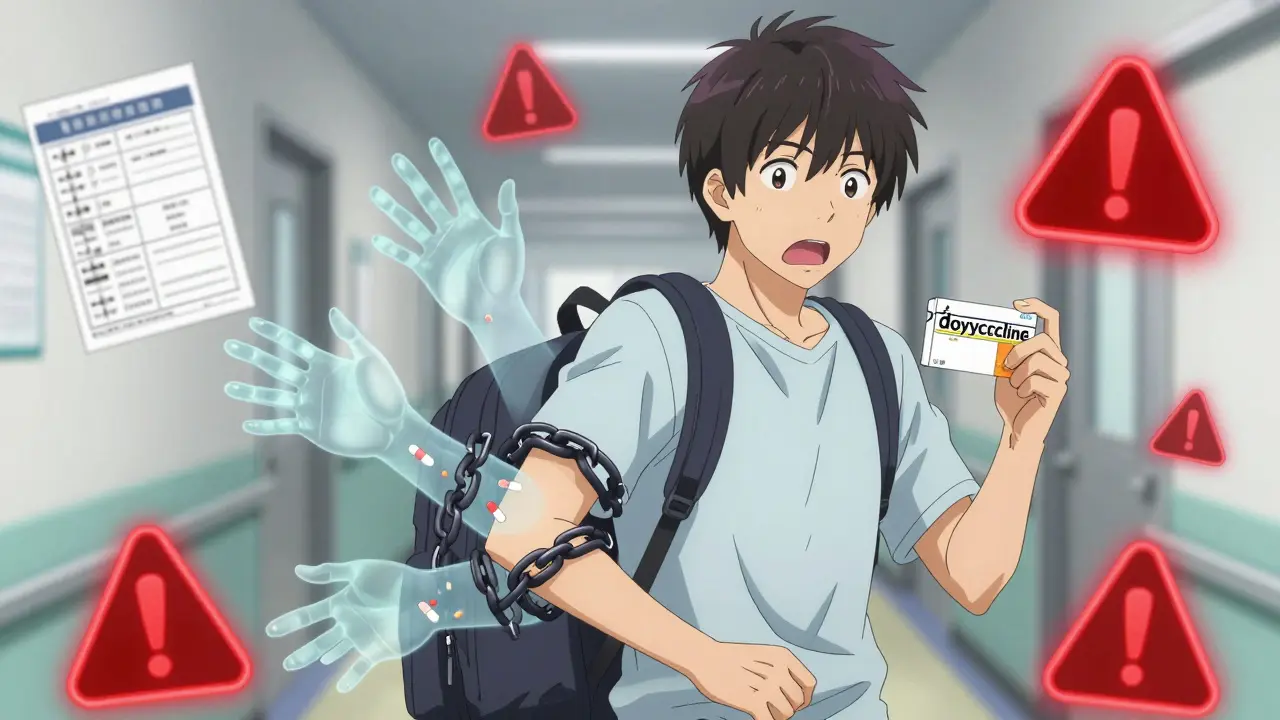
Calcium doesn’t just build bones. It also binds tightly to certain antibiotics, forming a chemical cage that stops your body from absorbing them. This is called chelation. The most affected drugs are tetracyclines (like doxycycline and minocycline) and fluoroquinolones (like ciprofloxacin and levofloxacin). When calcium from supplements, dairy, or even fortified orange juice meets these antibiotics, the result is a drop in drug levels by up to 40%. That’s not a small thing. It means the infection might not clear, bacteria could become resistant, and you could end up with a worse illness.Doctors don’t usually warn you about this because they assume you know not to take calcium with antibiotics. But here’s the problem: most people don’t realize calcium is in so many things. Yogurt, cheese, almond milk, fortified cereals-even some mineral waters-contain it. If you’re on a 7-day course of ciprofloxacin for a UTI, skipping your calcium supplement isn’t enough. You need to avoid all high-calcium foods for the entire duration. And if you forget and have a glass of milk with dinner? You’ve likely reduced the antibiotic’s effectiveness by nearly half.
Iron and Antibiotics: Same Problem, Different Timing
Iron supplements-especially ferrous fumarate or ferrous sulfate-do the exact same thing to tetracycline and fluoroquinolone antibiotics. They bind to them in the gut and block absorption. But here’s the twist: iron doesn’t just interfere with antibiotics. It also needs stomach acid to be absorbed properly. That’s why proton pump inhibitors (PPIs) like omeprazole and H2 blockers like famotidine can make iron supplements useless. These heartburn meds lower stomach acid, and without it, iron just passes through your system.So if you’re taking iron for anemia and also take omeprazole for acid reflux, you’re fighting a losing battle. The solution isn’t to stop the heartburn med-it’s to time it right. Take your iron at least two hours before your PPI or H2 blocker. That way, your stomach still has enough acid to dissolve the iron. Some people even take their iron with orange juice. The vitamin C helps iron absorb better, and the mild acid helps too. But don’t take it with milk. The calcium in milk will bind to the iron and cancel it out.
Levothyroxine and Calcium: A Silent Threat
If you’re on thyroid medication like levothyroxine, calcium is one of the most dangerous things you can take with it. Even a single calcium supplement can slash your thyroid hormone levels by up to 30%. That might not sound like much, but for someone relying on precise hormone levels to manage fatigue, weight, or heart rhythm, it’s enough to throw everything off. Studies show that when calcium and levothyroxine are taken together, the thyroid hormone doesn’t get absorbed properly. The result? Your doctor might increase your dose, thinking you’re undermedicated-when really, you just need to space them out.The fix is simple: wait at least four hours between taking levothyroxine and any calcium supplement. That’s longer than most people expect. If you take your thyroid pill first thing in the morning on an empty stomach, don’t take your calcium until after lunch or even dinner. The same rule applies to iron, magnesium, and even antacids like Tums. They all interfere. And yes, this is why some people feel worse on thyroid meds even when their blood tests look fine-they’re taking their supplements too close together.
What About Other Minerals? Magnesium, Zinc, and More
Calcium and iron aren’t the only troublemakers. Magnesium in antacids or laxatives can block antibiotics like ciprofloxacin and doxycycline just like calcium does. Zinc supplements can reduce the absorption of some antibiotics and even interfere with penicillin. Aluminum in some antacids and even some multivitamins can bind to thyroid meds and antibiotics too. The pattern is the same: minerals form complexes with drugs in the gut, and your body can’t use them.The key is not to avoid these minerals entirely. It’s to manage timing. If you’re on a long-term antibiotic, take your magnesium or zinc at night, at least four hours after your last antibiotic dose. If you take a daily multivitamin with iron and calcium, don’t take it with your thyroid pill or your antibiotics. Pick a time when you’re not taking any meds-like mid-afternoon-and stick to it.
How to Get It Right: A Simple Timing Guide
Here’s a practical, no-fluff schedule you can follow:- Thyroid medication (levothyroxine): Take on an empty stomach, first thing in the morning. Wait at least four hours before taking calcium, iron, magnesium, or antacids.
- Antibiotics (tetracyclines, fluoroquinolones): Take on an empty stomach, either one hour before or two hours after meals. Avoid calcium, iron, magnesium, zinc, and antacids for at least two hours before and after. Four hours is safer.
- Iron supplements: Take on an empty stomach, 30 minutes before breakfast. If you need heartburn meds, take iron at least two hours before the PPI or H2 blocker. Pair with orange juice or vitamin C for better absorption. Avoid milk, coffee, and tea.
- Calcium supplements: Take with food to reduce stomach upset. But never within four hours of thyroid meds or antibiotics. If you take calcium at dinner, make sure your morning thyroid pill was taken at least four hours earlier.
These aren’t suggestions. They’re based on clinical studies showing what actually works. One study in the South Medical Journal found that patients who waited four hours between levothyroxine and calcium had normal hormone levels. Those who took them together-even two hours apart-still had dangerously low absorption.
What You Should Ask Your Pharmacist
Most people don’t tell their doctors they’re taking supplements. They think it’s just vitamins. But calcium and iron are powerful substances that interact with drugs. Your pharmacist sees this every day. When you pick up a new prescription, ask: “Does this interact with calcium, iron, or magnesium?” Don’t say ‘supplements’-say the exact names: calcium carbonate, ferrous fumarate, magnesium oxide. Be specific.Also, ask if your medication has a warning label about mineral interactions. The FDA requires these on packaging for drugs like ciprofloxacin, doxycycline, and levothyroxine. If you don’t see it, ask anyway. Many pharmacists will check a drug interaction database and give you a printed guide.

Real-Life Scenarios: What Goes Wrong
A 68-year-old woman takes levothyroxine at 7 a.m. and a calcium pill at 8 a.m. because she thinks morning is best. Her TSH levels stay high, so her doctor doubles her dose. She feels worse-more fatigue, weight gain. Turns out, the calcium was blocking her thyroid med. After spacing them four hours apart, her levels normalized in six weeks. A teenager with acne takes doxycycline and a daily iron pill for anemia. His doctor didn’t warn him. He takes them together. His acne doesn’t improve. His iron levels stay low. He ends up with a persistent infection and a new diagnosis of iron-deficiency anemia. Once spaced two hours apart, both conditions improved. A man on omeprazole for heartburn takes his iron supplement at night. He still feels tired. His doctor blames his diet. He switches to a different iron pill. Still no improvement. Only when he took iron two hours before his PPI did his ferritin levels jump up.These aren’t rare cases. They happen every day. And they’re preventable.
What’s Changing in 2026
Pharmacies in Australia and the U.S. are starting to flag mineral-medication interactions in their digital systems. If you buy iron and levothyroxine together, the pharmacy software now pops up a warning. Some apps even send you a text reminder: “Take your calcium 4 hours after your thyroid pill.” Electronic health records are starting to track supplement use, too. But you can’t rely on tech alone. You still need to know what’s happening.The American Pharmacists Association now recommends that every patient on chronic meds be asked about supplement use during medication reviews. That’s a big step. But until you’re asked, don’t assume they know. Tell them.
Bottom Line: Timing Is Everything
You don’t have to stop taking calcium or iron. You just need to take them at the right time. The goal isn’t to avoid supplements-it’s to make sure your medications work. Four hours between thyroid meds and calcium. Two to four hours between antibiotics and iron. Two hours before heartburn meds if you’re taking iron. Simple. Clear. Life-changing.If you’re on more than three medications and take any mineral supplement, write down your schedule. Put it on your fridge. Set phone alarms. This isn’t complicated-it’s just easy to forget. But forgetting can cost you your health.
Can I take calcium with my multivitamin?
It depends. Most multivitamins contain iron, zinc, or magnesium-all of which can interfere with thyroid meds and antibiotics. If you’re on levothyroxine, take your multivitamin at least four hours after your thyroid pill. If you’re on antibiotics, wait two to four hours after your dose. Don’t take your multivitamin with your meds unless you’ve checked the label.
Is it safe to take iron with orange juice?
Yes, and it’s actually recommended. The vitamin C in orange juice helps your body absorb iron better. Avoid milk, coffee, tea, or calcium-fortified juices-they block iron. Stick to plain orange juice or a vitamin C tablet if you don’t like citrus.
What if I forget and take calcium with my antibiotic?
Don’t panic. One mistake won’t ruin your treatment. But don’t take another dose of the antibiotic to make up for it-that can cause side effects. Just skip the next dose if it’s too soon, and resume your schedule. Tell your pharmacist so they can monitor your progress. If you’re treating a serious infection, contact your doctor.
Do all calcium supplements interact the same way?
Yes, in terms of drug interactions. Whether it’s calcium carbonate, calcium citrate, or calcium from dairy, they all bind to antibiotics and thyroid meds. Calcium citrate is better absorbed on an empty stomach, but it still blocks drugs the same way. Don’t assume one form is safer.
Can I take iron at night if I take my thyroid pill in the morning?
Yes, that’s ideal. Taking iron at night, at least four hours after your thyroid pill, avoids the interaction entirely. Just avoid taking it with milk, coffee, or antacids. Pair it with vitamin C for better absorption.
Are there any calcium-free alternatives to Tums?
Yes. Look for antacids with aluminum hydroxide or magnesium hydroxide (like Maalox or Mylanta). They still need to be spaced from antibiotics and thyroid meds, but they don’t contain calcium. For long-term heartburn, talk to your doctor about alternatives that don’t interfere with mineral absorption.
Comments (14)
-
Ryan Barr January 5, 2026
Calcium with antibiotics? That’s not a mistake-it’s a biochemistry 101 failure. If you can’t time your supplements right, maybe you shouldn’t be self-prescribing anything.
And yes, I’m talking to you, the person who takes Tums with cipro.
Stop.

-
Dana Termini January 6, 2026
This is the kind of post that should be mandatory reading before anyone starts popping supplements. I’ve seen friends struggle with thyroid issues for years because they didn’t know calcium blocked absorption. No one ever told them. It’s not their fault-it’s the system’s.
Thank you for laying this out so clearly.

-
Amy Le January 7, 2026
AMERICA NEEDS TO STOP BEING LAZY ABOUT HEALTH.
People think ‘vitamins’ are harmless candy. No. Calcium carbonate is a mineral chelator. Iron is a metal that binds like glue. You don’t get to take your ‘daily wellness routine’ and expect your antibiotics to work like magic.
And if you’re using orange juice to ‘boost’ iron? Good. But don’t tell me you’re ‘natural’ while chugging almond milk with your doxycycline. That’s not wellness. That’s ignorance wrapped in a yoga mat.
Also, if your pharmacist doesn’t warn you, they’re not doing their job. Demand better.
And yes-I’m a US citizen. This is why we have the worst health outcomes in the developed world.

-
Pavan Vora January 7, 2026
Very informative, sir/madam. I am from India, and here, many people take calcium with tea, or iron with milk-because ‘it’s traditional’. But I have seen relatives suffer from persistent anemia, even after taking iron for months. Now I understand why. I will share this with my family. Thank you for writing this. 🙏
Also, I think the government should make these warnings mandatory on supplement bottles. In India, even high-dose iron tablets have no warning about antibiotics.
Maybe one day.

-
Indra Triawan January 9, 2026
I’ve been on levothyroxine for 8 years. I took calcium with it for 5 of them. I cried when I found out why I felt so awful all the time. It wasn’t depression. It wasn’t aging. It was a stupid pill I took at 7:30 a.m. because I ‘forgot’ to wait.
I’m still mad.
And I’m still tired.
But now I know.

-
Susan Arlene January 11, 2026
so like… if you take thyroxine at 7am, you can’t have oat milk with your granola until noon? yikes.
guess i’ll just drink water and suffer in silence.
also, why is this not on every pill bottle??

-
Joann Absi January 12, 2026
THIS IS WHY AMERICA IS FALLING APART.
People think supplements are ‘safe’ because they’re ‘natural’. Natural doesn’t mean harmless. Calcium is a mineral. Minerals interact with drugs. DUH.
And yet, your auntie takes Tums with her thyroid med and says ‘I feel better now’-because she’s just blocking the hormone and her body’s screaming for help.
Stop normalizing this. This isn’t wellness culture. This is medical negligence.
And if you’re not talking about this at dinner? You’re part of the problem.
SHARE THIS POST. NOW.

-
Ashley S January 13, 2026
Why do doctors not tell you this? It’s not hard. I took iron with my antibiotic and got sick for weeks. My doctor just said ‘maybe you’re not absorbing it’. Like… maybe? No. I did it wrong. Why didn’t anyone warn me?
People need to know.
Stop being so quiet about this.

-
Harshit Kansal January 14, 2026
Hey man, this is gold. I’m from India and we take iron with milk because ‘it’s good for bones’. I just found out that’s the worst thing you can do. I’m gonna tell my mom right now. She’s been taking calcium with her BP pills for years. Hope she listens. Thanks for the heads up 😊

-
Venkataramanan Viswanathan January 16, 2026
It is with profound respect for the scientific rigor demonstrated in this exposition that I acknowledge the critical importance of temporal separation between mineral supplementation and pharmacological agents. The biochemical mechanisms of chelation, as elucidated herein, are not merely theoretical but have demonstrable clinical consequences. I commend the author for elucidating these interactions with such precision and for advocating for patient education as a cornerstone of therapeutic efficacy.

-
Vinayak Naik January 17, 2026
Bro this is wild. I used to take my iron with my protein shake (calcium fortified!) and wondered why I was still tired. Then I read this and switched to taking it at night with orange juice. My ferritin jumped from 12 to 48 in 3 months. No joke. I’m not a doctor but I’m a walking case study now.
Also, stop taking Tums like candy. Aluminum-based stuff works fine if you space it right. 🙌

-
Saylor Frye January 19, 2026
Interesting. But honestly, if you need to time your supplements with military precision, maybe your medication regimen is too complex. Or maybe you’re just taking too many things. I’d rather just simplify.

-
Kiran Plaha January 20, 2026
So if I take my thyroid pill at 7am, and my calcium at 7pm, that’s 12 hours apart… is that okay? Or do I need to wait 4 hours after the pill, not before the calcium? Just want to make sure I’m not messing up.
Thanks for the post.

-
Katie Schoen January 21, 2026
Wow. I thought I was doing everything right. I take my thyroid med at 7am, calcium at 8am, iron at lunch, and I still feel like a zombie. Turns out I was sabotaging myself.
So… I’m switching to calcium at dinner. Iron at bedtime. And I’m drinking orange juice like it’s my job now.
Also, I just texted my mom to stop taking Tums with her meds. She’s gonna hate me.
Worth it.
