
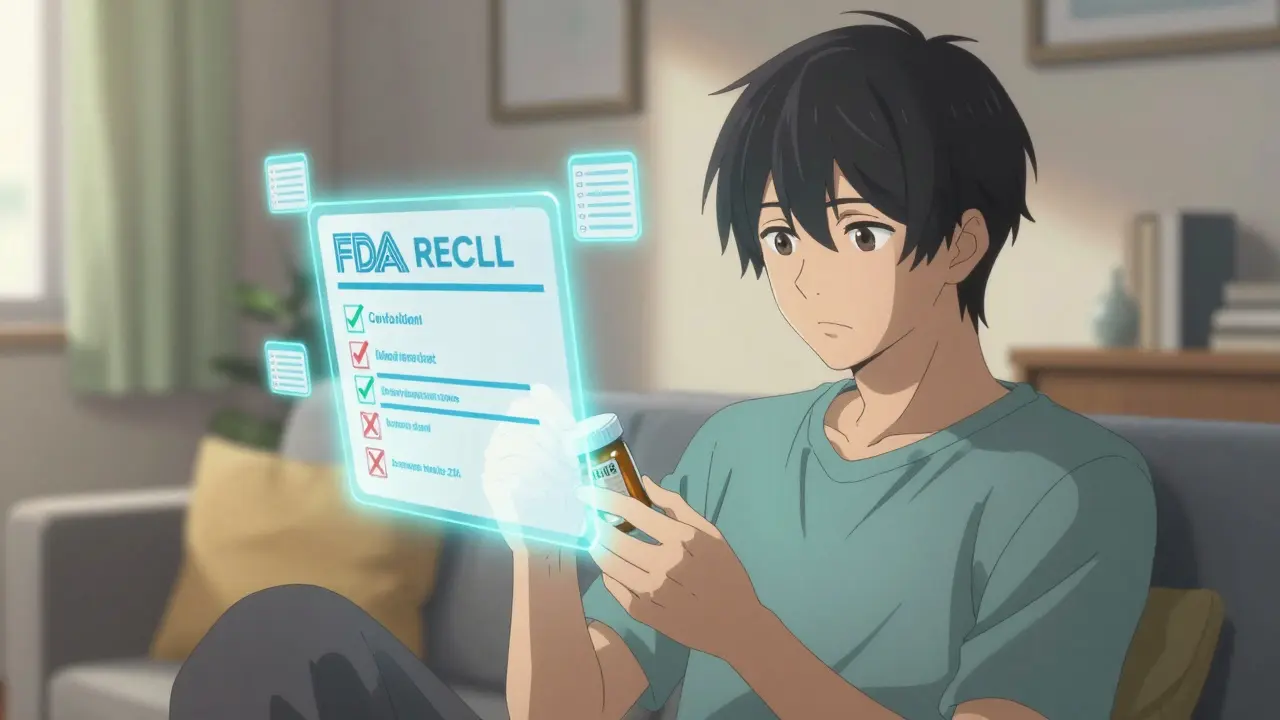
When you hear your medicine has been recalled, your first thought might be to stop taking it right away. That’s the wrong move. Medication recalls are serious, but panic won’t help you. In fact, stopping your drug suddenly could be more dangerous than the recall itself.
Every year, thousands of medications are pulled from shelves-not because they’re all life-threatening, but because of small errors: wrong labels, contamination, or manufacturing flaws. In 2022 alone, the FDA recorded over 4,800 drug recalls. Most of these (about 65%) came from production issues, not from the medicine being harmful. Only about 15% are Class I recalls-the highest risk category-where use could lead to serious injury or death. The rest? Many are just paperwork errors or minor contamination that don’t affect how the drug works in your body.
Don’t Stop Taking Your Medicine
The biggest mistake patients make? Stopping their medication without talking to a doctor or pharmacist. This happens in nearly one in five cases, according to FDA surveys. For people on blood pressure meds like valsartan, diabetes drugs like metformin, or heart medications like warfarin, quitting cold turkey can trigger strokes, heart attacks, or dangerous spikes in blood sugar. The FDA has been clear since the 2018 valsartan recall: “Continue taking your medicine until your provider gives you a replacement.” The recalled pill isn’t necessarily making you sick-it’s the sudden withdrawal that puts you at risk.
Check Your Lot Number
Not every bottle of a recalled drug is affected. Recalls target specific batches, identified by lot numbers and expiration dates. You can’t assume your medicine is in danger just because the brand name shows up on a recall list. In fact, 45% of patients wrongly think all versions of a drug are recalled when only one batch is.
Look at the label on your pill bottle. You’ll see a string of numbers and letters-that’s your lot number. Compare it to the one listed in the FDA recall notice. If it matches, your medicine is affected. If it doesn’t, keep taking it as normal. You can find recall notices on the FDA’s website by searching the brand name or NDC code. Many pharmacies also send out direct alerts if you’ve filled prescriptions there.
Call Your Pharmacy First
Don’t wait for a letter or email. If you hear a recall is happening, call your pharmacy. Pharmacists are trained for this. According to the American Pharmacists Association, 92% of pharmacies have systems in place to check your prescription against recall lists within minutes. They can tell you if your exact bottle is affected, and if so, they’ll usually have a replacement ready within 24 to 48 hours.
Pharmacists can also help you switch to a different brand or generic version if needed. They know which manufacturers are safe and which batches are still in circulation. This is faster and safer than trying to find a replacement on your own.
Watch for Symptoms
If you’ve already taken a recalled medication, monitor your body. Keep a log: when you took it, how much, and any changes you notice-dizziness, nausea, rash, unusual fatigue, or heart palpitations. These might seem minor, but they could be early signs of a reaction.
The FDA’s Adverse Event Reporting System (FAERS) collected over 1.2 million reports in 2022. About 8% of those involved drugs later recalled. That means even if you feel fine now, symptoms can show up days or weeks later. If you notice anything off, call your doctor. Don’t wait. Bring your pill bottle with you. The lot number helps them connect your symptoms to the recall.
Dispose of Recalled Medication Properly
If your pharmacy tells you to throw out the medicine, don’t flush it down the toilet or toss it in the regular trash. That’s unsafe for the environment and risky for kids or pets.
Instead, mix the pills with something unappetizing-used coffee grounds, kitty litter, or even peanut butter. Put the mixture in a sealed plastic bag or container. Then put it in the trash. Some pharmacies offer take-back bins, and a few cities have designated drop-off locations for expired or recalled drugs. Ask your pharmacist where to safely dispose of it.
Keep a Medication Log
Most people don’t track their prescriptions beyond the bottle. But if you keep a simple log-brand name, dosage, lot number, expiration date-you can check for recalls in seconds. The National Community Pharmacists Association found that patients who do this resolve recall issues 60% faster than those who don’t.
It doesn’t need to be fancy. A note in your phone, a sticky note on your fridge, or a printed sheet in your medicine cabinet works. Update it every time you refill a prescription. When a recall happens, you won’t need to scramble. You’ll know instantly if your bottle is affected.
What Gets Recalled Most Often?
Not all drugs are equal when it comes to recalls. In 2022, the most commonly recalled medications were blood pressure drugs-especially ARBs like valsartan, losartan, and irbesartan. These made up 18% of Class I recalls. Diabetes medications followed at 15%, and cancer treatments at 12%. These aren’t random. They’re complex drugs made with multiple ingredients, often produced overseas, and subject to tight manufacturing controls. A tiny mistake in one step can taint an entire batch.
Labeling errors are also common. A pill bottle labeled for 5mg when it’s actually 10mg? That’s a Class II recall. It won’t kill you, but it could cause side effects or under-treatment. That’s why checking the lot number matters more than the brand name.

How Recalls Are Getting Better
The FDA has been upgrading its system. In 2024, pilot programs started using pharmacy benefit managers to send recall alerts directly to patients’ phones or emails. Early results show a 35% faster response rate. That means you’ll know sooner, and you’ll have less time to worry.
Hospitals and clinics now follow strict seven-step recall protocols. They remove recalled drugs from shelves within hours, identify affected patients, and switch them to safe alternatives. These systems work. The FDA reports that 98% of Class I recalls are resolved within 10 business days when hospitals follow the rules.
Common Mistakes to Avoid
- Stopping your medicine without talking to a provider-this is the #1 danger.
- Assuming all versions of a drug are recalled. Only specific lots are affected.
- Flushing pills or throwing them in the trash without mixing them first.
- Ignoring the recall because you feel fine. Problems can show up later.
- Waiting for a letter. Don’t rely on mail. Check your pharmacy or the FDA website immediately.
Recalls are a sign the system is working-not failing. They happen because someone caught a problem before it hurt someone. Your job isn’t to fear it. It’s to act smart.
What to Do Right Now
- Don’t panic. Most recalls aren’t emergencies.
- Don’t stop your medicine. Keep taking it until your provider says otherwise.
- Find your lot number and expiration date on the bottle.
- Go to the FDA website and search for the recall notice.
- Call your pharmacy. Ask if your bottle is affected.
- If it is, ask for a replacement or alternative.
- Dispose of the recalled medicine safely-mix it, seal it, trash it.
- Start keeping a medication log. Write down every prescription you take.
If you’ve taken a recalled drug and feel unwell, call your doctor immediately. Bring your bottle. Keep notes. Your actions matter-not just for you, but for the system that keeps everyone safe.
What should I do if my medication is recalled?
Do not stop taking your medicine unless your doctor or pharmacist tells you to. Check the lot number on your bottle against the recall notice. Call your pharmacy-they can confirm if your specific bottle is affected and give you a safe replacement within 24 to 48 hours.
Are all pills of a recalled drug dangerous?
No. Recalls target specific batches identified by lot numbers and expiration dates. Only pills from those batches are affected. Most recalls involve less than 10% of the total supply. Don’t assume your bottle is unsafe just because the drug name is on the list.
Can I just throw away recalled medicine in the trash?
No. Never flush pills or throw them in the trash without mixing them first. Combine them with something unpalatable like used coffee grounds, kitty litter, or peanut butter. Seal the mixture in a plastic bag before putting it in the trash. This prevents children or pets from accessing it.
How do I find out if my medicine has been recalled?
Visit the FDA’s website and search by the brand name or NDC code. You can also call your pharmacy-they check recall lists daily. Many pharmacies will notify you directly if you’ve filled a recalled medication. Don’t wait for a letter-act fast.
Why do recalls happen so often?
Recalls happen because manufacturers and regulators catch problems early. About 65% are due to manufacturing errors, 20% to labeling mistakes, and 10% to contamination. Most aren’t life-threatening. The system works because it catches issues before patients get hurt-not after.
Should I sign up for FDA recall alerts?
Yes. The FDA offers free RSS feeds and email alerts for recalls. About 45% of healthcare professionals subscribe. It’s one of the fastest ways to know if your medicine is affected. You can sign up on the FDA’s website under MedWatch.
What medications are most often recalled?
Blood pressure drugs-especially ARBs like valsartan and losartan-are recalled most often, making up 18% of high-risk recalls in 2022. Diabetes medications and cancer treatments follow closely. These drugs are complex to manufacture, and small errors can trigger recalls.
Can a recalled medicine make me sick?
Possibly, but not always. Class I recalls involve drugs that could cause serious harm, like contamination with carcinogens. Class II and III recalls usually involve labeling errors or minor impurities that don’t affect safety. Still, if you’ve taken a recalled drug and feel unusual symptoms-dizziness, nausea, rash-call your doctor immediately.
Is it safe to switch to a different brand if my medicine is recalled?
Yes, if your pharmacist or doctor recommends it. Many recalled drugs have generic or alternative brand versions that are safe and equally effective. Pharmacists can quickly switch you to a non-recalled version. Never switch on your own without professional advice.
How can I prevent being caught off guard by a recall?
Keep a simple log of all your medications: brand name, dosage, lot number, and expiration date. Update it every time you refill. Patients who do this resolve recall issues 60% faster. It takes 2 minutes and can save you from unnecessary risk.
If you’re unsure about anything-call your pharmacist. They’re trained for this. You don’t need to figure it out alone.
Comments (10)
-
Brian Anaz January 6, 2026
Stop taking your meds? LOL. You think the FDA gives a damn about you? They’re just trying to cover their own asses while Big Pharma dumps toxic crap on us. I’ve seen this shit before-same brand, different batch, same poison. Don’t believe the hype. If it’s recalled, it’s dangerous. Period. Keep taking it? That’s how people die.

-
Venkataramanan Viswanathan January 7, 2026
It is imperative to understand that the recall mechanism is a testament to the robustness of regulatory oversight. Discontinuation of medication without professional consultation may result in severe clinical consequences. The lot number verification process is not merely procedural-it is a critical safeguard. One must act with diligence and defer to the expertise of licensed pharmacists at all times.

-
Vinayak Naik January 8, 2026
Yo, I used to be scared of recalls till I learned to check my lot numbers like a boss. My blood pressure med got pulled last year-thought I was gonna die. Turned out my bottle was fine. Called my pharmacy, they had a new batch ready by lunch. Best $0 I ever spent. Now I keep a sticky note on my fridge with all my meds, lot #s, dates. No more panic. Just chill and check.

-
Lily Lilyy January 8, 2026
This is such an important reminder! So many people panic and stop their meds-and that’s when the real danger kicks in. I’m so grateful for pharmacists who do this work quietly every day. You’re not alone. If you’re worried, call your pharmacy. They’re waiting to help. You’ve got this. 💪

-
Susan Arlene January 9, 2026
why do people think stopping meds is the answer? like bro its just a number on a bottle. if your bottle aint on the list you aint in danger. also pharms are way faster than you think. just call them. stop scrolling. do the thing.

-
Joann Absi January 9, 2026
THEY’RE LYING TO YOU. AGAIN. 💀 The FDA? Big Pharma’s puppet. They let this stuff out on purpose to make you dependent on replacements. I’ve seen the documents. Class I? Maybe. But Class II? That’s the real poison-slow, silent, invisible. Don’t trust the system. Trust your gut. If your medicine feels off… it probably is. 🕵️♀️🩸

-
Ryan Barr January 10, 2026
Lot number. Pharmacy. Don’t stop. Done.

-
Dana Termini January 10, 2026
I think the real win here is how much we underestimate pharmacists. They’re not just dispensers-they’re the first line of defense. I called mine last year during a recall and they walked me through everything. No rush. No judgment. Just help. We need more of that.

-
Mukesh Pareek January 12, 2026
While the FDA’s classification framework delineates risk stratification across Class I-III recall categories, the underlying systemic vulnerability stems from GMP noncompliance in overseas API manufacturing hubs. The 65% manufacturing defect rate is indicative of supply chain fragmentation exacerbated by cost arbitrage. Patients must cognitively disassociate brand equity from batch integrity-lot number verification is not optional, it is pharmacovigilant orthodoxy.

-
Ashley S January 12, 2026
So let me get this straight-you want me to keep taking poison because some bureaucrat says so? Yeah right. I’d rather die on my own terms than be a lab rat for these corporate liars. And don’t even get me started on the ‘med log’-like I got time for that. This system is broken and everyone knows it.
