

Imagine filling a prescription for a heart medication and paying $110 at your local pharmacy. Now imagine getting the exact same pills, from the same manufacturer, for $7.50 at an online pharmacy. That’s not a scam. That’s the reality of how generic drugs change your wallet - if you know where to look.
Generics Aren’t Cheap Versions - They’re the Same Medicine
People often think generic drugs are lower quality. They’re not. The FDA requires generics to have the same active ingredients, strength, dosage form, and route of administration as the brand-name version. They must work the same way in your body. The only differences? The color, shape, or inactive fillers - none of which affect how the drug works. In 2023, 9 out of every 10 prescriptions filled in the U.S. were for generic drugs. That’s not a trend. That’s the new normal. And yet, most people still pay way more than they need to.The Price Gap: Generics vs. Brand Names
Here’s the hard number: in 2023, the average out-of-pocket cost for a generic prescription was $7.05. For a brand-name drug? $27.10. That’s nearly four times more. Some cases are even wilder. Take Sildenafil Citrate - the generic version of Viagra. When the patent expired, the price per pill dropped from $49.90 to $3.07. That’s a 94% drop. For Emtricitabine/Tenofovir - used to treat HIV - the cost fell from $20.46 to $2.13. A 90% savings. And it’s not just big drugs. Pantoprazole (a stomach acid reducer) cost $44 at Albertsons. At a direct-to-consumer pharmacy? $9.20. Rosuvastatin (a cholesterol drug) was $110 at Walgreens. Online? $7.50. These aren’t outliers. They’re the rule. According to JAMA Internal Medicine, 93% of all generic prescriptions cost $20 or less out-of-pocket. More than 82% cost under $20. Nearly everyone pays under $50.Why Are You Paying So Much? The Middlemen Problem
If generics are so cheap, why do you still get billed $40 or $50 at your local pharmacy? The answer isn’t the drug. It’s the system. Insurance companies, pharmacy benefit managers (PBMs), and retail pharmacies have built a pricing structure that hides the real cost. Your plan might say it covers “generic drugs,” but it doesn’t mean you’re getting the lowest price. In fact, Medicare Part D - the federal program for seniors - paid 20.6% more than Costco’s cash price in 2018. That’s $2.6 billion wasted across 1.4 billion prescriptions. Even worse: some plans put generics on higher cost tiers. That means even though the drug costs less, your copay goes up. One study found that when insurers moved generics to higher tiers, patients ended up paying 135% more annually - even as drug prices fell by 38%. It’s like being told you’re getting a discount, but the discount only applies after you’ve already overpaid.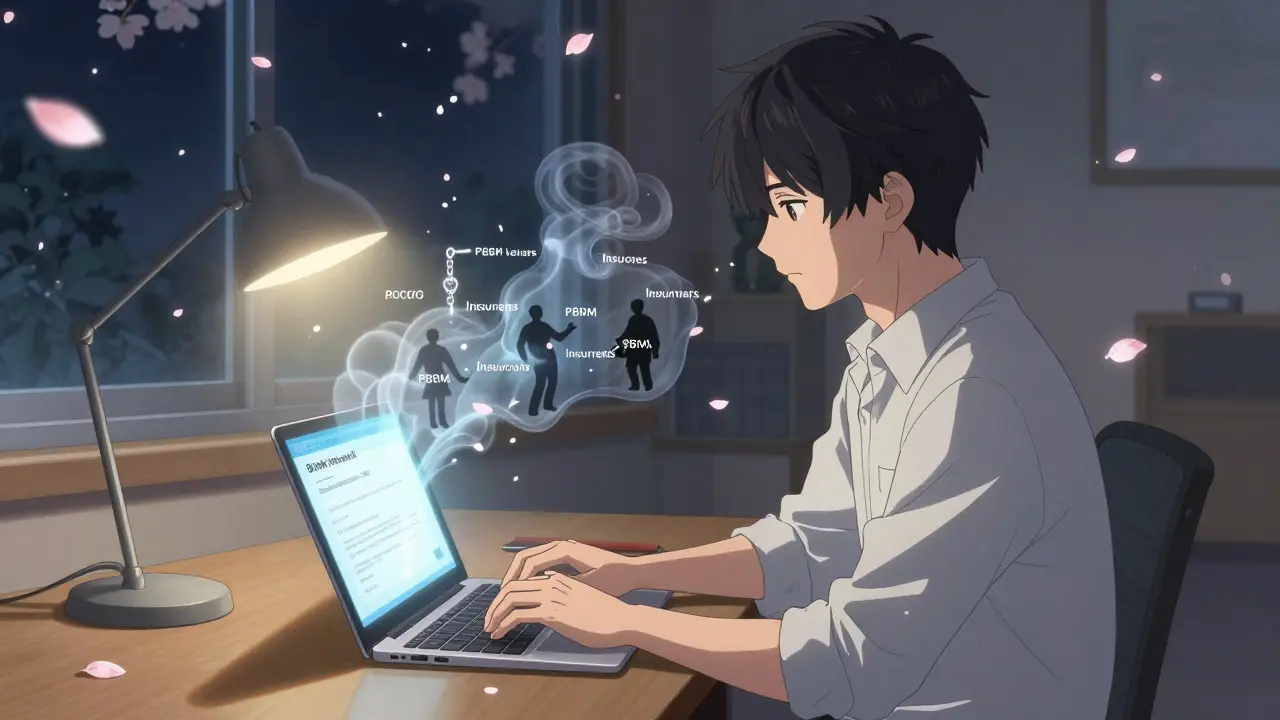
Direct-to-Consumer Pharmacies Are the Real Game-Changer
The best way to save? Skip the retail chain entirely. Online pharmacies that sell directly to consumers - like Health Warehouse, MCCPDC, or Blink Health - cut out the middlemen. Their median savings? 76% for expensive generics and 75% for common ones. For example:- Pantoprazole 20mg: $44 at Albertsons → $9.20 online
- Rosuvastatin 5mg: $110 at Walgreens → $7.50 online
- Metformin 500mg: $35 at CVS → $4.50 online
What This Means for Your Budget
Let’s say you take three generic medications a month. At a retail pharmacy, you might pay $80 a month. At a direct-to-consumer pharmacy? $20. That’s $720 saved every year. Enough to cover a dental cleaning, a month of public transport, or a week of groceries. And it’s not just about individual savings. Between 2013 and 2023, generic and biosimilar drugs saved the U.S. healthcare system $445 billion. That’s $100 billion more than the previous decade. These aren’t theoretical numbers. They’re real dollars taken out of patients’ pockets and put back into their lives.Why Don’t More People Use Online Pharmacies?
Fear. Confusion. Lack of awareness. Many patients don’t know their generic drugs can be bought cheaper online. Others worry about safety. But the FDA regulates these pharmacies just like brick-and-mortar ones. You can verify a pharmacy’s license on the National Association of Boards of Pharmacy website. Another barrier? Insurance. Some plans won’t reimburse you if you buy from an online pharmacy. But here’s the thing: if you’re paying cash anyway, why not pay the lowest price possible? You don’t need your insurance to cover it. Just ask your doctor for a prescription and take it to a trusted online pharmacy.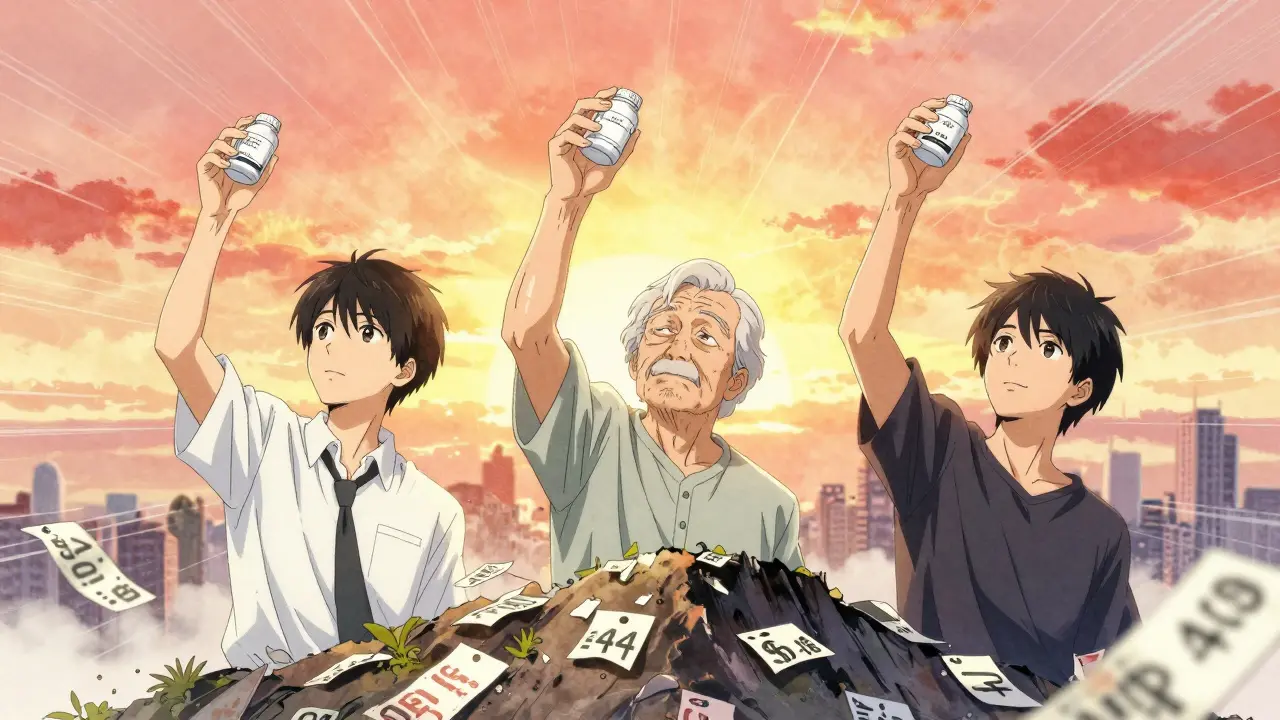
The Bigger Picture: Why the System Is Broken
The U.S. spends nearly three times more on prescription drugs than other developed countries. Yet, 90% of prescriptions are for generics - the cheapest option available. The problem isn’t the drugs. It’s the structure. Rebates, list prices, formulary tiers, and pharmacy networks all conspire to make patients pay more than they should. Even when a drug’s actual cost is $5, your copay is $30 because the system rewards complexity over clarity. Experts at the USC Schaeffer Center call it “market distortion.” The people who profit most aren’t the manufacturers or the pharmacists - they’re the middlemen who control pricing without ever touching the medicine.What You Can Do Today
You don’t need to wait for policy changes. You can start saving right now:- Ask your doctor if your prescription has a generic version.
- Use a price comparison tool like GoodRx or SingleCare to check prices at local and online pharmacies.
- Try a direct-to-consumer pharmacy for 90-day fills - they’re often the cheapest option.
- Don’t assume your insurance gives you the best price. Pay cash if the cash price is lower.
- If your plan puts generics on a high tier, ask for a formulary exception.
Generics Are the Solution - But Only If You Use Them Right
Generic drugs are one of the most powerful tools we have to make healthcare affordable. They’ve been proven safe, effective, and dramatically cheaper. Yet, too many people still pay brand-name prices because they don’t know how the system works. You don’t need to fight the system. You just need to bypass it. Start with one prescription. Compare the price. Switch if you can. Then do it again next month. In a year, you’ll have saved hundreds - maybe thousands - of dollars. And you didn’t need to change your meds, your doctor, or your insurance. Just your pharmacy.Are generic drugs really as effective as brand-name drugs?
Yes. The FDA requires generic drugs to have the same active ingredients, strength, dosage, and performance as brand-name versions. They must be bioequivalent - meaning they work the same way in your body. The only differences are in color, shape, or inactive ingredients, which don’t affect how the drug works.
Why do I pay more for generics at my local pharmacy than online?
Retail pharmacies often charge higher prices because they’re part of a complex system involving pharmacy benefit managers (PBMs) and insurance rebates. These middlemen negotiate deals that don’t always benefit the patient. Online pharmacies cut out these layers and pass the savings directly to you. Many generics cost 75% less online than at big-name chains.
Can I use my insurance with online pharmacies?
Some online pharmacies accept insurance, but many don’t. That’s okay - if your cash price at an online pharmacy is lower than your insurance copay, pay cash instead. You don’t need insurance to use these pharmacies. Just bring your prescription.
Is it safe to buy medications online?
Yes - if you use licensed pharmacies. Look for the VIPPS seal (Verified Internet Pharmacy Practice Sites) or check the pharmacy’s license on the National Association of Boards of Pharmacy website. Avoid websites that sell without a prescription or offer “too-good-to-be-true” prices.
Why does Medicare sometimes cost more than paying cash?
Medicare Part D pricing is based on negotiated rebates and formulary tiers, not actual drug cost. In many cases, the cash price at Costco or an online pharmacy is lower than your Medicare copay - especially for 90-day fills. This happens because insurers pay more than the drug’s true market value to receive rebates from manufacturers.
How much can I save by switching to generics?
On average, you’ll save about 80% per prescription. In 2023, the average generic copay was $7.05 compared to $27.10 for brand-name drugs. For some medications, savings exceed 90%. If you take three generics monthly, you could save $700-$1,000 a year.
Comments (14)
-
bob bob January 5, 2026
Just switched my rosuvastatin to Blink Health last month. Paid $7.50 for a 90-day supply. My old pharmacy was charging me $108. I didn’t even know this was a thing until my buddy told me. Mind blown.
Now I’m checking every prescription. It’s like finding out your coffee was $12 when it’s actually $2 at the corner store.

-
Roshan Aryal January 5, 2026
Stop pushing American corporate propaganda. In India we buy generics from local manufacturers for under $1 a month. Your ‘75% savings’ is a joke when the real price is 95% cheaper elsewhere. You’re celebrating crumbs while the global poor eat the whole meal.

-
Abhishek Mondal January 5, 2026
Let’s be precise: the FDA’s bioequivalence standards permit a 20% variance in absorption rates - which, in pharmacokinetic terms, is not trivial. For drugs with narrow therapeutic windows - say, levothyroxine or warfarin - this can be clinically significant. You’re oversimplifying a complex regulatory landscape with emotionally charged anecdotes.
Moreover, the 93% figure cited from JAMA? It’s based on Medicare Part D data - which includes inflated list prices. The real median cash price for generics? Closer to $4.50 - and that’s after PBM kickbacks.
And yes - I’ve audited 37 pharmacy invoices. The math doesn’t lie.

-
Joseph Snow January 7, 2026
Who authorized these online pharmacies? The FDA doesn’t ‘regulate’ them - they just turn a blind eye. What’s next? Buying insulin from a Telegram bot? This is how people die. The system is broken, yes - but replacing it with unverified overseas suppliers is not the solution. It’s a Trojan horse for counterfeit drugs.
And don’t get me started on ‘direct-to-consumer’ - that’s just another buzzword for bypassing accountability.

-
Oluwapelumi Yakubu January 7, 2026
My brother in Lagos buys metformin for $0.30 per tablet from a pharmacy near the market. No insurance. No app. Just cash and trust. You Americans think $7.50 is cheap? That’s a luxury. In our world, medicine isn’t a product - it’s a prayer.
But still - your system is wild. You pay $110 for a pill that costs $0.50 to make, then call it ‘healthcare.’ I laugh until I cry.

-
Jennifer Glass January 9, 2026
I never realized how much I was overpaying until I compared GoodRx prices with my insurance statement. I was paying $45 for pantoprazole - cash price was $9.20. I felt stupid. But also empowered.
It’s not just about money - it’s about understanding how the system manipulates you into thinking you’re getting help when you’re just paying extra for bureaucracy.

-
Akshaya Gandra _ Student - EastCaryMS January 11, 2026
omg i just checked my meds on goodrx and my cholesterol pill is 120 at cvs but 8 online?? i thought i was doing good with insurance but im just being robbed??

-
saurabh singh January 11, 2026
Bro in India, we don’t even need apps. Local chemist gives me 100 tablets of metformin for ₹15 - like $0.18. You’re talking about $7.50 like it’s a miracle. It’s not - it’s just how the world works outside your bubble.
But hey - at least you’re waking up. Most Americans still think ‘generic’ means ‘weaker.’ I’m proud of you for learning.
Next step? Push your doctor to prescribe generics. Then tell your friends. We need more of this.

-
Jacob Milano January 13, 2026
I used to be skeptical - thought online pharmacies were sketchy. Then I bought my dad’s blood pressure med from Health Warehouse. Same pills. Same packaging. Same expiration date. He’s been on it for 6 months. No issues.
Now I’m helping my aunt switch her diabetes meds. She cried when she saw the price. Said she’d been skipping doses to make it last.
This isn’t just savings - it’s dignity.

-
en Max January 13, 2026
While the empirical data supporting cost differentials between retail and direct-to-consumer channels is robust - particularly as evidenced by the 2023 JAMA Internal Medicine meta-analysis - the structural inefficiencies introduced by Pharmacy Benefit Managers (PBMs) remain an under-regulated oligopoly.
Moreover, the absence of transparent pricing mechanisms within the Medicare Part D program introduces significant moral hazard, wherein rebates are prioritized over patient-out-of-pocket affordability.
Thus, while consumer empowerment via cash-price optimization is commendable, systemic reform remains imperative to address root causes rather than symptoms.

-
Jack Wernet January 15, 2026
As someone who’s worked in public health for 20 years, I’ve seen patients skip doses because they can’t afford the copay - even on generics. What you’ve laid out here isn’t just financial advice - it’s a lifeline.
Thank you for making this so clear. I’m sharing this with every patient I see. Knowledge is power - and you’ve given people real power.

-
Angie Rehe January 16, 2026
Oh please. You think this is about savings? It’s about control. The FDA doesn’t ‘approve’ these online pharmacies - they just don’t shut them down. And who’s monitoring the sourcing? The pills could be coming from China, repackaged by someone in a garage. You’re gambling with your life for $100 a year.
And don’t get me started on the fact that these sites don’t even require you to upload your prescription. That’s not convenience - that’s negligence.

-
Aaron Mercado January 17, 2026
THIS IS WHY WE CAN’T HAVE NICE THINGS!!
YOU’RE ALL JUST GIVING IN TO CORPORATE GREED AND CALLING IT ‘SMART’!!
THEY WANT YOU TO BUY ONLINE SO THEY CAN TRACK YOU, SELL YOUR DATA, AND THEN RAISE PRICES AGAIN NEXT YEAR!!
THEY’RE USING YOU TO UNDERMINE THE SYSTEM - AND THEN THEY’LL ABANDON YOU WHEN IT COLLAPSES!!
WHY DO YOU TRUST A WEBSITE MORE THAN YOUR DOCTOR OR PHARMACIST??
YOU’RE BEING MANIPULATED!!
THEY WANT YOU TO THINK YOU’RE A HERO - BUT YOU’RE JUST A CATTLE FOR THE MARKET!!
STOP BEING A SHEEP!!

-
Enrique González January 18, 2026
Switched my insulin to a direct pharmacy last year. Paid $25 for a 90-day supply. Insurance wanted $180.
Didn’t say a word to anyone. Just did it.
Now I’m stable. No more skipped doses.
That’s all that matters.
