
Food Allergy: What It Is, How It Triggers Reactions, and What You Need to Know
When your body sees a harmless food as a threat, that’s a food allergy, an immune system response triggered by specific proteins in food. Also known as hypersensitivity reaction, it’s not about digestion—it’s about your body launching an attack. This isn’t just a tummy ache or a weird taste. It’s your immune system producing IgE antibodies, specialized proteins that identify and target food proteins as invaders—and those antibodies set off a chain reaction that can turn deadly in minutes.
Common food triggers, specific foods that cause allergic reactions in sensitive people include peanuts, tree nuts, shellfish, milk, eggs, soy, wheat, and fish. These eight account for over 90% of serious reactions. But it’s not just what you eat—it’s how much, how often, and whether you’ve been exposed before. A tiny crumb of peanut butter can send someone into anaphylaxis, a sudden, life-threatening whole-body allergic reaction that shuts down breathing and drops blood pressure. Unlike food intolerance, which causes discomfort, a true food allergy can kill if not treated fast.
People with food allergies often carry epinephrine auto-injectors because waiting for symptoms to pass isn’t an option. Emergency rooms see hundreds of cases every year from kids swallowing peanut residue on a playground or adults misreading a food label. The good news? Many children outgrow allergies to milk or eggs. But allergies to nuts and shellfish? Those usually stick around for life. And the number of adults developing new food allergies is rising—especially to shellfish and sesame.
What you’ll find in these articles isn’t just theory. It’s real-world guidance from people who’ve lived with this. You’ll learn how to spot the early signs of a reaction, why some reactions get worse over time, how to read labels that hide allergens in plain sight, and what to do when a child has a reaction at school. There’s no fluff here—just clear, practical info to help you stay safe, avoid surprises, and manage daily life without fear.
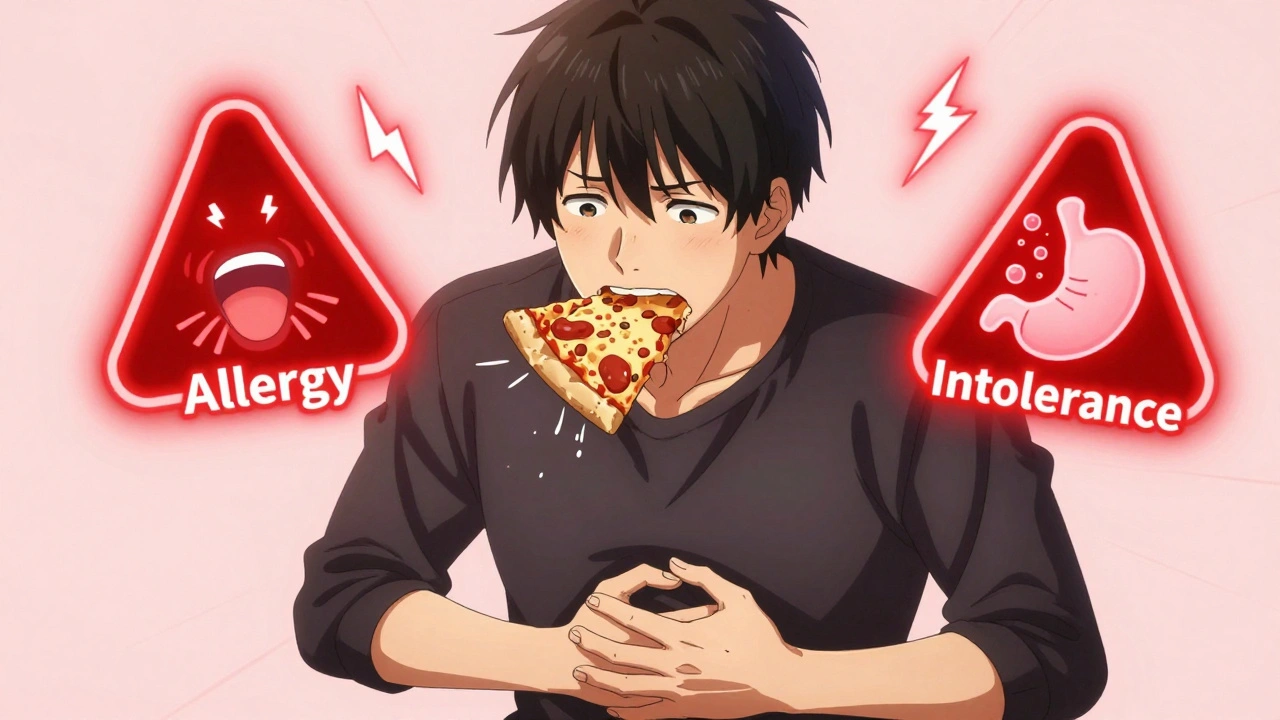
Food Intolerance vs. Allergy: GI Symptoms and Testing Explained
Finnegan O'Sullivan Dec 5 8Learn the key differences between food intolerance and food allergy, including GI symptoms, reliable testing methods, and how to manage each condition safely and effectively.
More Detail