
Safe School Drug Administration: How Schools Keep Kids Safe with Medications
When a child needs medication during school hours, safe school drug administration, the structured process schools follow to give prescription or over-the-counter drugs to students under supervision. Also known as school-based medication management, it’s not just about handing out pills—it’s about legal responsibility, trained staff, and preventing mistakes that could harm a child. Every year, thousands of students with asthma, epilepsy, diabetes, allergies, and ADHD rely on school staff to manage their meds. But without clear rules, even small errors—wrong dose, wrong time, wrong kid—can turn dangerous.
That’s why school nurses, licensed professionals trained in pediatric medication safety and emergency response are at the center of this system. They don’t just hand out pills; they verify prescriptions, log each dose, store drugs securely, and train teachers and aides on what to do in a crisis. medication storage in schools, the secure, locked, and temperature-controlled storage of drugs to prevent accidental access or tampering is just as critical. A locked cabinet isn’t optional—it’s required by law in most states. And it’s not just about keeping meds away from kids. It’s also about protecting them from theft, spoilage, or mix-ups with other students’ prescriptions.
Parents and doctors play their part too. Schools need written orders from a licensed provider, signed consent from a parent, and sometimes a completed school-specific form. Even something as simple as changing a pill’s color or shape can confuse a student or staff member—so any switch from brand to generic needs extra attention. That’s why pediatric medication management, the tailored approach to giving drugs to children based on weight, age, and medical history is so different from adult care. A 5-year-old with asthma doesn’t need the same dose or monitoring plan as a 15-year-old. Schools track this carefully.
Emergency plans are built in too. If a child has a severe allergy, the school must have epinephrine ready, staff trained to use it, and a clear chain of action. For kids on seizure meds, staff know when to call 911 and when to wait. These aren’t hypotheticals—they’re daily realities. And with more kids on complex drug regimens than ever before, the system has to be flawless.
Below, you’ll find real-world guides on how to spot dangerous drug interactions, what to do when meds go wrong, how to store drugs safely at home and school, and how to protect children from accidental poisoning. These aren’t theory pieces—they’re practical tools used by nurses, parents, and educators to keep kids alive and healthy while they’re in school.
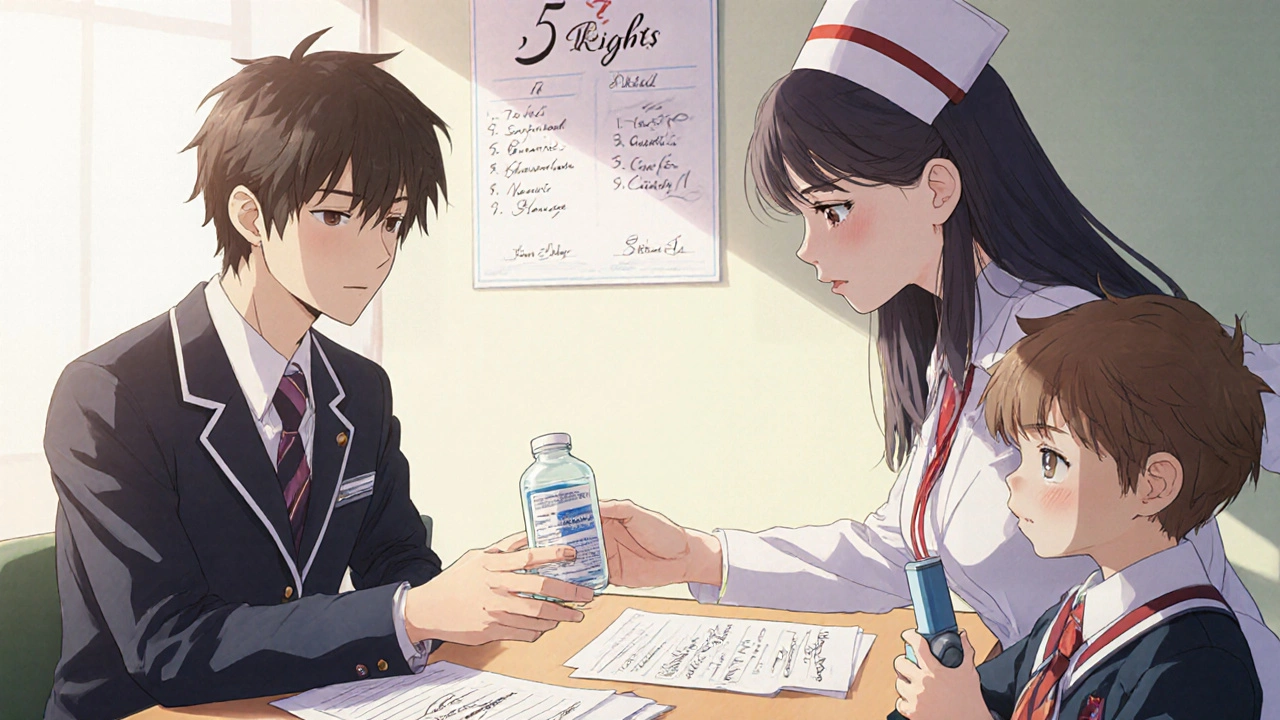
School Medications: Safe Administration Guidelines for Parents
Finnegan O'Sullivan Nov 24 10Learn the exact steps parents must take to ensure their child's medications are safely given at school, from paperwork and labeling to handling refusals and year-end retrieval.
More Detail