
Sharps Travel: Safe Transport and Handling of Medical Needles and Syringes
When you need to travel with sharps travel, the safe movement of medical needles, syringes, or lancets across borders or on flights. Also known as traveling with injectables, it’s not just about convenience—it’s about safety, legality, and avoiding emergencies. Whether you’re on a weekend trip or moving abroad, carrying insulin pens, blood thinners, or pain meds with needles isn’t optional. It’s essential. But most people don’t know the rules, and that’s where things go wrong.
Sharp objects like needles aren’t banned from planes—they’re regulated. The sharps container, a puncture-resistant, leak-proof case designed specifically for used medical needles is your best friend. Airlines require it. TSA requires it. Customs requires it. A Ziploc bag? That’s a ticket to being pulled aside, fined, or even having your meds confiscated. You need a hard-shell container labeled with your name and the medication inside. Many pharmacies sell travel-sized ones for under $10. Keep your sharps container in your carry-on. Never check it. Checked luggage gets tossed, crushed, and sometimes opened by people who don’t know what they’re handling.
Then there’s the medical needles, devices used to inject medications like insulin, heparin, or GLP-1 agonists. You must have a prescription or doctor’s note—even if you’re just flying domestically. Some countries, like Japan or Australia, will ask to see it at customs. A generic note saying "patient requires daily injections" isn’t enough. Include your name, diagnosis, medication name, dosage, and prescribing doctor’s contact info. If you’re on anticoagulants like warfarin, or using injectables for arthritis or MS, this isn’t optional. It’s your protection.
What about disposal? You can’t just toss a used needle in a hotel trash can. Many airports now have sharps disposal kiosks near restrooms or pharmacies. Some hotels offer sharps return programs—if you ask ahead. If you’re staying long-term, buy a local sharps container and drop it off at a pharmacy or clinic. Don’t wait until you’re stuck with a full container in your bag. Plan it like you plan your flights.
And don’t forget the little things. Keep your insulin cool but not frozen. Use a cooling wallet if it’s hot outside. Don’t let your sharps container sit in a hot car. Heat can ruin meds. Label everything clearly. If you’re traveling with multiple injectables, use color-coded caps or stickers so you don’t mix them up. One wrong shot can land you in the ER.
There’s a reason 1 in 5 travelers with diabetes or chronic conditions report problems with sharps during trips. It’s not because they’re careless. It’s because the rules aren’t clear. This collection of articles gives you real, tested advice from people who’ve been through it—how to handle airport security without panic, how to get through customs without delays, and how to avoid the most common mistakes that lead to canceled trips or medical emergencies. You’re not just packing meds. You’re packing safety. And that starts with knowing exactly how to handle your sharps travel.
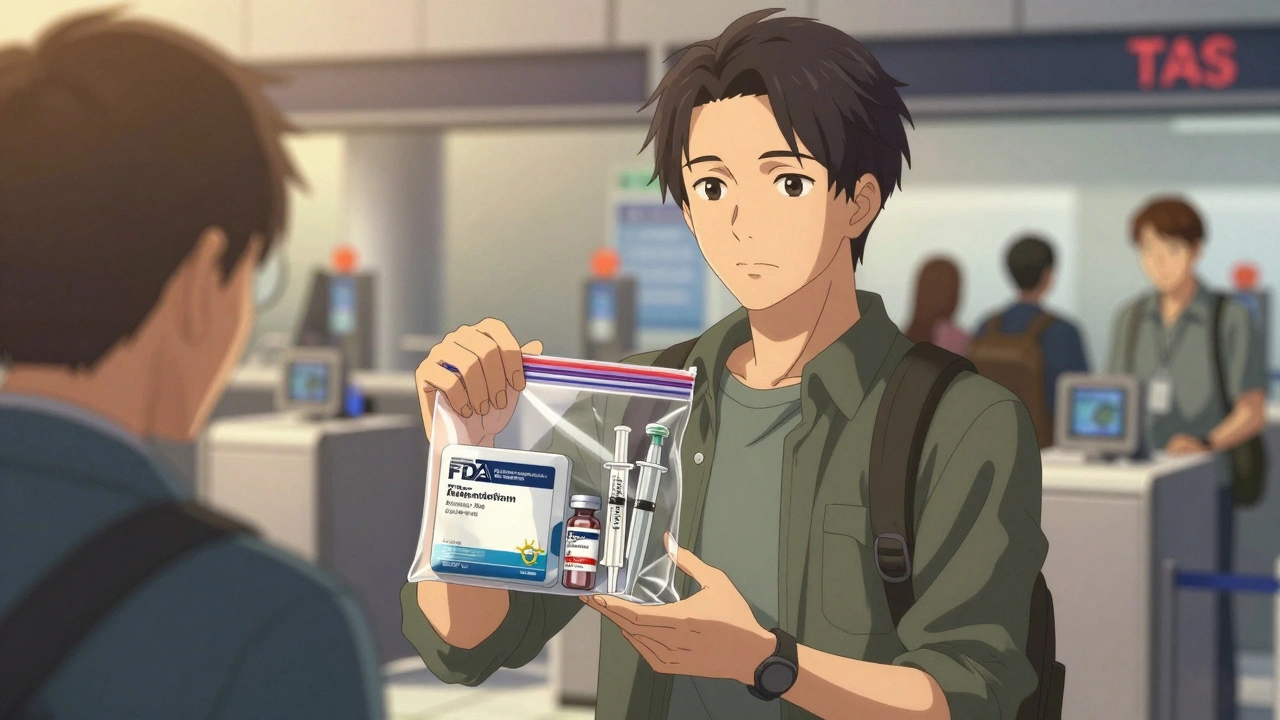
How to Carry Injectables, Syringes, and Sharps on Airplanes: A Clear Guide for Travelers
Finnegan O'Sullivan Dec 1 14Learn how to safely carry injectables, syringes, and sharps on airplanes with TSA-approved tips, international rules, packing tricks, and real-world advice to avoid delays and keep your meds secure.
More Detail