
Syringes on Airplane: What You Can and Can't Bring on a Flight
When you need to carry syringes on airplane, medical devices used to inject medication, often required for chronic conditions like diabetes. Also known as needles or injection devices, they’re essential for millions of travelers who rely on daily injections to manage their health. The good news? You’re allowed to bring them on board—but only if you follow a few simple rules. The TSA doesn’t ban syringes. What they care about is whether you can prove you need them and how you pack them.
Most people who fly with syringes are managing diabetes. Insulin users, in particular, need to carry needles and vials every day. But syringes aren’t just for insulin. People with arthritis, multiple sclerosis, or autoimmune conditions also travel with them. What ties these cases together? You must have a legitimate medical reason. That’s why it’s smart to carry a doctor’s note or prescription, even if it’s not required. Security officers see hundreds of bags a day. A clear label on your insulin box or a printed prescription makes your case instantly believable. Don’t wait until you’re at the checkpoint to realize you forgot it.
How you pack matters just as much as why you have them. Never put syringes in checked luggage. If your bag gets lost, you’re stuck without your medication. Always keep them in your carry-on, ideally in their original packaging. Use a hard-shell case if you have one—it protects the needles and makes inspection easier. If you’re carrying sharps, like used syringes, you need a sharps container. These are available at pharmacies and come with labels that say "medical waste." The TSA allows these in carry-ons too. Just don’t try to sneak loose needles in a ziplock bag—that’s asking for trouble.
Some travelers worry about declaring syringes. You don’t need to announce them unless asked. But if a TSA agent pulls your bag for inspection, be calm and cooperative. Say something like, "I have diabetes and need these for insulin." Most officers have seen this before. They’re not trying to stop you—they’re trying to keep everyone safe. If you’re flying internationally, check the rules of your destination country. Some places have stricter limits on medication imports. Canada and the UK are usually fine, but countries like Japan or the UAE may require a letter from your doctor in their language.
What about other medical supplies? If you’re carrying test strips, alcohol swabs, or glucose monitors, those are fine too. The TSA treats them like medical necessities. Just keep everything together in one clear bag so it’s easy to scan. No need to overpack. One day’s worth of supplies is enough. If you’re traveling for a week, bring enough for the trip plus a few extras. Always pack more than you think you’ll need.
There’s one big myth: you can’t fly with syringes if you’re not diabetic. That’s not true. Anyone with a medical need can bring them. If you’re giving yourself B12 shots, hormone therapy, or even allergy treatments, you’re covered. The key is proof. A label on the bottle, a prescription, or even a pharmacy receipt will do. You don’t need a notarized letter. Just be ready to explain it simply.
And what about needle disposal? Don’t try to throw used syringes in the airport trash. Use a sharps container and take it home. Most airlines don’t offer disposal services. If you’re flying back and still have used needles, bring the container with you. You can drop it off at a pharmacy or medical waste center when you land.
Traveling with syringes shouldn’t be stressful. The rules are clear, and millions of people do it every year without issues. The key is preparation. Know what you’re carrying, pack it right, and have proof ready. You’ve got the right to manage your health—even when you’re 30,000 feet in the air.
Below, you’ll find real-world advice from people who’ve flown with medical supplies, plus tips on handling security checks, international travel, and what to do if something goes wrong.
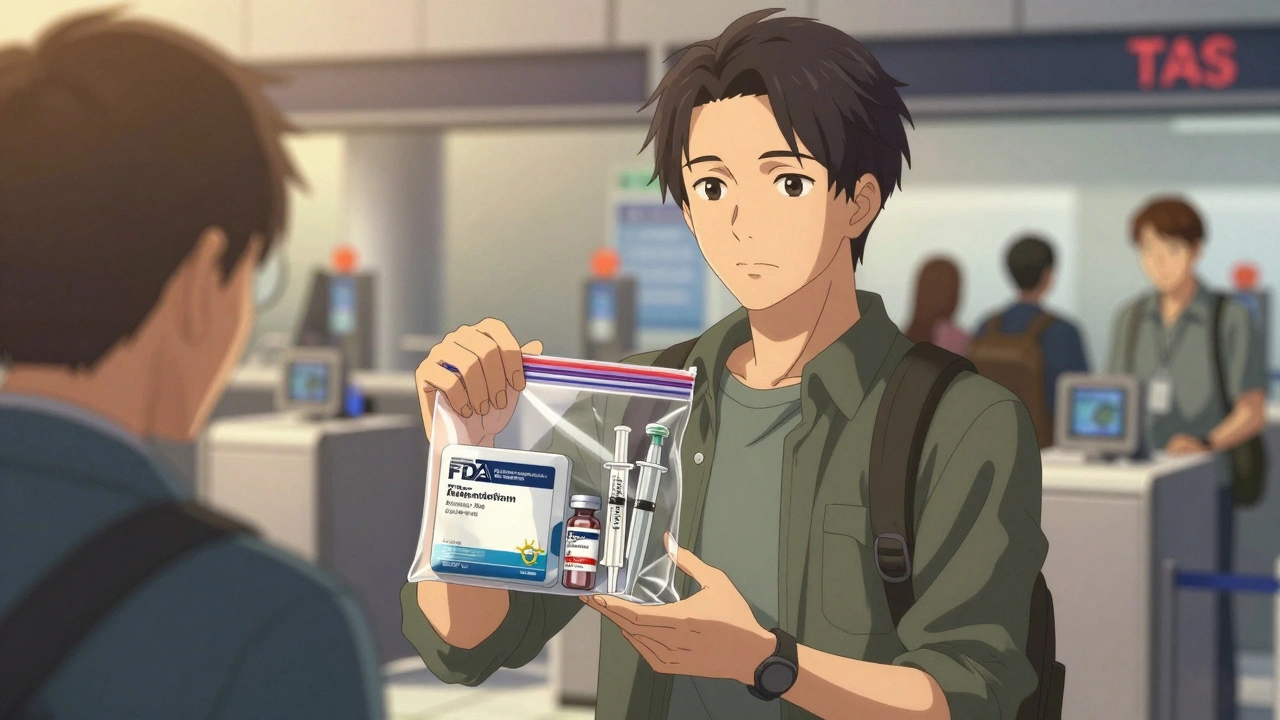
How to Carry Injectables, Syringes, and Sharps on Airplanes: A Clear Guide for Travelers
Finnegan O'Sullivan Dec 1 14Learn how to safely carry injectables, syringes, and sharps on airplanes with TSA-approved tips, international rules, packing tricks, and real-world advice to avoid delays and keep your meds secure.
More Detail