
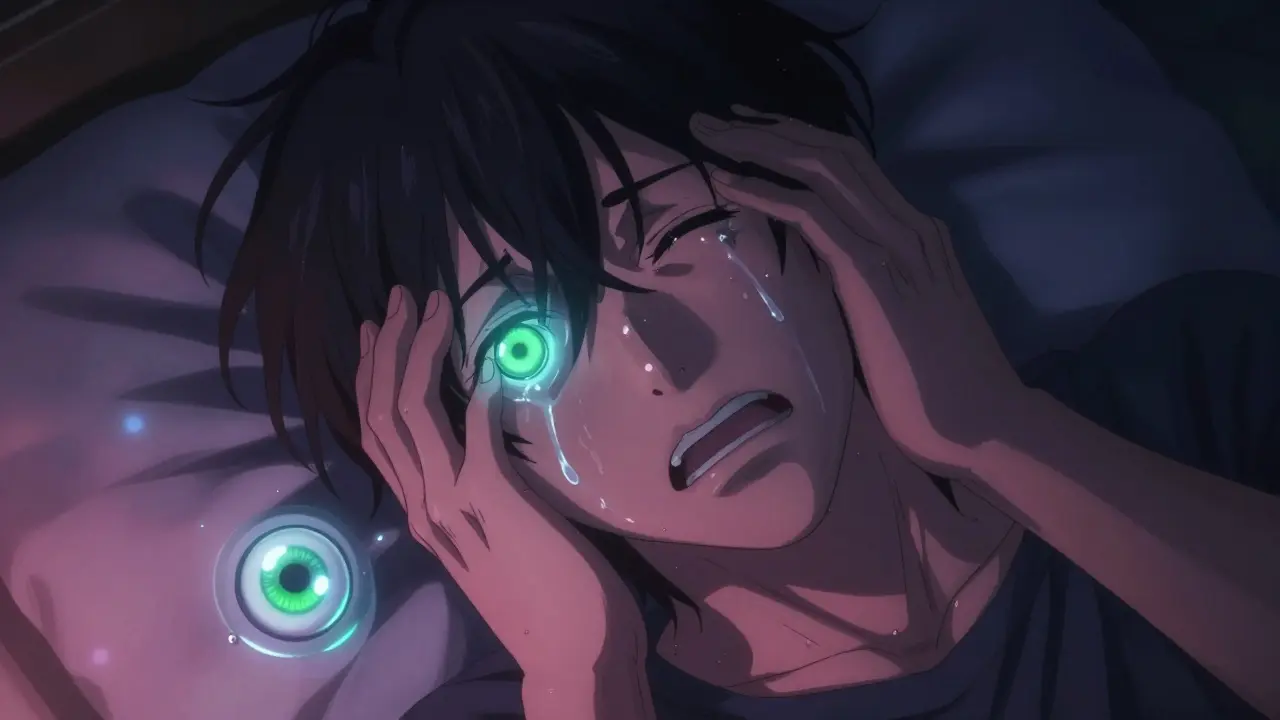
Imagine waking up with your eye burning like it’s full of sand, light feels like a knife, and your vision is suddenly blurry. You’ve been wearing your contact lenses for days-maybe even slept in them once or twice. You think it’s just dryness or fatigue. But it’s not. It could be a corneal ulcer, and every hour you wait makes it worse.
A corneal ulcer is an open sore on the clear front surface of your eye. It’s not a scratch. It’s tissue loss. And it’s often caused by infection. While contact lenses are safe for millions, they’re also the leading cause of this serious eye condition. If you wear contacts, you need to know the signs, the risks, and what to do before it’s too late.
Why Contact Lenses Put You at Risk
Over 85 million people worldwide wear contact lenses. Most do it safely. But even a small mistake can turn routine use into a medical emergency. The biggest danger isn’t the lens itself-it’s what happens when you wear it longer than you should, clean it wrong, or expose it to water.
When you wear contacts, especially overnight, you’re blocking oxygen from reaching your cornea. That’s bad enough. But worse, bacteria, fungi, or even tiny parasites like Acanthamoeba can get trapped under the lens. These germs come from your fingers, your tap water, your shower, or even a bottle of expired solution. Once they’re under the lens, they multiply fast. Your eye can’t fight them off without help.
The numbers are stark. If you wear contacts, you’re about 10 times more likely to get a corneal ulcer than someone who doesn’t. If you sleep in them? That risk jumps to 100 times higher. Extended-wear soft lenses are the worst offenders. The FDA warns these lenses can lead to blindness if infections aren’t caught early.
What the Symptoms Really Look Like
People often ignore early signs. They think their eyes are just tired. But corneal ulcers don’t get better on their own. Here’s what to watch for:
- Severe eye pain-like something’s digging into your eye
- Redness that won’t go away, even after removing lenses
- Blurry or hazy vision, like looking through fog
- White or gray spot on the clear part of your eye (you might not see it yourself, but others might)
- Extreme sensitivity to light-even turning on a lamp feels painful
- Excessive tearing or thick, yellowish discharge
- Feeling like there’s still grit in your eye, even after removing lenses
If you have even one of these symptoms and you wear contacts, stop wearing them immediately. Don’t wait. Don’t try to flush it out with water. Don’t reach for over-the-counter drops. This isn’t pink eye. This is an emergency.
How Doctors Diagnose a Corneal Ulcer
Eye doctors don’t guess. They test. If you show up with these symptoms, your eye care provider will run a few key tests:
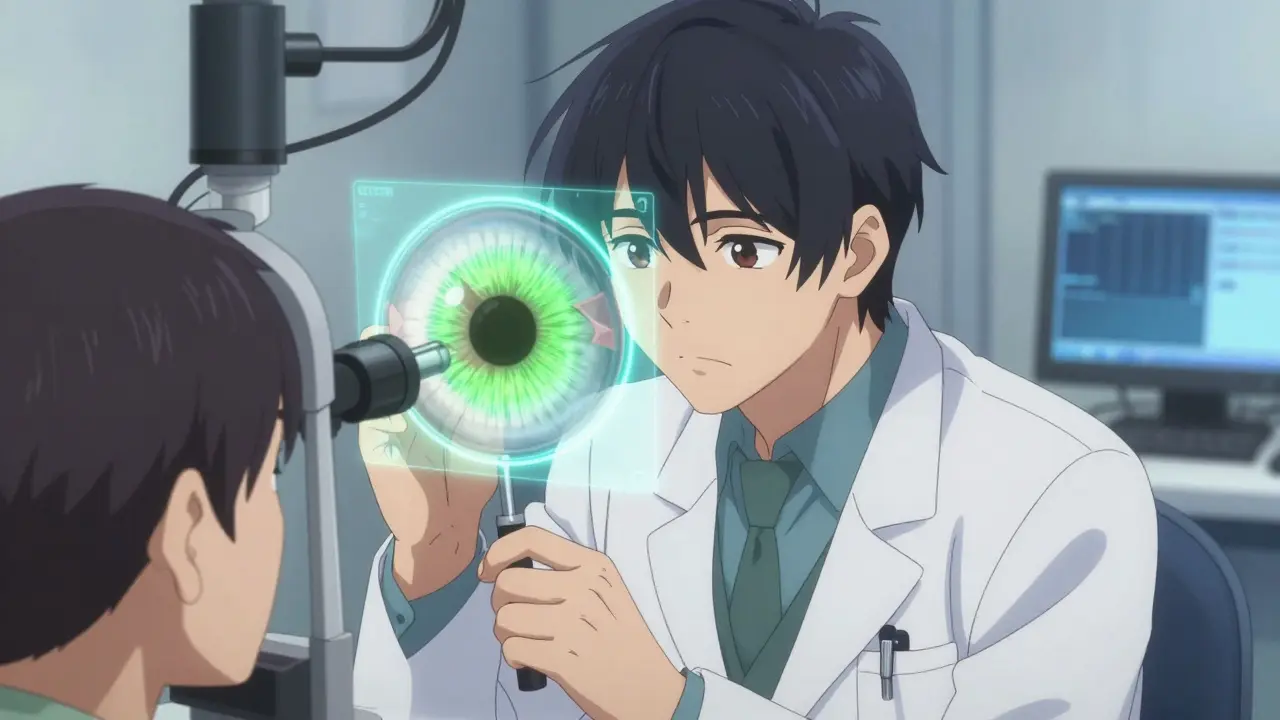
- Fluorescein staining: A harmless orange dye is dropped in your eye. Under blue light, any damaged areas glow green. It shows exactly where the ulcer is.
- Slit-lamp exam: A high-powered microscope lets the doctor zoom in on your cornea, seeing the depth and shape of the sore.
- Corneal scraping: If the ulcer looks serious, they’ll gently take a tiny sample of the infected tissue. This tells them if it’s bacteria, fungus, or a virus.
- Visual acuity test: They’ll check how well you can see-before and after treatment-to track progress.
Newer tools are helping too. Some clinics now use digital imaging to capture photos of the ulcer and compare them over time. This helps catch changes faster, especially in the first 24 hours when treatment is most critical.
What Happens If You Wait
Time is vision. Every day you delay treatment increases the chance of permanent damage.
Corneal ulcers can scar your cornea. That scar doesn’t heal. It stays. And if it’s in the center of your vision, you’ll have a permanent blind spot. In worse cases, the infection eats through the cornea and can cause your eye to collapse. That’s when you need a corneal transplant-surgery to replace your entire front eye surface.
Bacterial ulcers are the most common and can spread fast. Fungal ulcers are rarer but harder to treat. They often come from contaminated water-like swimming or showering in contacts. Acanthamoeba, a parasite found in tap water, is especially dangerous. It’s resistant to most antibiotics and can linger for months.
And here’s something many don’t realize: Steroid eye drops, which help with inflammation, can make ulcers worse if used without knowing the cause. If you’ve been given steroids for “red eye” in the past, don’t use them again without a doctor’s order. They can hide the infection while it eats your eye.
Treatment: Fast, Aggressive, and Personalized
There’s no one-size-fits-all fix. Treatment depends on what’s causing the ulcer.
- Bacterial ulcers: Treated with strong antibiotic eye drops-usually fluoroquinolones like moxifloxacin or gatifloxacin. These are applied every hour at first, then tapered as healing begins.
- Viral ulcers: Caused by herpes simplex virus. Treated with antiviral drops like acyclovir or ganciclovir. Recurrence is common, so long-term management is often needed.
- Fungal ulcers: Require antifungal drops like natamycin or voriconazole. These are harder to find, harder to use, and take weeks to work.
- Severe cases: If the ulcer is larger than 2mm, close to the center of your vision, or getting worse after 48 hours of treatment, you’ll likely need hospital care. Some patients need IV antibiotics or surgery.
Don’t expect quick results. Healing takes days to weeks. You’ll need daily check-ups. And you must stop wearing contacts-ever-until your doctor says it’s safe. Even then, many people never wear them again.
How to Prevent a Corneal Ulcer for Good
The best treatment is prevention. And it’s simple-if you’re willing to be strict.
- Never sleep in your contacts. Not even for an hour. Not even if they’re labeled “extended wear.” The 100x risk isn’t a myth-it’s data.
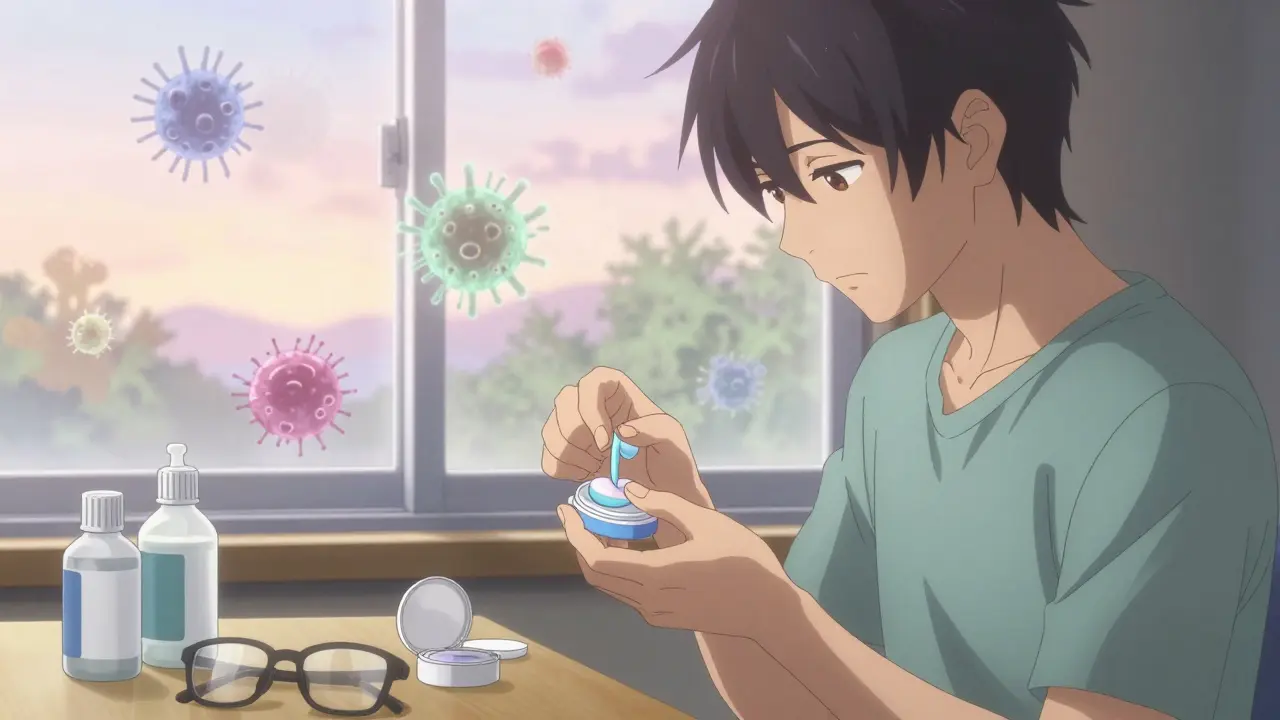
- Never expose lenses to water. No swimming. No showering. No rinsing lenses with tap water. Use only sterile solution. Even distilled water can carry Acanthamoeba.
- Wash your hands before touching lenses. Soap and water. Dry with a lint-free towel. Don’t use hand sanitizer-it doesn’t kill all germs.
- Replace lenses on schedule. Daily disposables are safest. If you use monthly lenses, toss them after 30 days-even if they look fine.
- Use only recommended solutions. Never mix brands. Never reuse solution. Always clean the case and let it air-dry upside down.
- Give your eyes a break. Wear glasses at least one day a week. Let your cornea breathe.
The FDA and major eye groups agree: Proper hygiene reduces risk by over 90%. It’s not about being paranoid. It’s about being smart.
When to Go to the Emergency Eye Clinic
If you have pain, redness, or vision changes and you wear contacts-go now. Don’t wait for your regular appointment. Don’t call your GP. Go to an eye specialist or urgent eye clinic.
Many hospitals have dedicated ophthalmology emergency services. In Sydney, clinics like the Sydney Eye Hospital and private ophthalmology centers offer same-day urgent care for corneal issues. Time matters. The sooner you start treatment, the less likely you’ll lose vision.
And if you’ve ever had a corneal ulcer before? You’re at higher risk for another. Be extra careful. Keep your lens case, solution, and glasses ready. Don’t wait for symptoms to get bad.
Corneal ulcers are rare-but they’re devastating. And they’re almost always preventable. Your eyes don’t get a second chance. Treat them like the delicate, irreplaceable organs they are.
Comments (8)
-
Luke Davidson January 23, 2026
Bro i woke up yesterday with my eye burning like i’d been stabbed with a rusty nail and i thought it was just allergies till i saw the gray spot on my cornea. I dropped everything and went to urgent eye care. They said it was a tiny ulcer from sleeping in my lenses for two nights straight. I’m never doing that again. My vision’s fine now but holy shit that was a wake-up call.

-
Patrick Gornik January 25, 2026
Let’s be real-this isn’t about hygiene. It’s about the commodification of convenience. The contact lens industry thrives on your delusion that you’re too busy to wear glasses. They sell you ‘extended wear’ like it’s a badge of honor. Meanwhile, your cornea is suffocating under a plastic prison while you scroll TikTok at 2 a.m. This isn’t a medical issue-it’s a systemic betrayal. We’ve normalized self-harm disguised as lifestyle optimization. The real ulcer isn’t on your eye-it’s in the culture that tells you your time is more valuable than your vision.

-
Karen Conlin January 26, 2026
Thank you for posting this. I had a friend who lost 30% of her vision because she waited a week thinking it was pink eye. She’s now legally blind in one eye and uses a monocle. Please don’t be her. If your eye feels wrong and you wear contacts-GO. NOW. No excuses. I’m not even kidding. I keep a pair of glasses by my bed now just in case. You don’t need to be a hero. You just need to be smart.

-
asa MNG January 26, 2026
so like i totally slept in my contacts for 5 days straight last month bc i was partying and then my eye started crying yellow stuff and i thought it was just allergies?? like wtf is acanthamoeba?? is that a new strain of covid?? i went to the doc and they were like ‘bro you’re lucky u didnt lose it’ and i was like 😳 i still wear them tho lmao

-
Heather McCubbin January 27, 2026
You think this is bad? Try living in a country where you can’t even get antibiotic drops without a 3-week wait and a referral from your therapist. I had a corneal ulcer in Manila and the clinic didn’t have the right meds so I had to order them from Singapore. I cried for three days. And don’t even get me started on how people still rinse their lenses with bottled water like it’s some kind of spiritual ritual. This isn’t just ignorance-it’s a global tragedy wrapped in convenience culture

-
Chloe Hadland January 28, 2026
I wore contacts for 12 years. Never had an issue. Then one day I took a shower with them in. Just a quick rinse. One minute. And boom-ulcer. I thought I was invincible. Turns out I was just lucky. Now I only wear glasses. And honestly? I feel freer. My eyes don’t hurt. My mornings are calmer. Sometimes the simplest change is the most powerful one.

-
Amelia Williams January 29, 2026
My mom used to say ‘your eyes are your windows to the soul’ and I thought she was being cheesy. Now I know she was warning me. I had a fungal ulcer from swimming in my contacts. Took 11 weeks to heal. I had to put drops in every hour for the first week. I slept with an eye patch. I cried every time I looked in the mirror. I thought I’d never see my daughter’s face clearly again. I’m not scared of contacts anymore-I’m scared of being careless. Please, just stop. Wear glasses. It’s not a weakness. It’s wisdom.

-
Viola Li January 30, 2026
Everyone’s acting like this is some groundbreaking revelation. Newsflash: you’re supposed to follow the instructions on the bottle. You’re supposed to wash your hands. You’re supposed to not sleep in them. This isn’t a medical mystery. It’s basic responsibility. The fact that people need a 2000-word essay to understand this says more about society than it does about contact lenses. Stop romanticizing negligence. Just follow the damn rules.
