
Why do some people refuse to take generic drugs-even when their doctor says they’re just as good? It’s not about science. It’s about trust, memory, and the way we’ve been conditioned to think about medicine. A 65-year-old who’s been taking Brand X for 30 years might swear by it. A 28-year-old might grab the generic version without a second thought. Both are getting the exact same active ingredients. So why the divide?
Generations See Medicines Differently-Because They Grew Up With Different Rules
Baby Boomers (born 1946-1964) came of age when drug advertising was limited, brand names were trusted, and pharmacies were local. They remember when pills came in glass bottles with handwritten labels. They saw doctors as infallible, and brand-name drugs as the gold standard. Many still associate price with quality: if it costs more, it must work better. That belief isn’t based on data-it’s built on decades of experience and cultural messaging. Gen X (born 1965-1980) saw the rise of direct-to-consumer drug ads. They watched TV commercials for brand-name medications with catchy jingles and smiling actors. They were the first generation to be marketed to as patients, not just recipients. Many still hold onto brand loyalty, but they’re also more likely to ask questions. They’ve seen the cost of prescriptions climb and know generics are cheaper-but they’re skeptical. Is the cheaper version really the same? They’ve been told it is, but they’ve also been told it isn’t. Millennials (born 1981-1996) grew up with the internet. They Google symptoms, compare prices online, and read reviews before buying anything-even medicine. They’re the first generation to routinely use pharmacy apps that auto-substitute generics. They don’t care about the brand on the bottle as long as the pill works. They’ve seen their parents struggle with bills and don’t want to repeat that. For them, generics aren’t a compromise-they’re a smart choice. Gen Z (born 1997-2012) didn’t grow up with TV drug ads. They know generics are the norm. They’ve seen inflation hit hard. They’ve watched friends skip prescriptions because they couldn’t afford the brand. They don’t have emotional ties to drug names. To them, a pill is a pill. If it’s FDA-approved and costs half as much, why would they pick the expensive one? They’re more likely to trust scientific labels than marketing logos.It’s Not Just About Age-It’s About Experience and Exposure
The biggest factor shaping attitudes isn’t birth year-it’s medication experience. A 50-year-old who’s never taken a generic might be wary. A 70-year-old who’s switched five times without issue? They’re all in. Studies show that people who’ve taken generics before are far more likely to trust them. But here’s the twist: many older adults have taken generics without realizing it. Pharmacies automatically switch them when the brand runs out. They don’t know they’re on a generic. So their opinion is based on how they felt while taking the pill-not what it was called. If they felt fine, they don’t care. If they felt worse? They blame the generic-even if the difference was placebo or a change in filler ingredients. Health literacy plays a huge role. Older generations often have less exposure to scientific explanations of bioequivalence. They don’t know what “bioequivalent” means. They don’t know the FDA requires generics to have the same active ingredient, strength, and absorption rate as the brand. They know “brand” and “cheap.” That’s enough.Why Do People Still Think Generics Are Weaker?
Despite decades of evidence, 35.6% of people still believe generics are less effective. Why? One reason is familiarity bias. We trust what we know. Brand names have decades of advertising, recognizable logos, and emotional associations. “Lipitor” sounds like a medicine. “Atorvastatin” sounds like a chemical formula. Even though they’re the same thing, the brain treats them differently. Another reason is framing. When a doctor says, “I’m switching you to a generic,” it sounds like a downgrade. When they say, “This is the same medication, just less expensive,” it sounds like a win. The words matter more than the science. And then there’s the confirmation bias. If someone believes generics are weaker, they’re more likely to notice any side effect-real or imagined-and blame the drug. If they believe it’s the same, they ignore minor changes.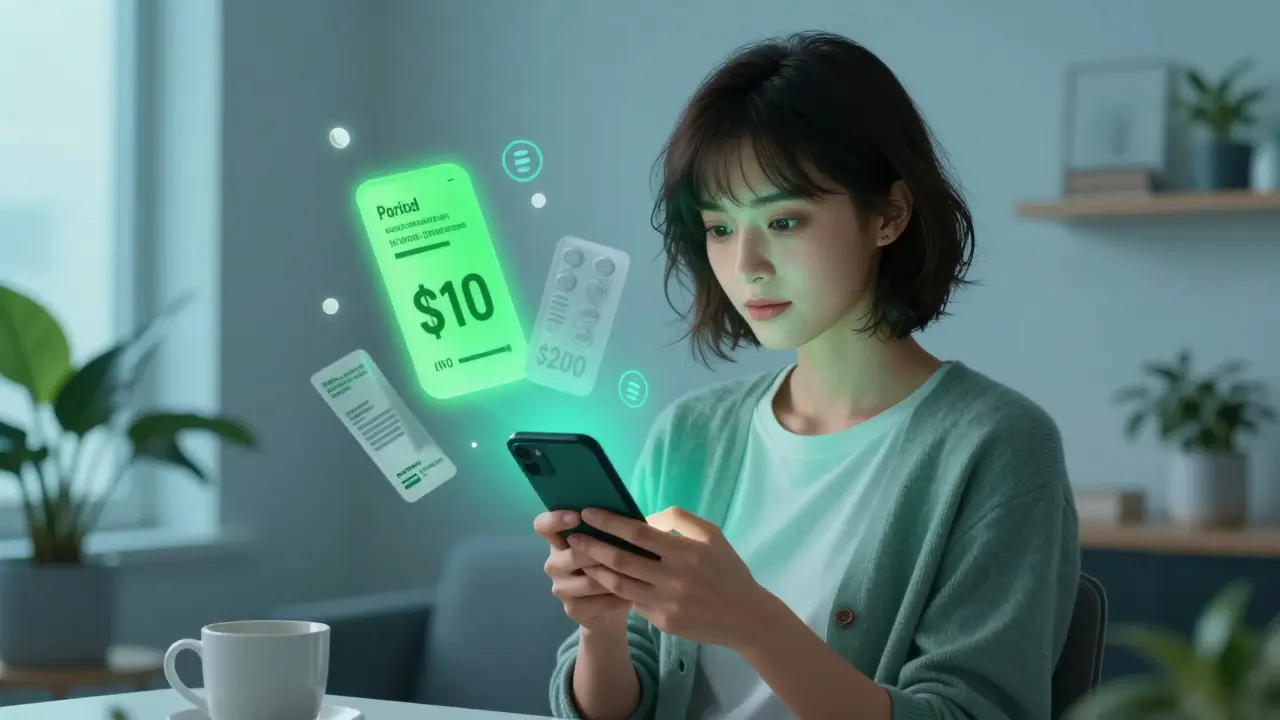
The Numbers Don’t Lie-Generics Are the Backbone of Modern Healthcare
In the U.S., generics make up 90% of all prescriptions filled. But they only cost 23% of total drug spending. That’s not a fluke. It’s the result of real savings. A 30-day supply of the brand-name drug Zoloft might cost $200. The generic sertraline? $10. In China, after the government pushed for generic procurement, the share of generics in prescriptions jumped from 60% to nearly 78% in just a few years. In the U.S., the generic drug market was worth $130 billion in 2022. These aren’t small players. They’re the system. And they’re safe. The FDA requires generics to meet the same standards as brands. Same active ingredient. Same dosage. Same manufacturing quality. Same testing. The only difference? No marketing budget.Doctors and Pharmacists Aren’t Always on the Same Page
Even among healthcare workers, attitudes vary. Pharmacists-who see the cost savings daily and handle the supply chain-are more likely to support generics. Physicians, especially older ones, are more cautious. Why? Because they’ve seen patients panic when their medication changes. They’ve had calls: “This isn’t working like before.” One study found that only 49% of healthcare professionals believed generics were equally effective. That’s not because they’re wrong-it’s because they’ve been trained to be careful. And patients pick up on that hesitation. If your doctor says, “I’m not sure about this generic,” you’ll believe them-even if they’re just being cautious.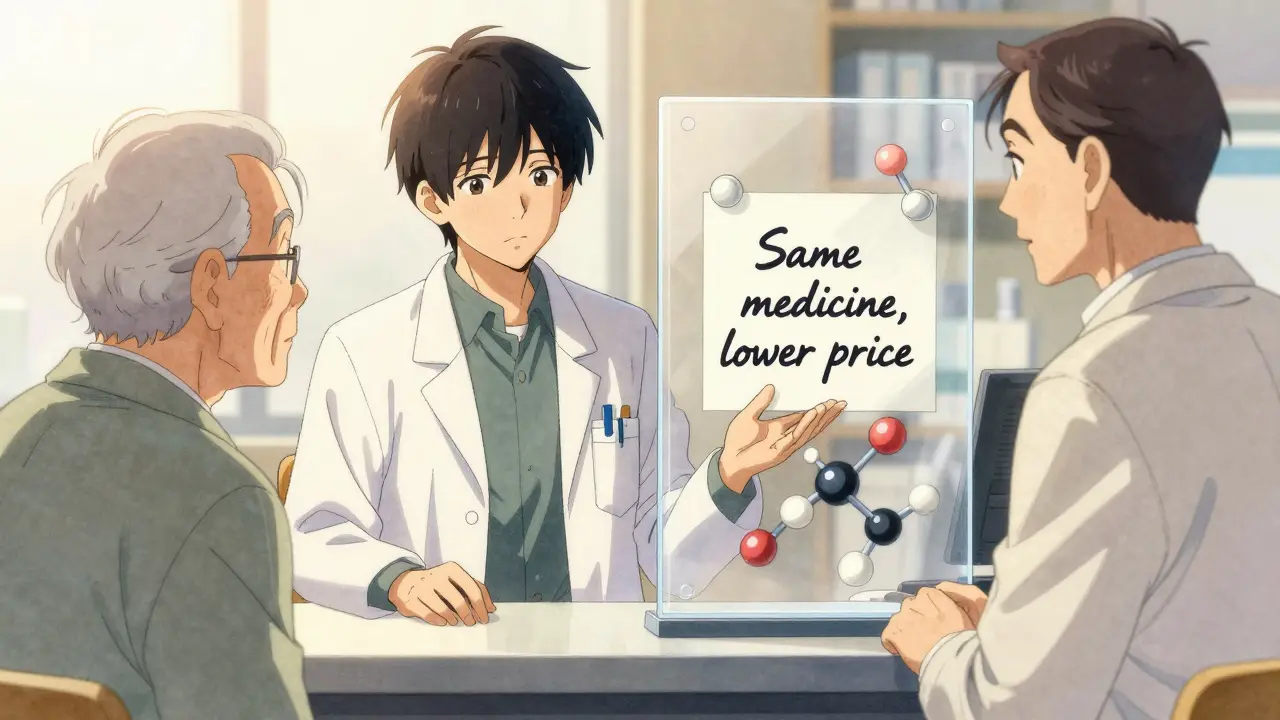
How to Bridge the Gap: Better Communication, Not More Ads
You can’t fix this with another TV commercial. You need better conversations. For older patients: Start with respect. Say, “You’ve been on this brand for years, and it’s worked well for you. This generic has the same active ingredient, and thousands of people have switched without any issues. I’ve seen it work just as well.” For younger patients: Don’t over-explain. Just say, “This is the same medicine, but it’s cheaper. You’ll save $150 a month.” They’ll get it. Pharmacies can help too. Instead of just swapping the label, add a note: “This is the generic version of [Brand Name]. Same active ingredient. Same effect. Lower price.” Simple. Clear. No jargon.What Happens When People Don’t Take Generics?
The cost of avoiding generics isn’t just financial. It’s health-related. When people skip prescriptions because they can’t afford the brand, they end up in the ER. They get sicker. Their conditions worsen. Their overall healthcare costs go up. A 2023 study showed that patients who switched to generics for chronic conditions like high blood pressure or diabetes were more likely to stick with their treatment. Why? Because they could afford it. That’s not opinion. That’s data. Generics aren’t a compromise. They’re a lifeline.It’s Time to Stop Seeing Generics as Second-Best
The truth? Generics aren’t cheaper because they’re worse. They’re cheaper because they don’t need to pay for ads, fancy packaging, or celebrity endorsements. The science is the same. The pills are the same. The results are the same. The only thing different is perception. And perception can change-with the right message, at the right time, for the right generation. For Baby Boomers, it’s about trust and history. For Gen Z, it’s about value and logic. The science doesn’t change. But how we talk about it? That has to.Comments (13)
-
Gran Badshah December 30, 2025
My dad in Delhi still refuses generics. Says his heart medicine from 1998 was in a red bottle and worked like magic. Now he takes the generic and complains his chest feels "lighter"-like the pill lost weight. He doesn’t get that the pill didn’t shrink, his body just got used to it.
He also thinks the generic is "made in a garage." I told him it’s the same factory, just no fancy logo. He nodded and asked if I could bring him the red bottle next time.

-
Ellen-Cathryn Nash December 30, 2025
Let me just say this-people who refuse generics are either rich enough to waste money or too lazy to read the FDA website. It’s not rocket science. Same molecule. Same bioavailability. Same results.
And yet, we have adults who think "atorvastatin" sounds like a toxic spill and "Lipitor" sounds like a superhero. This isn’t skepticism. It’s magical thinking wrapped in a prescription bottle.
Stop romanticizing brand names. Your bank account will thank you. Your kidneys might too.

-
Samantha Hobbs January 1, 2026
OMG YES. My grandma switched to generic blood pressure med and said she felt "weird" for two days. Turns out she just missed the blue color of the old pill. She’s fine now. We just got her a little sticker to put on the bottle that says "same stuff, different shirt." She loves it.
Also, she calls the generic "the cheap one" and I don’t correct her anymore. She’s 82. Let her have her little rituals.

-
Nicole Beasley January 2, 2026
Gen Z here 👋 and I just got my first generic for anxiety meds. Cost me $7 vs $210 for the brand. I didn’t even check the label until my roommate said "wait, that’s not the name I know."
Turns out it’s the same. Same pill. Same results. Same me. 🤷♀️
Also, I used to think generics were "fake medicine" until I learned what "bioequivalent" meant. Now I’m basically the pharmacy’s hype woman. 💊✨

-
sonam gupta January 3, 2026India makes 50% of the world’s generics. We don’t need your brand names. We need affordable medicine. Your fear is your privilege. Our lives depend on this. No drama. Just pills.

-
Julius Hader January 3, 2026
My uncle’s a cardiologist. He won’t take generics for himself. Says he’s "too old to experiment." But he prescribes them to everyone else. I asked him why. He paused and said, "I’ve seen too many people skip meds because they cost too much. I’d rather they take something that works than nothing at all."
Kinda broke my heart. And made me rethink everything.

-
Vu L January 5, 2026
Actually, I think generics are worse. I had one that gave me a rash. Brand didn’t. Coincidence? Maybe. But I’m not risking it again. Science doesn’t care about my skin. I do.
Also, the generic looked like a cereal pill. I didn’t trust it. Trust your gut. Not the FDA.

-
James Hilton January 6, 2026
Let me get this straight-you’re mad that a pill costs $10 instead of $200… but you’re cool with paying $15 for a coffee that does literally nothing for your health?
Bro. You’re not saving money. You’re just buying a placebo with better branding.
Gen Z is winning. You’re just mad they’re not scared of the word "generic."

-
Mimi Bos January 7, 2026
my mom switced to generic and now she thinks her pills are "suspicious" because they're white and round instead of blue and oval. i had to show her the FDA page on my phone. she still says "but the other one had a logo" like that means something. sigh.
also i misspelled something here. sorry. typing on my phone.

-
Payton Daily January 8, 2026
Think about it-generics are the ultimate metaphor for modern life. We’re told to value efficiency over identity. Function over feeling. Substance over symbolism.
But humans aren’t machines. We don’t just want to survive. We want to feel safe. We want to see a name we recognize on the bottle. That’s not irrational. That’s existential.
Generics are cheaper because they stripped away the story. But we’re not buying pills. We’re buying peace of mind.
And sometimes, peace of mind costs $200.
So don’t shame people for needing the brand. Shame the system that made the brand necessary in the first place.

-
Kelsey Youmans January 10, 2026
It is imperative to recognize that the psychological dimension of pharmaceutical adherence is as significant as the pharmacological one. The perceived legitimacy of a medication, as mediated by cultural and historical context, directly influences physiological outcomes through the nocebo and placebo effects.
Therefore, the clinical imperative must be to engage in patient-centered communication that validates prior experience while gently introducing evidence-based alternatives. The goal is not to override belief, but to expand it.

-
Sydney Lee January 10, 2026
It’s not that I distrust generics. It’s that I distrust the system that allows them to exist in the first place.
Big Pharma spends billions on ads to make you fear the generic. Then they spin off the generic division under a different name and sell it back to you at 90% off.
It’s a shell game. The pill is the same. The profit motive? Not so much.
So no. I won’t take the generic. I’ll take nothing. Because I refuse to be complicit in this charade.
And before you say "but your health"-I’ve read the studies. I know the stats. I’m not stupid. I’m principled.

-
oluwarotimi w alaka January 12, 2026
Generics? Made in China. Poisoned by U.S. corporations. They put fake pills in African markets. They test on poor people. You think your $10 pill is safe? It’s a trap. Your doctor doesn’t know. FDA? Bought and paid for.
My cousin died from generic malaria pills. He was 23. Now I only take what’s made in Nigeria. Even if it costs more. Even if it’s harder to find.
You think science matters? Try surviving a system that wants you dead.
