
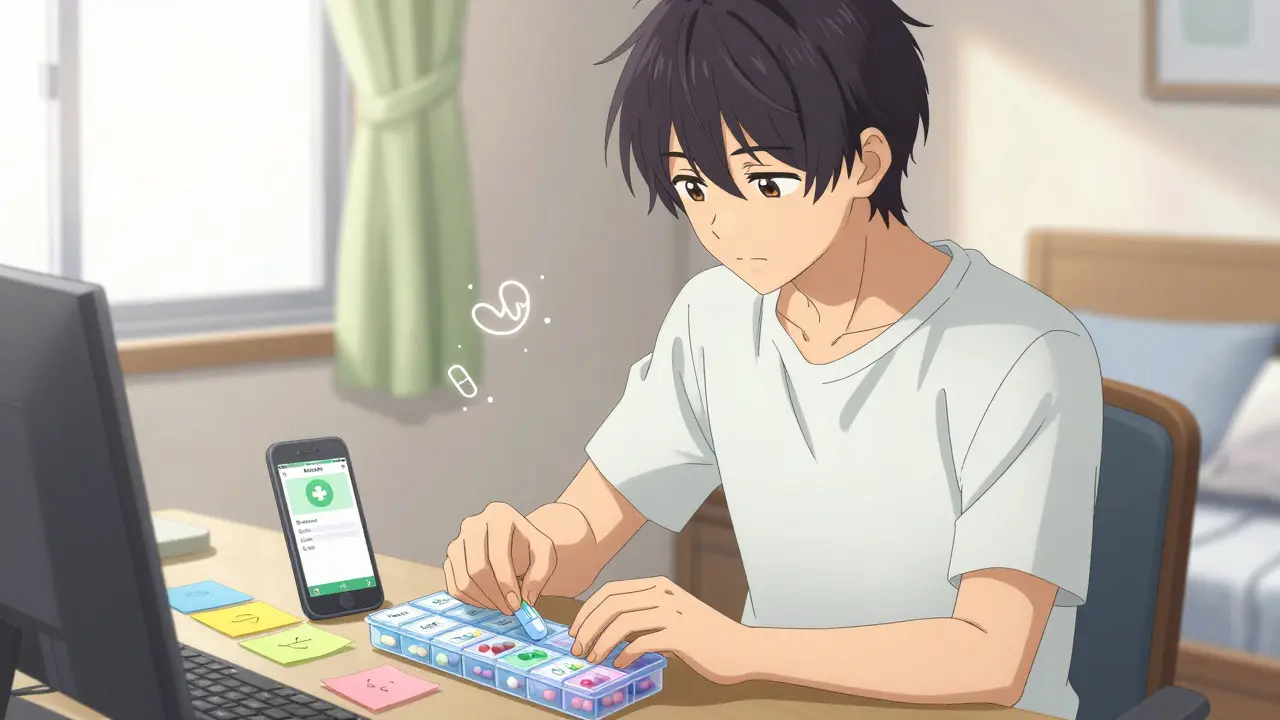
Teaching teens to manage their own prescription meds isn’t just about remembering to take pills. It’s about giving them the tools to stay safe, avoid misuse, and take real control of their health as they head into adulthood. Many parents assume their teen will figure it out on their own-until a missed dose leads to a flare-up, or a bottle goes missing. The truth? Teens won’t magically become responsible with meds without guidance. And the stakes are high: nearly 1 in 7 high school seniors have misused prescription drugs, according to the 2022 Monitoring the Future study. Opioids, ADHD meds, and anxiety pills are the most common targets. But here’s the good news: with the right approach, you can turn medication management from a source of stress into a skill they’ll carry for life.
Start Early-Before It’s an Emergency
Don’t wait until your teen leaves for college to start this conversation. The ideal time to begin is in 10th grade. That’s when teens are old enough to understand cause and effect, but still have adult support nearby if things go sideways. By 11th grade, they should be handling refills and scheduling appointments. By 12th, they should be able to talk to a pharmacist or doctor about side effects without you stepping in. This isn’t about letting go-it’s about handing over the keys slowly, so they don’t crash the car.Dr. Nicholas Chadi from the American Academy of Pediatrics says it best: "Coach them in handling their own medications. Gradually let them take responsibility for it, well before they leave home so you can support them through any challenges." Start with simple questions: "What’s this pill for?" "What happens if you skip it?" "How do you know it’s working?" If they can’t answer, you’ve found your starting point.
Teach Them What’s in the Bottle
Most teens don’t know the difference between their asthma inhaler and their brother’s Adderall. That’s dangerous. A 2020 DEA report found that 70% of teens think prescription drugs are safer than street drugs-because they come from a doctor. That’s a myth with deadly consequences.Get them to read the label themselves. Show them how to spot the drug name, dosage, frequency, and warnings. Have them write down each medication in a notebook or phone note: name, purpose, dose, time to take it, and what to do if they miss a dose. Make it visual. Use color-coded sticky notes or a printable chart. For teens with chronic conditions like asthma, diabetes, or epilepsy, this isn’t optional-it’s life-saving.
Don’t just explain the benefits. Talk about the risks. If they’re on opioids for pain, explain how quickly dependence can start. If they’re on stimulants for ADHD, explain why sharing them is illegal and dangerous. Use real stats: 4.8 million teens needed treatment for prescription drug misuse in 2022, according to SAMHSA. This isn’t scare tactics-it’s truth with context.
Build Routines, Not Reminders
Memory fails. Teens are busy. Stress, sleep deprivation, and social pressure make it easy to forget a pill. The fix? Tie medication to habits they already do every day.Research from the University of Rochester shows that pairing meds with an existing routine-like brushing teeth, eating breakfast, or charging their phone-boosts adherence by 37%. If they take their medication at night, link it to brushing teeth before bed. If it’s morning, pair it with pouring cereal. Consistency beats complicated alarms.
But alarms help too. Use a simple phone alarm with a clear label: "AMOXICILLIN - 500mg - AFTER BREAKFAST." Set two: one at the right time, another 30 minutes later as a backup. Apps like Medisafe or MyMeds send notifications, track doses, and even alert you if they miss one. A 2020 University of Michigan study found that teens using these apps improved adherence by 41%.
Here’s the trick: don’t just set the alarm. Have them tap "taken" themselves. That small act builds accountability. And if they forget? Don’t yell. Ask: "What happened? How can we make it easier?"
Use Tools That Actually Work
Pill organizers aren’t just for grandparents. A seven-day compartment box with morning/afternoon/evening slots is one of the most effective tools for teens. Buy one with a lock if they’re on controlled substances like opioids or stimulants. Store it in a safe place-not their bedroom drawer.For teens on multiple meds, consider blister packs from the pharmacy. Many pharmacies now offer pre-sorted packs labeled by day and time. No counting, no confusion. Just open and take.
Keep a simple log: a printed checklist or a notes app where they mark off each dose. Review it weekly with them. Don’t check like a cop. Check like a coach: "You missed Wednesday’s dose. Was it the alarm? The school trip? Let’s adjust."
And here’s a pro tip: use the pharmacy’s refill reminders. Most have text or email alerts. Set one up so your teen gets notified when it’s time to reorder. Teach them to call the pharmacy themselves. This builds independence-and prevents last-minute runs to the ER because they ran out.
Give Them a Voice With Doctors
Too many teens never speak up about side effects. They’re afraid of being told to stop their meds. Or they don’t know what to say.Role-play doctor visits. Practice phrases like: "I’ve been feeling dizzy after I take this," or "I don’t think this is helping my headaches." Teach them to write down questions before the appointment. Let them lead the conversation. You can sit in the room, but let them talk first. Then ask: "Did they answer your question?"
By 12th grade, they should be able to request refills, report side effects, and ask about alternatives. If they’re on a long-term medication, help them access their electronic health record. The 2020 CURES Act lets teens as young as 13 view their own medication history. That’s power. Let them use it.
Lock It Up, Count It, Dispose of It
Controlled substances-painkillers, ADHD meds, anxiety pills-need extra rules. Keep them locked in a small safe, a locked drawer, or a medicine lockbox. Never leave them on the bathroom counter. Even if your teen is responsible, friends might be tempted. And 70% of teens who misuse prescriptions get them from family medicine cabinets, according to the DEA.Count the pills monthly. If you notice missing tablets, don’t accuse. Say: "I noticed the count is off. Are you having trouble with your schedule?" That opens the door for help, not punishment.
And when the bottle’s empty? Don’t flush it. Don’t throw it in the trash. Take it to a pharmacy drop-off box. There are over 14,000 DEA-authorized collection sites across the U.S. Most pharmacies offer this for free. Teach your teen to do it themselves. It’s part of being a responsible adult.
Let Them Have a Buddy
Teens listen to peers more than parents. That’s why having a medication buddy helps. It could be a close friend who also takes meds, a sibling, or even a classmate in the same health class. They check in with each other: "Did you take yours?" "How’s your head feeling?"A 2021 study in the Journal of Adolescent Health found teens with a medication partner had 22% higher adherence. It’s not about spying-it’s about shared responsibility. If your teen has a chronic illness, encourage them to find someone they trust. Even a simple text exchange helps.

When to Step Back
You’re not done when they turn 18. You’re just changing roles. Around 11th grade, start reducing daily checks. Move from watching them take meds, to asking them to text you after they’ve taken them. Then to weekly check-ins. By senior year, monthly spot checks are enough.Here’s the line: if they’re consistently responsible for 3 months, you can trust them. If they miss doses, forget refills, or hide meds? Go back to daily check-ins. Don’t punish. Re-teach. This isn’t a test of obedience-it’s a training program.
And if they’re on opioids or benzodiazepines? Keep supervision longer. Dr. Harold Paz from Aetna says: "Even responsible teens should not be allowed to control their painkillers." That’s not control-it’s safety.
What Schools Can Do
You don’t have to do this alone. Programs like Generation Rx’s "My Generation Rx" curriculum are being used in over 2,000 U.S. schools. They teach teens how to say no to peer pressure, how to recognize misuse, and how to find healthy ways to cope with stress. Schools that use it report 33% fewer prescription drug misuse incidents.Ask your teen’s school if they offer any medication safety education. If not, bring it up at a PTA meeting. This isn’t just a family issue-it’s a public health one.
What to Do If Things Go Wrong
If you catch your teen misusing meds, don’t panic. Don’t scream. Don’t take away all their meds. Instead:- Stay calm.
- Ask why they’re doing it.
- Get them evaluated by a counselor or pediatrician.
- Connect them with a support group or teen-specific addiction program.
Medication misuse is often a symptom-not the problem. It might be stress, anxiety, or pressure to perform. The goal isn’t punishment. It’s understanding and healing.
And if you’re unsure where to turn, call the Substance Abuse and Mental Health Services Administration (SAMHSA) helpline at 1-800-662-HELP. They offer free, confidential support 24/7.
This Isn’t Just About Pills
Teaching teens to manage their meds is about more than sticking to a schedule. It’s about building self-trust, responsibility, and communication skills. It’s about helping them see their health as something they own-not something that’s done to them.When they learn to take their asthma inhaler before gym class without being reminded, they’re learning to advocate for themselves. When they call the pharmacy for a refill, they’re learning to navigate systems. When they say no to a friend offering their Adderall, they’re learning to stand up for their values.
These aren’t just medical skills. They’re life skills. And they’re worth the effort.
Comments (9)
-
Ryan Riesterer January 22, 2026
Per the 2022 Monitoring the Future cohort data, prescription drug misuse among high school seniors remains statistically significant, particularly for CNS stimulants and opioids. The behavioral economics of adherence are well-documented: cue-dependent habit stacking (e.g., pill + toothbrushing) yields 37% improvement in compliance versus cue-independent reminders. Blister packaging and pharmacy refill automation are underutilized clinical tools with high ROI. The key is systematization, not surveillance.

-
Akriti Jain January 22, 2026
lol so now we're teaching teens to be little pharmacy robots?? 🤖💊 next they'll be scanning QR codes on their Adderall to prove they're 'responsible'... meanwhile the DEA is still letting Big Pharma flood neighborhoods with oxycotin 🤡 #capitalismisabook

-
Malik Ronquillo January 24, 2026
Man this is so true. I remember when I was 16 and my mom made me take my asthma meds like a robot. I hated it. But now I'm 28 and I still take them without thinking. It just sticks. No drama. No yelling. Just routine. That's all it takes. Seriously. Just make it part of the morning. Like brushing your teeth. Boom. Done.

-
Chiraghuddin Qureshi January 25, 2026
In India, we don't have pill organizers or apps. We have grandmas and siblings yelling from the kitchen: 'Beta, medicine liyo!' 😅 But honestly? It works. Community accountability > tech. Also, never flush meds. We throw them in the cow dung pile. It's biodegradable. And the cows? They don't care. 🐄

-
Alec Amiri January 26, 2026
OMG I can't believe parents are still doing this. Teens are not robots. You can't program responsibility. Some kids just don't care. And that's fine. Let them suffer the consequences. If they miss their meds and get sick? So what. They'll learn. Stop coddling them. It's not your job to babysit their pills.

-
Lana Kabulova January 26, 2026
I'm a pediatric nurse. I've seen this. Over and over. The teens who succeed? They're the ones who had one adult who asked, 'What do you think?' not 'Take your pill.' The ones who were allowed to say 'This makes me nauseous' and weren't shamed. The ones who got to hold their own script. That's not parenting. That's partnership. And it works. Trust me. I've seen it.

-
Patrick Roth January 28, 2026
Actually, the University of Rochester study you cited? It was a 2017 pilot with n=42. And the 41% adherence bump from Medisafe? That was funded by the app's parent company. Also, teens don't 'tap taken'-they ignore notifications. Real-world adherence for teens on chronic meds is closer to 28%. Stop pretending this is a fix. It's a Band-Aid on a hemorrhage.

-
Kenji Gaerlan January 28, 2026
bro why are we even talking about this? just give them a phone alarm and chill. they'll forget. it's fine. they're teens. it's not like they're gonna die. unless it's insulin. then maybe don't be lazy. but otherwise? chill.

-
Mike P January 29, 2026
Look. I get it. You wanna raise responsible adults. But here's the truth-most of these kids are gonna be on meds for life. ADHD, anxiety, asthma. So what? They're not broken. They're just wired different. The real problem? We treat meds like a punishment. Like taking a pill means you're weak. Nah. It means you're smart. You're managing your body. That's not compliance. That's power. So stop framing it like a chore. Frame it like a superpower. And yeah-lock up the opioids. But let them take their own inhaler. Let them call the pharmacy. Let them say 'no' to their friend. That's not parenting. That's teaching them how to be human.
