
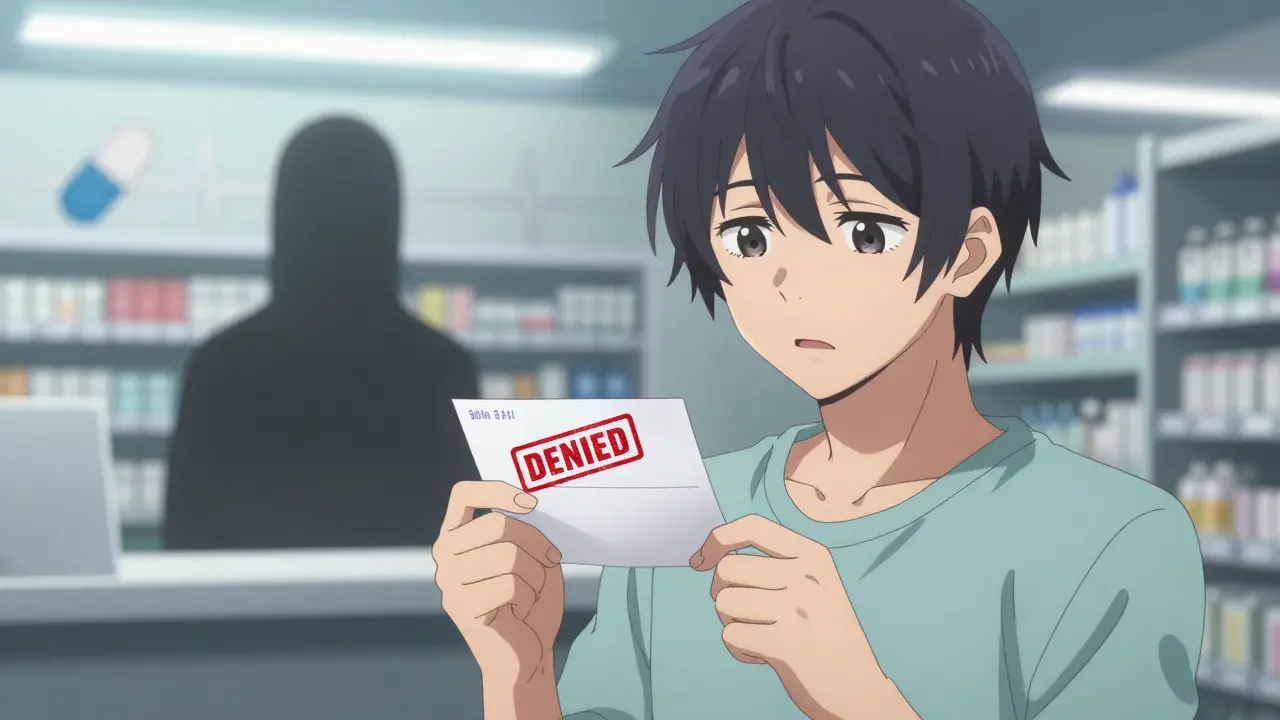
When your doctor prescribes a generic medication and the pharmacy says it’s not covered, it’s not a mistake - it’s a non-formulary generic. That means your insurance plan doesn’t list it on their approved drug list, even though it’s the same active ingredient as the brand-name version or other generics they do cover. You’re left holding a prescription you can’t fill without paying full price - often hundreds of dollars more than usual.
This isn’t rare. In 2022, over 12.7% of all generic prescriptions faced some kind of formulary restriction, and for conditions like autoimmune diseases, that number jumps to nearly 25%. The problem isn’t that these drugs are unsafe or ineffective - it’s that insurance companies choose which generics to cover based on cost deals with manufacturers, not medical need. And when they say no, you don’t have to accept it.
Why your generic isn’t covered
Insurance formularies are lists of drugs the plan agrees to pay for. They’re updated yearly, and while federal rules require plans to cover at least two drugs per therapeutic class, they don’t have to cover every generic version. For example, if your plan covers one brand of metformin ER but not another - even though both are identical in active ingredient - the second one becomes non-formulary.
Why? It’s often about rebates. Drug manufacturers pay insurance companies money to get their product listed. The plan then passes that savings on to you - lower copays. If your doctor prescribes a generic that doesn’t pay a rebate, the plan has no financial incentive to cover it. That’s not always fair, but it’s how the system works.
For chronic conditions like diabetes, Crohn’s disease, or epilepsy, switching to a formulary alternative isn’t just inconvenient - it can be dangerous. One patient reported her A1c spiked from 6.8 to 9.2 after being forced off her usual generic metformin. Her doctor had to fight to get the original back. That’s not an isolated case.
What you can do: the exceptions process
By law, every Medicare Part D and most commercial plans must offer an exceptions process. This is your legal right to ask for coverage even if the drug isn’t on the list. It’s not a loophole - it’s a required safety net.
Here’s how it works in practice:
- Get a coverage determination from the pharmacy. If they say no, ask for the written denial - it must be provided within 24 hours.
- Ask your doctor to complete a Coverage Determination Request form. This isn’t just a checkbox. They need to explain why the non-formulary drug is necessary.
- Include specific clinical evidence: lab results, previous failed attempts with other drugs, or documented side effects. For example: “Patient experienced severe nausea and vomiting on Formulary Drug A. Switched to non-formulary generic B - tolerated well for 14 months. Reintroduction of Drug A caused recurrence of symptoms.”
- Submit the request. Most plans respond within 72 business hours. For urgent cases - like a flare-up of Crohn’s or unstable diabetes - you can request an expedited review, which must be decided within 24 hours.
According to CMS data, 68.4% of these requests are approved on the first try - if they’re done right. The Crohn’s & Colitis Foundation found that 58% of initial denials are overturned on appeal. That means more than half of people who get denied end up getting their medication - if they push back.
What your doctor needs to write
Your doctor isn’t just filling out paperwork - they’re writing a medical argument. The best requests include:
- Specific reasons why formulary alternatives won’t work
- Previous drug trials with dates and outcomes
- Lab values or clinical markers showing the current drug is working
- Potential harm from switching - e.g., increased risk of hospitalization, worsening symptoms
Dr. Jane Sarasohn-Kahn, a healthcare economist, says the most successful appeals include measurable data: “Hemoglobin A1c levels for diabetes, fecal calprotectin for IBD, seizure frequency for epilepsy. Numbers speak louder than ‘I think this works better.’”
Doctors spend an average of 22.7 minutes on a complete form - and 14.3 minutes on an incomplete one. The difference? Approval rates. Incomplete forms get denied. Detailed ones get approved.

What happens if you’re denied
If the first request is denied, you have the right to appeal. You have 60 days from the date of denial to file an internal appeal. If that’s denied, you can request an external review by an independent third party - and that’s where things often turn around.
Here’s the kicker: even if your drug is approved through an exception, your plan doesn’t have to lower your copay. You might still pay 3.7 times more than if it were on the formulary. That’s a loophole. But there’s another path: you can file a separate tiering exception request. This asks the plan to put your approved drug on a lower cost tier - like Tier 2 instead of Tier 4. Many doctors don’t know this is possible. But it’s legal, and it can cut your monthly cost by hundreds of dollars.
Emergency help while you wait
Waiting 72 hours for a decision can be unbearable if you’re running out of medication. Federal law says plans must provide a 72-hour emergency supply of the non-formulary drug while your request is reviewed. But a 2023 compliance report found that 37% of plans illegally deny this. If you’re told no, ask for the policy in writing and escalate to customer service. If needed, contact your state insurance commissioner - many states have stronger rules than federal law.
California, for example, requires decisions on urgent cases within 48 hours - not 24. New York is pushing for 24-hour reviews even for non-urgent cases. Your rights vary by state, so check your local regulations.
Real stories: how people got their meds
On Reddit, a user named PharmTechSarah spent four tries to get her generic mesalamine approved. Each time, she and her doctor added more detail: flare dates, colonoscopy results, lab markers. On the fourth try, they won.
Another patient, DiabetesWarrior, paid $417 out-of-pocket for 90 days of metformin ER after a denial. She submitted her A1c drop from 9.2 to 6.8 on the specific generic - and got approved. Her monthly cost dropped from $140 to $15.
These aren’t rare. GoodRx’s 2023 survey showed 63% of people who appealed got their drug covered. But only 29% knew they could ask for an urgent review.

What’s changing in 2025
The system isn’t perfect, but it’s getting better. In October 2023, CMS rolled out standardized clinical criteria for common conditions - meaning doctors now have clearer guidelines for what evidence to include. By 2025, CMS plans to integrate the exception process directly into electronic health records, which could cut processing time by 40%.
Also, the Inflation Reduction Act now requires Medicare plans to automatically approve exceptions for insulin and naloxone - two life-saving generics that were routinely denied before.
But challenges remain. Specialty pharmacies are starting to carve out certain generics - like bioidentical hormones - and move them outside standard formularies entirely. That’s creating new gaps. And with drug costs rising, more generics are being excluded. MedPAC predicts formulary exception requests will rise 18% by 2025.
Your action plan
If you’re denied coverage for a generic drug:
- Don’t stop taking it. Ask your doctor for a 72-hour emergency supply.
- Get the written denial from the pharmacy.
- Work with your doctor to complete the form with clinical data - not just opinions.
- Submit the request and ask for expedited review if your condition is unstable.
- If denied, file an internal appeal within 60 days.
- Separately, request a tiering exception to reduce your out-of-pocket cost.
- If still denied, request external review - and don’t give up.
Remember: you’re not asking for a favor. You’re exercising a legal right. Insurance companies know this - and they count on people giving up. Don’t be one of them.
What to do if you’re overwhelmed
If your doctor is too busy, or you don’t know where to start:
- Contact your plan’s patient advocate - they’re paid to help you navigate this.
- Call the Medicare Rights Center (1-800-333-4114) for free counseling.
- Use the Crohn’s & Colitis Foundation or American Diabetes Association templates - they have pre-filled forms for common conditions.
- Check your state’s insurance department website - many have step-by-step guides for filing exceptions.
It’s not easy. But it’s worth it. A 2023 KFF poll found that 38% of patients skip doses or cut pills in half when faced with non-formulary denials. That’s not just financial stress - it’s health risk. You don’t have to live like that.
What is a non-formulary generic?
A non-formulary generic is a generic medication that your insurance plan does not list on its approved drug list (formulary). Even though it contains the same active ingredient as covered generics, the plan won’t pay for it unless you get an exception approved.
Why would my insurance deny a generic drug?
Insurance plans choose which generics to cover based on rebates and cost deals with drug manufacturers. If a generic doesn’t pay a rebate, it may be excluded - even if it’s just as effective as the ones they do cover. It’s a business decision, not a medical one.
Can I appeal a denial for a non-formulary generic?
Yes. Federal law requires all Medicare Part D and most commercial plans to have an exceptions process. You can request coverage based on medical necessity, and if denied, you can appeal. About 58% of initial denials are overturned on appeal.
How long does the appeals process take?
Standard requests are decided within 72 business hours. For urgent cases - like a sudden flare-up or unstable condition - the plan must respond within 24 hours. You can also request an emergency 72-hour supply while waiting.
Will my copay go down if my drug is approved?
Not automatically. Approval means the drug is covered - but you may still pay a high copay. You can file a separate tiering exception request to ask the plan to move the drug to a lower cost tier, which can cut your monthly cost by hundreds of dollars.
What if my doctor won’t help me file an appeal?
Talk to the practice manager or patient advocate. Many clinics have staff trained to help with prior authorizations. You can also use templates from patient advocacy groups like the Crohn’s & Colitis Foundation or American Diabetes Association. Your health is worth pushing for.
Are there free resources to help me appeal?
Yes. The Medicare Rights Center (1-800-333-4114) offers free counseling. State insurance departments often have online guides. Patient advocacy groups like the Crohn’s & Colitis Foundation and GoodRx provide downloadable forms and step-by-step instructions.
Comments (8)
-
Nicola George December 27, 2025
So let me get this straight - the system literally pays drug companies to make certain generics cheaper for you, and if they don’t kick back enough cash, your life-saving med gets denied? And we call this healthcare? 🤡

-
Robyn Hays December 29, 2025
I’ve been there - forced off my generic for Crohn’s because the rebate went to a different pill. My doctor wrote a novel on the form, included my colonoscopy pics, and we got approved in 48 hours. It’s not magic, it’s paperwork with teeth. Don’t let them gaslight you into thinking it’s ‘just how it is.’

-
Liz MENDOZA December 30, 2025
My mom got denied for her metformin last year. She cried because she couldn’t afford the $300 out-of-pocket. We filed the appeal together - doctor included her A1c drop from 9.1 to 6.5 on that exact generic. Approved. Her copay went from $140 to $12. I wish more people knew this was possible. You’re not being difficult - you’re being smart.

-
Anna Weitz January 1, 2026
Insurance companies are just profit machines pretending to be healthcare providers and we keep letting them get away with it because we’re too tired to fight or we think it’s too complicated but it’s not it’s just rigged and someone has to say it out loud

-
dean du plessis January 2, 2026
Back home in Cape Town we don’t have this problem - generics are all covered. But I’ve seen friends in the States struggle with this. It’s wild how a system that claims to care about health can prioritize rebate deals over actual outcomes. People shouldn’t have to be lawyers just to get their meds.

-
Kylie Robson January 3, 2026
Technically, non-formulary exclusions are governed under the Medicare Modernization Act of 2003, Section 1860D-1, and commercial plans follow similar CMS guidelines under the Affordable Care Act’s essential health benefits benchmark. The key is that formularies must provide therapeutic equivalency - but not necessarily identical molecule coverage. The rebate structure is a vertical integration play - manufacturers pay plans for formulary placement, which creates a perverse incentive to exclude cost-effective alternatives without rebate agreements. The tiering exception request is a critical lever under 42 CFR 423.570(c)(2).

-
Caitlin Foster January 3, 2026
Okay so I just got my insurance to cover my weird-ass generic epinephrine because I screamed into a customer service line for 47 minutes while my cat stared at me like I’d lost my mind?? AND THEN I FILED A TIERING EXCEPTION AND MY MONTHLY COST DROPPED FROM $189 TO $12??!!?!?!?!?!!? I’M A WARRIOR AND YOU CAN BE TOO!!

-
Todd Scott January 4, 2026
It’s worth noting that this issue isn’t just an American problem - it’s a global symptom of healthcare systems being commodified. In countries with single-payer systems, formularies are based on clinical effectiveness and cost-effectiveness analysis, not corporate rebates. Here, the system is designed to maximize shareholder returns, not patient outcomes. The fact that 68% of appeals succeed when properly documented shows the system isn’t broken - it’s just being exploited. The real tragedy is that most patients don’t have the time, energy, or medical literacy to navigate this labyrinth. We need systemic reform, not just individual heroics. But until then? Fight the good fight. Document everything. Use the templates. Call your state commissioner. Your life depends on it - and so does the integrity of the system.
