

When you pick up your generic blood pressure pill at the pharmacy and pay $10, you might think that money is helping you chip away at your $2,000 deductible. But here’s the truth: generic copays don’t count toward your deductible. They do count toward your out-of-pocket maximum. And that difference can save you thousands-or cost you more than you realize.
What’s the difference between a deductible and an out-of-pocket maximum?
Your deductible is the amount you pay before your insurance starts sharing the cost of covered services. If your plan has a $1,500 deductible, you pay the first $1,500 of medical bills yourself-doctor visits, lab tests, hospital stays-all of it. Once you hit that number, your insurance steps in with coinsurance (like paying 20% while they cover 80%).
But your out-of-pocket maximum is the total amount you’ll pay in a year for covered care. Once you hit that limit-say, $9,200 for an individual in 2025-your insurance pays 100% of everything else for the rest of the year. This cap is your safety net. It’s what keeps you from going broke if you get sick.
The key point? All your in-network costs-deductibles, coinsurance, and copays-add up to your out-of-pocket maximum. But only deductibles and coinsurance count toward your deductible. Copays? They’re on a different track.
Why generic copays don’t count toward your deductible
Generic prescription copays are designed to be a flat fee you pay at the pharmacy, no matter what. That $10 for metformin? That’s your copay. Even if you haven’t met your deductible yet, you still pay that $10. And it doesn’t move the needle on your deductible.
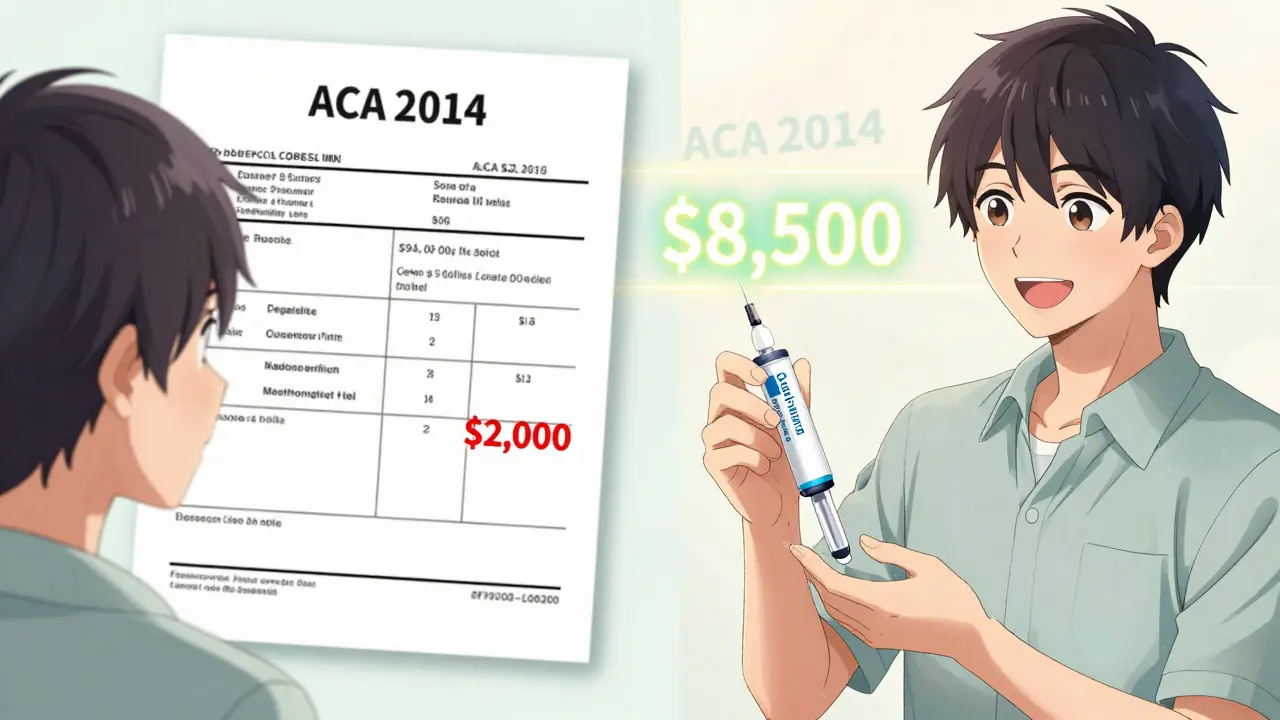
This isn’t a glitch. It’s intentional. Before the Affordable Care Act (ACA) in 2014, copays didn’t count toward anything-not your deductible, not your out-of-pocket maximum. People with chronic conditions like diabetes or asthma were stuck paying copays year after year with no progress toward relief. The ACA fixed that by requiring all cost-sharing to count toward the out-of-pocket maximum. But it left the deductible as a separate hurdle.
So now you have a two-step system:
- Pay your deductible first (for most services) → then pay coinsurance
- Pay copays at every visit or refill → they add to your out-of-pocket maximum, but not your deductible
This means you could pay $3,000 in generic drug copays over the year and still owe $1,500 toward your deductible for your next MRI. That’s confusing. And it’s why so many people get caught off guard.
Real-world confusion: The $2,500 copay trap
A 2023 survey by America’s Health Insurance Plans found that 68% of people think prescription copays count toward their deductible. That’s a massive gap between perception and reality.
One user on HealthCare.gov wrote: “I paid $10 copays for my blood pressure meds every month for a year. That’s $2,500. I thought I’d met my $2,000 deductible. But when I went for a knee injection, I still had to pay the full deductible amount.”
That’s not a mistake on their part. It’s a flaw in how plans are explained. Most people don’t read the Summary of Benefits and Coverage (SBC). They assume “copay” means “counting toward my limit.” But the SBC is where the truth lives.
Look for this line in your plan documents: “Does this payment count toward my deductible?” If it says “No” next to “Generic Prescription Copay,” you’re not alone-and you’re not wrong for thinking it should count.
Three plan types: Which one are you on?
Not all plans are built the same. There are three main structures for how prescriptions are handled:
- Single deductible (27% of employer plans): Your medical and prescription costs both go toward one deductible. Once you hit it, you pay coinsurance for everything. Copays are rare here-you pay full cost until the deductible is met.
- Separate medical and prescription deductibles (37% of plans): You have two deductibles. One for doctor visits. One for prescriptions. You pay full price for meds until you hit the prescription deductible. Then you pay a copay. Those copays count toward your out-of-pocket maximum, but not your medical deductible.
- Copay-only with no prescription deductible (36% of plans): No prescription deductible at all. You pay your $10 copay every time, even before you’ve met your medical deductible. Those copays count toward your out-of-pocket maximum, but still not your medical deductible.
If you’re on a plan with separate deductibles, your $10 copay for insulin might be your only out-of-pocket cost for meds-but it won’t help you meet your $2,000 medical deductible. That’s the trap.
How to know what your plan really does
You don’t have to guess. Your plan is required to give you a Summary of Benefits and Coverage (SBC) before you enroll. It’s a 2-4 page document in plain language. Here’s how to read it:
- Find the section: “Prescription Drugs” or “Pharmacy Benefits”
- Look for the column: “Does this payment count toward your deductible?”
- Check the row: “Generic Prescription Copay”
- If it says “No,” your copays aren’t helping your deductible-but they are helping your out-of-pocket maximum.
Also check your Explanation of Coverage (EOC). It’s longer, but it’s the official rulebook. If you’re unsure, call your insurer. Ask: “Do my generic drug copays count toward my medical deductible?” If they hesitate, that’s a red flag.

Why this matters: Real savings, real risks
Here’s the upside: if you’re on a plan with a $10,600 out-of-pocket maximum in 2026 and you take five generic meds a month at $10 each, that’s $600 a year. After 18 months, you’ve paid $10,800 in copays alone. You’ve hit your max. Your next prescription? Free. Your next surgery? Covered 100%.
That’s the power of the out-of-pocket maximum. It’s what made the ACA a lifeline for people with chronic conditions. One user on PatientsLikeMe said: “I reached my $8,500 out-of-pocket max last year. My insulin went from $15 to $0. I didn’t have to choose between food and meds anymore.”
But here’s the risk: if you think your copays are reducing your deductible, you might delay care. You might skip a refill because you think you’ve “already paid enough.” That’s dangerous. And it’s exactly why 15 billion dollars in prescription spending is lost every year because people misunderstand their coverage.
What’s changing in 2025 and beyond
The government knows this is confusing. In April 2024, the Department of Health and Human Services mandated clearer labeling on all plan documents for 2025. Insurers must now highlight whether copays count toward deductibles with bold text and icons.
Some insurers are testing new models. Five states are running pilot programs where prescription costs-including copays-count toward a single, combined deductible. Early results show 28% higher medication adherence. McKinsey predicts that by 2027, 60% of major insurers will offer at least one plan where generic copays count toward the deductible.
But there’s a catch. Combining them could raise premiums by 3-5%. So it’s a trade-off: simplicity vs. cost. For now, the system stays split. But the pressure to simplify is growing.
What you should do today
Don’t wait for your renewal. Do this now:
- Find your SBC. It’s usually in your member portal or mailed to you.
- Check the “Prescription Drugs” section. Look for the “count toward deductible?” row.
- If copays don’t count toward your deductible, track them separately. Add them up monthly.
- Know your out-of-pocket maximum. For 2026, it’s $10,600 for individuals, $21,200 for families.
- When you hit 80% of your out-of-pocket max, call your insurer. Ask: “What’s left to pay before I get 100% coverage?”
If you’re on a chronic medication, set a reminder: every month, add your copays to a running total. When you’re close to your max, you’ll know your next refill is free. That’s not magic. It’s your right under the law.
Generic copays aren’t a bonus. They’re a building block. They don’t clear your deductible, but they do clear your financial risk. And that’s worth understanding.
Do generic prescription copays count toward my deductible?
No, generic prescription copays typically do not count toward your medical deductible. They are flat fees paid at the pharmacy and are designed to be separate from the deductible. However, they do count toward your out-of-pocket maximum, which is the total amount you’ll pay in a year before your insurance covers 100% of covered services.
Do copays count toward my out-of-pocket maximum?
Yes, all in-network copays-including those for generic prescriptions-count toward your out-of-pocket maximum. This has been required by the Affordable Care Act since 2014. Once you reach your out-of-pocket maximum for the year, your insurance pays 100% of covered services for the rest of the year.
What’s the difference between a deductible and an out-of-pocket maximum?
Your deductible is the amount you pay before your insurance starts sharing costs for most services. Your out-of-pocket maximum is the total you’ll pay in a year for all covered care-including deductible, coinsurance, and copays. Once you hit the out-of-pocket maximum, your insurance pays 100% of covered services for the rest of the year.
Why do some plans have separate medical and prescription deductibles?
Separate deductibles let insurers manage costs differently for medical care and prescriptions. You pay full price for prescriptions until you meet the prescription deductible, then pay a copay. These copays count toward your out-of-pocket maximum but not your medical deductible. About 37% of employer plans use this structure, according to the Kaiser Family Foundation.
How can I find out how my plan works?
Check your plan’s Summary of Benefits and Coverage (SBC). Look for the “Prescription Drugs” section and find the row labeled “Generic Prescription Copay.” If it says “No” under “Does this payment count toward your deductible?”, then your copays don’t count toward your deductible-but they do count toward your out-of-pocket maximum. You can also call your insurer and ask directly.
Will generic copays ever count toward deductibles in the future?
Yes, some insurers are testing “Integrated Deductible” models where prescription costs-including copays-count toward one combined deductible. Early results show better medication adherence. By 2027, McKinsey predicts 60% of major insurers will offer at least one plan with this structure, responding to consumer demand for simpler rules.
Comments (14)
-
doug b January 27, 2026
Had no idea copays didn't count toward deductible. Paid $1200 last year for my blood pressure meds and thought I was halfway to my $2000 deductible. Turned out I still owed the full $2000 for my MRI. That’s wild.
Thanks for breaking this down.

-
Mel MJPS January 28, 2026
This is such a common trap. I’m a nurse and I’ve seen so many patients skip meds because they think they’ve ‘paid enough’ for the year. They don’t realize their copays aren’t moving the deductible needle. Please, everyone-track your copays like a budget. It saves lives.

-
SRI GUNTORO January 30, 2026
People need to stop blaming the system and start reading their own paperwork. If you didn’t check the SBC, that’s on you. Insurance companies aren’t hiding anything-it’s all right there in plain English. You just didn’t look.

-
Rose Palmer January 31, 2026
Thank you for this comprehensive breakdown. The distinction between deductible and out-of-pocket maximum is one of the most misunderstood aspects of health insurance in the U.S. The ACA’s requirement that copays count toward the out-of-pocket maximum was a critical consumer protection, even if it doesn’t resolve the structural confusion. I encourage all readers to print their SBC and highlight the prescription drug section. Knowledge is the only defense against opaque billing systems.

-
Mindee Coulter February 2, 2026
Just checked my SBC and yep my generic copays dont count toward deductible but do count toward OOP max. Saved this post. Been paying $15 a month for my thyroid med for 18 months and thought I was close to meeting my $2500 deductible. Nope. Just hit my OOP max next month. Free meds after that. Thank god.

-
Bryan Fracchia February 2, 2026
It’s funny how we assume things should work a certain way-like copays should count toward deductible-but the system doesn’t care about our assumptions. It cares about contracts. The real tragedy is that the people who need this info the most-chronic illness folks-are the ones least likely to read 40-page insurance docs. Maybe the next step isn’t better explanations… but better defaults. What if all plans defaulted to combined deductibles unless you opted out? Would that be too much?

-
Lance Long February 3, 2026
Let me tell you what happened to my mom last year. She took 4 meds. $10 copay each. 30 days a month. That’s $1200. She thought she’d blown through her $2000 deductible. Then she needed a colonoscopy. $1800 bill. She cried. She didn’t know the copays didn’t count. She thought she’d already paid her share. That’s not insurance-that’s a trap disguised as a benefit. This isn’t just confusing. It’s cruel. And now they’re making it even harder with new plan designs. We need a law to force insurers to send a yearly text: ‘Your copays didn’t help your deductible. You still owe $X.’

-
Timothy Davis February 3, 2026
Wow. So you’re telling me people can’t read a 2-page document? The SBC has been required since 2012. If you didn’t understand the difference between deductible and out-of-pocket maximum, you shouldn’t be allowed to choose a health plan. This isn’t rocket science. It’s basic finance. Stop acting like victims. You chose this plan. You signed the contract. Now deal with it.

-
fiona vaz February 3, 2026
My dad’s on a plan with separate deductibles. He pays $15 copays for his diabetes meds every month. He’s paid $1800 in copays over 15 months. His medical deductible is still $1500 away. He’s terrified to get an MRI because he thinks he’s already paid enough. This is why I make him a spreadsheet every month. It’s not glamorous. But it saves money. And sanity.

-
Sue Latham February 5, 2026
Ugh. I knew someone would say this. But honestly? If you’re on a plan where copays don’t count toward your deductible, you’re on a bad plan. Period. Why would any sane person choose that? You’re basically paying twice. This is why I switched to a high-deductible HSA plan with a combined deductible. Life’s too short for these games. If your plan doesn’t make sense, change it. Simple.

-
John Rose February 6, 2026
Interesting how this reflects broader systemic issues. The separation of prescription and medical costs stems from historical cost-shifting by insurers trying to control pharmacy spending. But it creates moral hazard-patients delay care because they think they’ve paid their share. The real question is: why do we still allow this fragmentation? It’s archaic. Maybe the future isn’t just better disclosure-it’s structural reform.

-
Lexi Karuzis February 7, 2026
THIS IS A GOVERNMENT SCAM. They made copays count toward OOP max so they could say ‘we protected patients’ while still letting insurers charge you full price for everything else. You think they care about you? No. They want you to hit your OOP max so they can stop paying. Then they raise premiums next year. It’s a trap. And the SBC? They make it unreadable on purpose. I’ve seen the code behind the PDFs-font size 6, hidden clauses. They don’t want you to know. They want you to suffer.

-
Colin Pierce February 8, 2026
I work in a pharmacy and see this every day. People walk up with their prescriptions and say ‘I thought I was done paying for the year.’ I have to explain it’s not that kind of limit. It’s exhausting. But I keep handing out these little printed cheat sheets: ‘Copays = OOP Max Only. Deductible = Separate.’ One guy cried. Said he skipped his heart meds for two months because he thought he was ‘covered.’ We need more of these guides in every pharmacy.

-
Mark Alan February 8, 2026
😭 THIS IS WHY I HATE AMERICAN HEALTHCARE. 💸 I PAY $10 FOR MY INSULIN EVERY MONTH AND STILL GET BILLED $1200 FOR A SIMPLE BLOOD TEST. I’M NOT A ROBOT. I’M A HUMAN BEING. WHY DO WE LET CORPORATIONS DO THIS TO PEOPLE?! 🤬 #HealthcareIsAHumanRight #FixThisNow
