
TSA Medical Supplies: What You Can and Can't Bring Through Security
When you're flying with TSA medical supplies, items like medications, syringes, oxygen tanks, or mobility aids that travelers need for health reasons. Also known as airline-approved medical items, these are essential for millions of people who rely on them to manage chronic conditions or recover from surgery. The TSA doesn’t ban these items—but they do have strict rules about how you pack and declare them. Skip the stress at security by knowing what’s allowed before you pack.
Medications in pill or liquid form are fine in both carry-on and checked bags, but liquids over 3.4 ounces (100 ml) are allowed if they’re for medical use. You don’t need to put them in a zip-top bag, but you do need to tell the officer at the checkpoint. Same goes for insulin, nebulizers, or injectables—keep them in their original packaging if you can. No prescription? Still okay. But having a doctor’s note or pharmacy label helps avoid delays. Needles and syringes? Allowed too, as long as they’re accompanied by the medication they’re meant for. Sharp containers should be sealed and labeled. Don’t hide them. TSA agents see them every day; they just want to make sure they’re safe.
Medical devices like CPAP machines, oxygen concentrators, and wheelchairs are fully permitted in the cabin. You don’t need to check them. Just arrive early so staff can help you get through screening. Batteries for these devices must meet FAA rules—lithium batteries are fine in carry-ons but not in checked luggage. And if you’re bringing a portable oxygen tank, you’ll need to notify the airline 48 hours ahead. Not all airlines allow the same models, so check with them first. Also, don’t assume your TSA-approved item is automatically airline-approved. Two different systems, same goal: keep you safe.
What’s not allowed? Anything that looks like a weapon or could be used as one—even if it’s medical. Scalpels, certain types of lancets, or large glass vials might raise flags. If you’re unsure, call the TSA helpline or check their website. And while you’re at it, remember that some states have different rules for carrying controlled substances. Even if TSA lets you bring your pain meds, your destination state might not. Always carry your prescription and keep it with your meds, not buried in your suitcase.
There’s a big difference between what’s legal and what’s smooth. You can bring your meds. You can bring your insulin pump. But if you wait until the last minute to declare them, you’ll be the person holding up the line. The smart move? Keep everything visible, labeled, and ready. Put your pills in a clear bin. Lay your syringes flat. Unplug your CPAP. Make it easy for the agent to say yes. That’s how you fly without drama.
Below, you’ll find real-world advice from people who’ve been through it—how to pack for long flights, what to do when security asks questions, how to handle international travel with prescriptions, and which medications require extra steps. Whether you’re managing diabetes, chronic pain, or mobility issues, these guides give you the practical steps to travel with confidence—no guesswork, no panic, no missed flights.
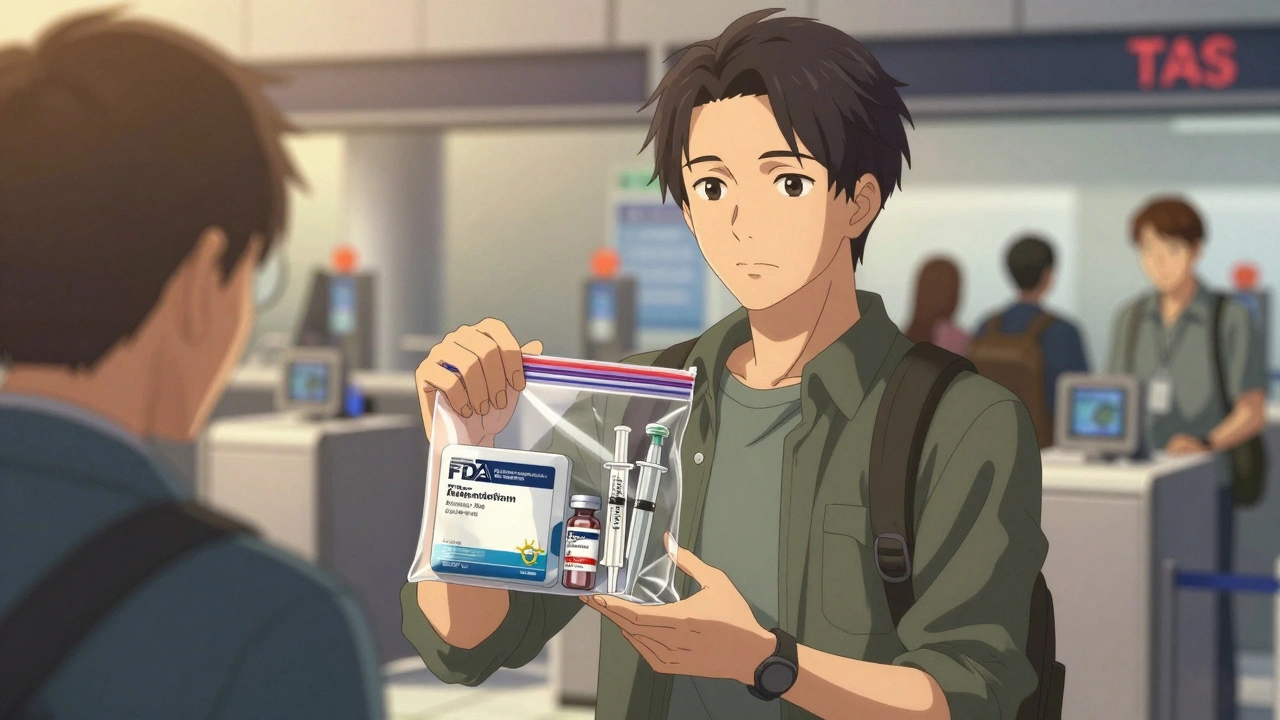
How to Carry Injectables, Syringes, and Sharps on Airplanes: A Clear Guide for Travelers
Finnegan O'Sullivan Dec 1 14Learn how to safely carry injectables, syringes, and sharps on airplanes with TSA-approved tips, international rules, packing tricks, and real-world advice to avoid delays and keep your meds secure.
More Detail